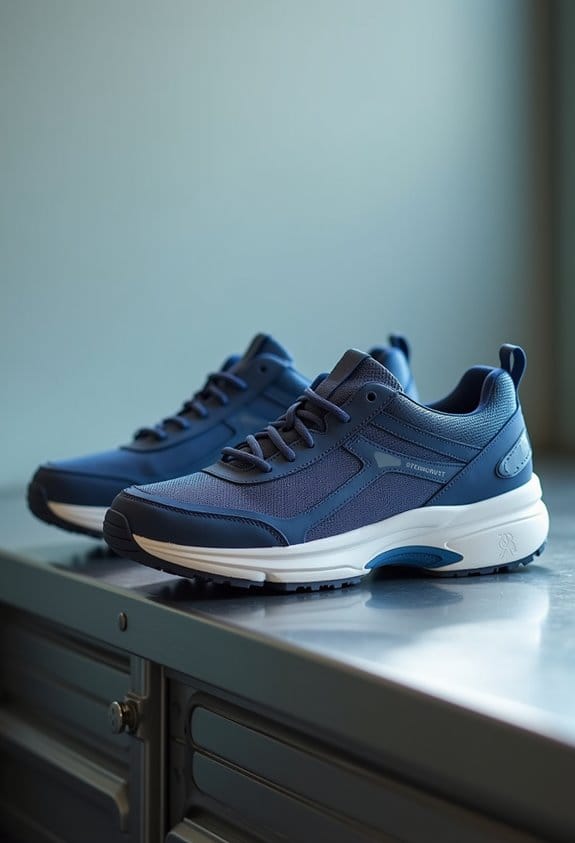
As an Amazon Associate, we earn from qualifying purchases. Some links on this site are affiliate links at no extra cost to you. Our recommendations are based on thorough research and editorial judgment.

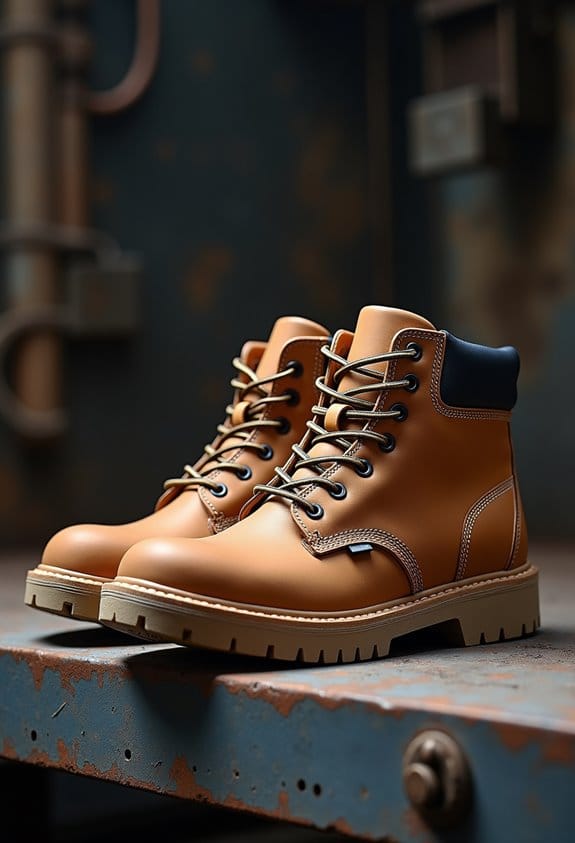
What Night‑Shift Workers Should Know About Footwear and Fatigue

Night-shift workers should know that prolonged standing causes foot fatigue, sore arches, and increased injury risk. Footwear must offer structured arch support, effective cushioning, and slip-resistant soles to reduce discomfort and prevent falls. Proper fit allows natural toe movement, while breathable materials keep feet dry. Using compression socks and performing stretches improves circulation and reduces swelling. Incorporating insoles or orthotics can provide additional support tailored to individual needs. Exploring these strategies helps maintain comfort and safety throughout long shifts.
Key Takeaways
- Night-shift workers should choose footwear with structured arch support to reduce foot strain and fatigue from prolonged standing.
- Effective cushioning in shoes absorbs shock, easing pressure on feet and preventing soreness during long shifts.
- Slip-resistant soles are essential for safety on potentially slippery floors common during night shifts.
- Compression socks improve blood flow and reduce swelling, enhancing comfort and foot health over extended hours.
- Incorporating regular foot stretches and breaks alleviates muscle tension and maintains foot flexibility during shifts.
The Impact of Prolonged Standing on Night-Shift Workers
You may be interested

1 Best Recycling Worker Boots for 2026: Durable and Comfortable
January 29, 2025

Arch Types and Work Boots: Flat Feet, High Arches, and Neutral Feet
November 19, 2025
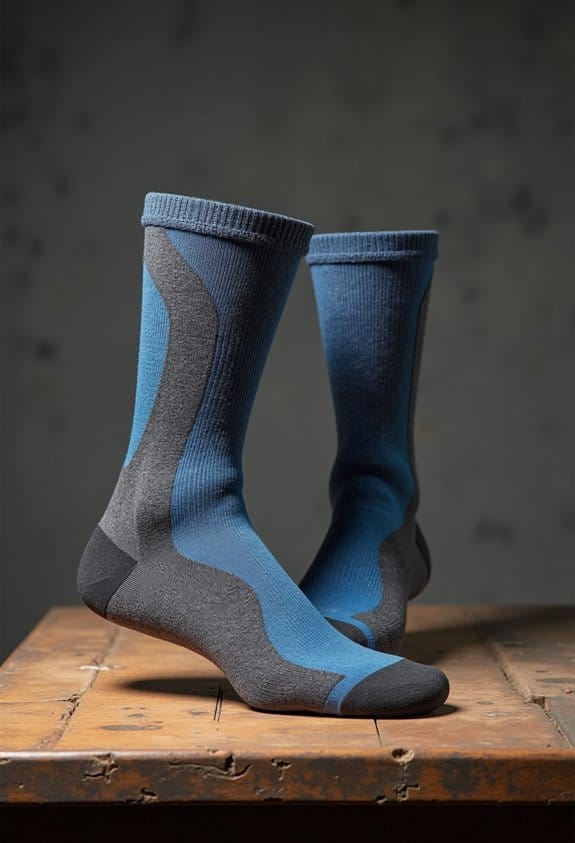
Choosing Moisture‑Wicking Socks for Long Shifts in Safety Boots
December 21, 2025
Although standing is a necessary part of many night-shift jobs, it can cause significant foot discomfort and fatigue due to the extended periods involved. What kinds of issues might you face during a shift? Foot fatigue commonly results from taking over 9,000 steps or standing continuously, leading to sore arches and burning heels. These symptoms increase the risk of foot problems such as plantar fasciitis and heel pain. How does this affect your overall health? Prolonged standing may destabilize posture, causing discomfort in your back and hips. What preventive measures are important? Practicing proper foot care and choosing suitable work shoes with effective shock absorption can reduce strain and risk of injury. Prioritizing these factors helps maintain your comfort and alertness throughout night shifts. Additionally, selecting boots with slip resistance can enhance safety by preventing falls on wet or slippery surfaces often encountered during night shifts.
Key Features of Supportive Footwear for Night Shifts
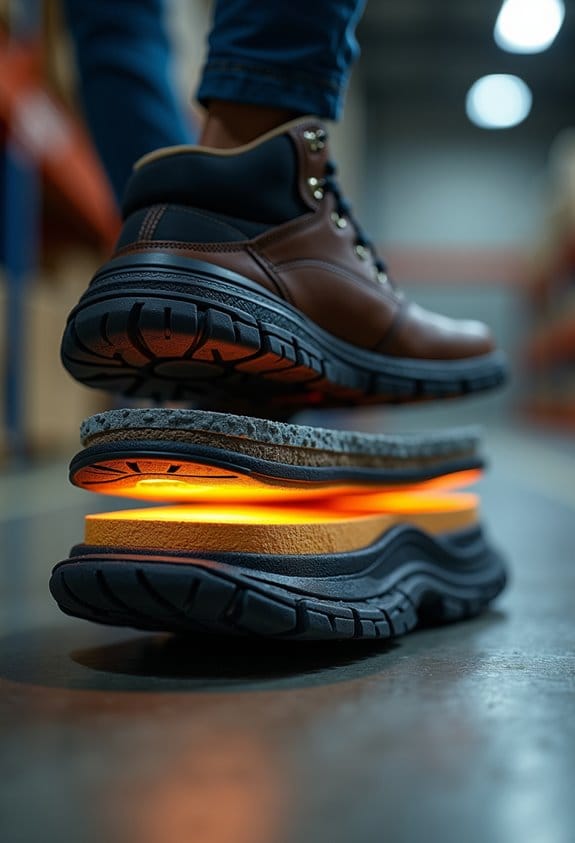
Five key features define supportive footwear suitable for night-shift workers, ensuring safety and comfort during long hours. What should you look for in supportive footwear? First, structured arch support is essential to prevent strain and provide stability during extended standing or walking. Second, cushioning that effectively absorbs shock helps relieve pressure points and maintain foot comfort. Third, shoes must offer a proper fit, allowing natural toe movement without excess tightness or looseness to avoid discomfort and foot issues. Fourth, incorporating breathable materials reduces moisture buildup and irritation, keeping feet dry and comfortable. Finally, slip resistance provides safety on potentially slick surfaces common in night environments. Additionally, selecting shoes with slip-resistant outsoles designed specifically for healthcare environments can help reduce the risk of workplace slips and falls.
Recommended Products
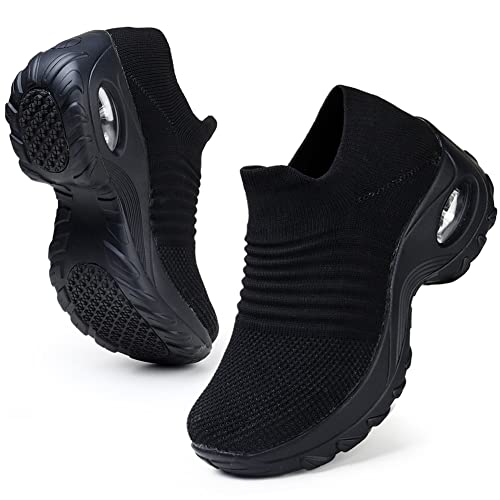
[Stretchable Fabric Upper]: Whether it's naturally breathable materials, technical membranes and meshes or Active Air technology, our shoes help you move more comfortably

SLIP-RESISTANT OUTSOLE: A rubber outsole with a dense diamond-grid tread grips wet, oily, and greasy floors — the channels between lugs push liquid away underfoot, so every step stays steady in kitchens, restaurants, and any workplace where floors get slippery.
How Proper Footwear Reduces Fatigue and Enhances Safety
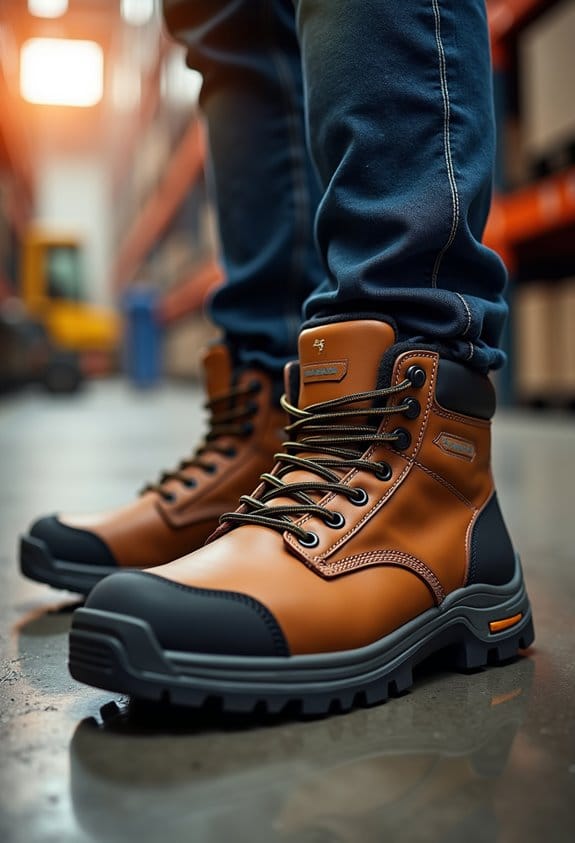
Proper footwear plays an essential role in reducing fatigue and enhancing safety for night-shift workers who spend long hours standing or walking. How do shoes reduce foot pain and promote safe work during long shifts? Consider these factors:
- Structured arch support in shoes prevents strain, minimizing foot fatigue over time.
- Cushioning absorbs impact, easing pressure points and lowering physical exhaustion.
- Slip-resistant soles help prevent slips and falls, common hazards that increase fatigue.
- A proper fit avoids pinching or slipping, which can distract workers and worsen tiredness.
- Insoles or orthotics designed for specific foot issues provide extra support and comfort.
- Additionally, boots with lightweight and flexible midsoles support natural foot movement, further reducing fatigue.
Recommended Products

【Breathable Mesh Upper】:The mens running shoes have a breathable mesh upper material enables rapid sweat wicking, keeping the inside of the running shoes cool and dry even during intense workouts.

DURABLE WORK SNEAKER: The Skechers Work Relaxed Fit: Dighton SR features a smooth leather and synthetic upper for long-lasting wear on the job.

【High Standard Safety Shoes】: Our steel toe shoes for women can efficiently protect your feet from accidentally falling or rolling objects. Meanwhile, the steel cap does not restrict toe movement or compromise comfort. Wearing our heavy-duty shoes will definitely give you a feeling of security.
Effective Foot Care Practices During and After Night Shifts
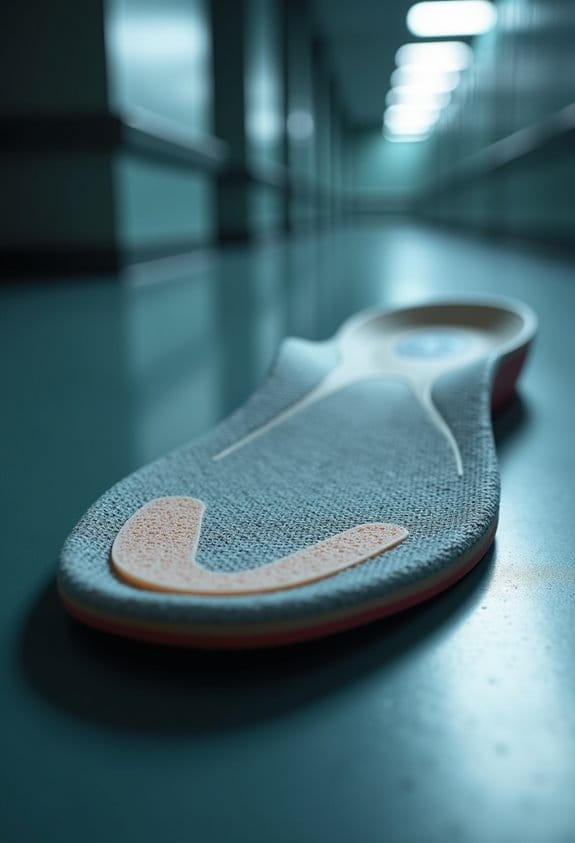
Proper foot care during shifts begins with selecting shoes that offer excellent arch support and ample cushioning to reduce foot fatigue. Wearing compression socks also improves blood flow, lessens swelling, and helps keep feet healthy throughout the shift. Taking foot-friendly breaks by performing simple stretches and massages can relieve tension and soreness. After work, elevating feet above heart level reduces swelling, while soaking them in warm Epsom saltwater for 10 to 15 minutes soothes discomfort. Regular foot hygiene is essential; inspect feet for cracks or dryness and apply moisturizer as needed. These strategies collectively maintain foot health and minimize fatigue caused by long hours on your feet during night shifts. Choosing footwear with shock absorption technology can further reduce impact stress and improve comfort during prolonged standing or walking.
Integrating Inserts and Orthotics for Long-Lasting Comfort
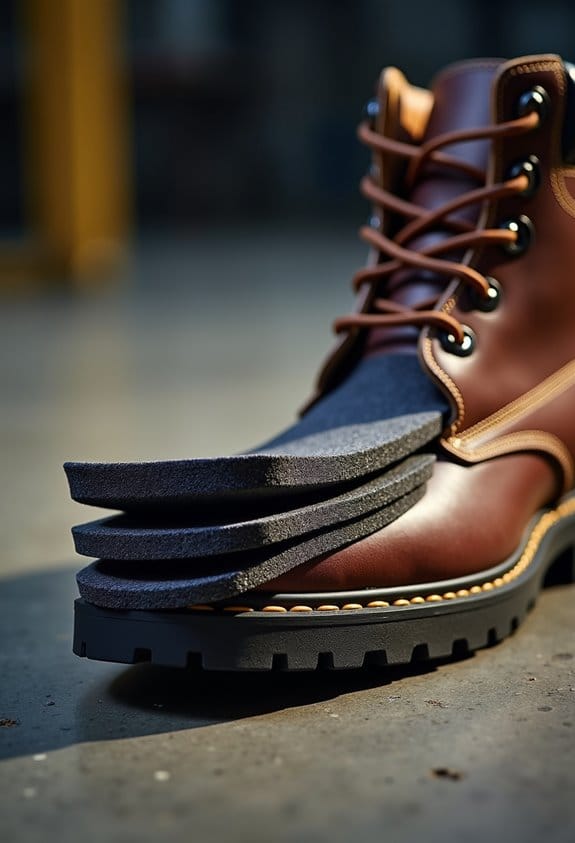
Although many night-shift workers rely on standard insoles, these often lack sufficient support and durability, leading to increased foot discomfort over extended hours. How can integrating quality insoles and orthotics improve comfort and reduce foot fatigue?
- Custom orthotics, designed after gait assessments, target specific issues like flat feet or high arches, providing firm arch support essential for prolonged standing.
- Regularly replacing insoles or adding orthotic inserts prevents common conditions such as plantar fasciitis and heel pain, maintaining foot health.
- Supportive insoles reduce strain, enhancing overall comfort and potentially boosting productivity during night shifts.
- Choosing inserts with durable materials guarantees long-lasting relief.
- Incorporating gel insoles with shock-absorbing cushioning can significantly alleviate pressure and fatigue during extended wear.
Recommended Products
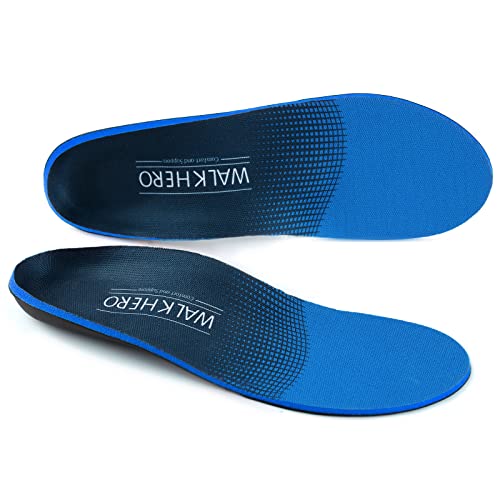
LASTING COMFORT: Arch support improves foot and leg alignment, enhances comfort, and helps ease stress and uncomfortable caused by flat feet (Pronation), bunions, arthritis,good for Plantar Fasciitis (heel pain and heel spurs), Achilles Tendonitis.

【Heavy Duty Pain Relief Insoles - Stop Pain Killing Your Feet!】Our orthotic insoles are designed for men and women weighing over 220lbs! Orthopaedic insoles relieve the symptoms of plantar fasciitis, flat feet, ankle pain, low back pain, bunions and bone spurs, eliminating any discomfort associated with prolonged standing or walking. WalkHero insoles permit a more confident, stable and relaxed stride.

Arch Support & Pain Relief Orthopedic Insoles: Designed to conform to the natural shape of your foot, these insoles provide effective relief from plantar fasciitis, heel pain, flat feet, bunions, Achilles tendonitis, and other foot pain. They balance foot pressure and support healthy foot alignment.plantar fasciitis relief ,arch support inserts women
The Role of Stretching and Compression Socks in Foot Health
Incorporating stretching exercises and compression socks into a night-shift worker’s routine can greatly improve foot health and reduce discomfort. How does stretching help? Simple exercises like ankle rolls, calf raises, and toe curls boost blood flow and relieve tension in the calf muscles, which you should hold for at least 10 seconds or repeat 10 times per foot. What role do compression socks play? Made of snug, stretchy material, they enhance circulation during long periods of standing or walking, which decreases swelling and fatigue in the legs. Can these methods prevent serious issues? Yes, compression socks help lower the risk of deep vein thrombosis. Overall, regularly combining stretching and compression socks supports better foot health, reduces pain, and improves your endurance throughout night shifts. Additionally, choosing footwear with proper fit measurement is essential to maximize the benefits of these practices and prevent discomfort during long shifts.
Recommended Products
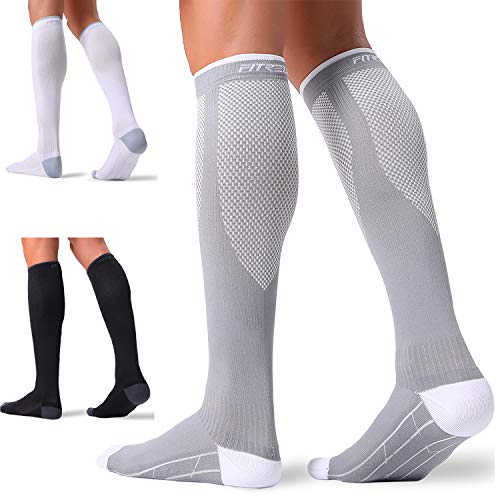
【Size Tips】: Choose according to your CALF size first as for 20-30 mmHg. One size smaller if need tighter compressions. S/M fit for Calf size 9-15in, mens US shoes 6-8.5, womens US shoes 7-9.5; L/XL fit for Calf size 14-16in, mens US shoes 9-12, womens US shoes 10-13
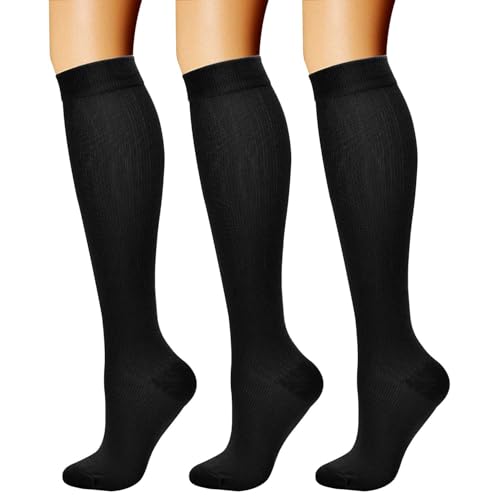
COMPRESSION SOCKS - We intend combining fashion, technology and science to bring you the triple comfort without. The material of our compression socks are upgraded with nylon percentage from 40% to 85%. Delivers 360-degree stretch for greater flexibility and durability. Breathable high performance fabric keeps an optimal temperature.

Ankle Tuck Compression: IRAMY Compression Socks combine advanced air knitting technology with 6 targeted compression rings for optimal ankle and arch support. The even pressure around the ankle relieves swelling, reduces muscle fatigue, and alleviates discomfort from plantar fasciitis, helping you stay active and pain-free throughout the day.
Tips for Selecting Durable and Lightweight Work Boots
When selecting work boots for night-shift workers, prioritizing durability alongside lightweight design is crucial to reduce fatigue and maintain comfort during long hours. How can you choose the best boots?
- Choose lightweight materials such as synthetic fabrics or mesh, which reduce weight compared to full-grain leather without sacrificing durability.
- Guarantee proper balance; avoid toe-heavy boots that cause shin splints and muscle fatigue by shifting weight unevenly.
- Look for appropriate cushioning; sufficient padding supports comfort but too much may cause strain by reducing natural toe movement.
- Consider the boot’s construction for a stiff frame combined with a natural toe-spring, enhancing stability and reducing foot fatigue.
- Additionally, selecting boots with slip-resistant outsoles can improve traction and safety during night shifts where visibility is reduced.
Recommended Products

ENHANCED NON-SLIP OUTSOLE: The outsole of these non slip work boots is covered with professional non slip patches, the special material and well-designed pattern of the non slip patches enhances the grip of the boots, which helps you to stay stable on slippery or oily floors.

NON SLIP OUTSOLE :This mens non slip work shoes features a high-friction slip-resistant patches design that provides excellent grip even on wet or oily surfaces, effectively reducing the risk of slipping. Specially designed for complex work environments like kitchens.
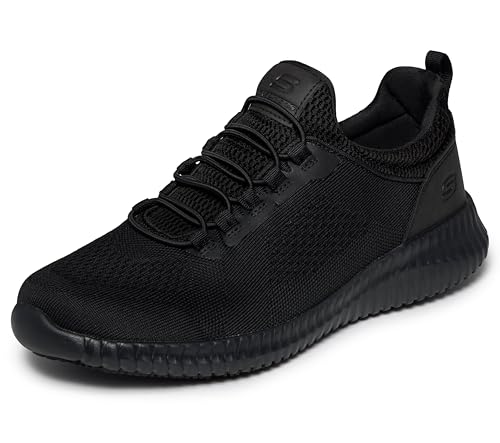
WORKPLACE SAFETY CERTIFIED: Slip-resistant rated outsole provides superior traction on wet, dry, and oily surfaces, with tested electrical hazard protection for added workplace safety
Frequently Asked Questions
What Is the Correct Footwear to Wear at Work?
The correct footwear features durable shoe materials, structured arch support, low heel height, slip resistance, and cushioned insole types. These elements collectively reduce fatigue, enhance safety, and support foot health during prolonged work periods.
What Do Anti-Fatigue Shoes Mean?
Anti-fatigue shoes incorporate cushioning technology and ergonomic design, featuring specialized shoe materials for shock absorption. They provide enhanced foot support and anti fatigue features that reduce strain, improving comfort and reducing fatigue during prolonged standing or walking.
How Long Should I Elevate My Legs After a 12 Hour Shift?
Leg elevation techniques recommend elevating legs for 15 to 20 minutes after a 12-hour shift. Combined with foot circulation tips, stretching exercises, and other recovery strategies, this enhances post shift routines and promotes ideal recovery.
What Are the Best Shoes for Being on Your Feet 12 Hours a Day?
The best shoes for 12-hour shifts reveal their secret through comfortable cushioning and supportive arch design. Their breathable materials, ideal heel height, and slip resistance combine to sustain comfort and safety during relentless hours on feet.