As an Amazon Associate, we earn from qualifying purchases. Some links on this site are affiliate links at no extra cost to you. Our recommendations are based on thorough research and editorial judgment.


When to Add Aftermarket Insoles to Occupational Footwear

When should you add aftermarket insoles to occupational footwear? Consider these signs: persistent foot or heel pain, burning or numbness, uneven sole wear, and frequent blisters indicating poor fit or cushioning. Factory insoles often compress and lose support over time, reducing shock absorption and comfort on hard surfaces. If you notice discomfort or alignment issues affecting knees or back, it’s time to upgrade. Later, you’ll find guidance on choosing, replacing, and maintaining insoles for lasting support.
Key Takeaways
- Add insoles when experiencing persistent foot pain, especially in the arches, heels, or linked joints like knees and lower back.
- Insert aftermarket insoles if the original insoles show compression or visible wear, reducing cushioning and support.
- Use insoles when noticing uneven shoe sole wear or frequent blisters indicating poor foot alignment or discomfort.
- Consider adding insoles for enhanced shock absorption and arch support during prolonged standing or heavy labor.
- Replace or add insoles every 6-12 months, or before starting a new intense work period to maintain comfort and protection.
Why Work Boots Often Need Added Insoles
Work boots are mainly built to protect feet from injuries rather than to provide comfort. Why do these boots often need added insoles? First, their natural rigidity offers limited cushioning and foot support, increasing foot fatigue during long work hours. Second, hard surfaces common in many work environments demand better shock absorption to reduce impact on feet. Third, inadequate cushioning can worsen conditions such as plantar fasciitis, making added insoles essential. You should consider using custom orthotics or quality aftermarket insoles to improve comfort and foot health. Over time, factory insoles compress and lose effectiveness, so it becomes necessary to replace insoles for sustained support. Adding insoles not only enhances cushioning but also promotes better foot alignment and reduces the risk of pain linked to prolonged use of work boots. Choosing insoles with shock-absorbing materials can significantly improve comfort and reduce muscle fatigue during long shifts.
Common Foot and Body Signs That Indicate the Need for Insoles
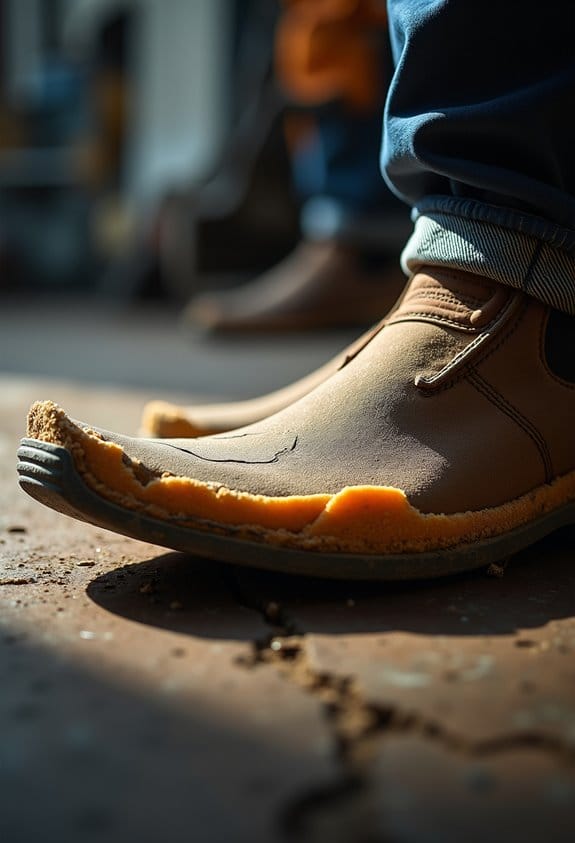
Foot discomfort and related body pains often reveal when insoles are needed to improve footwear support. What common signs indicate it’s time to add insoles? Persistent foot pain, especially in the arches or heels, suggests insufficient cushioning and lack of proper support. Can body aches signal foot issues? Yes, lower back and knee discomfort often result from poor foot alignment and can be alleviated by insoles. How does boot wear factor in? Uneven wear on soles points to gait problems that insoles can correct. What other symptoms appear? Burning sensations, numbness, or tingling indicate the need for additional cushioning. Frequent blisters or hot spots highlight poor comfort and fit. For those with chronic foot conditions, monitoring these signs supports ongoing foot health and aids in deciding when to add insoles. It is also important to note that shoes with Memory Foam cushioning can offer adaptive comfort that may reduce the immediate need for aftermarket insoles.
Recommended Products
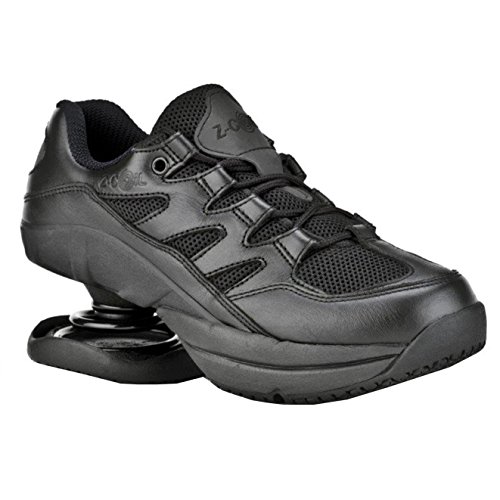
RELIEVE FOOT, LEG, AND BACK PAIN: Advanced spring heel, built-in orthotic, and rocker forefoot cut impact by 50%, reducing pain & improving posture by absorbing shock & distributing pressure evenly.

Custom-Fit Running Orthotics – Tailored from your foot impressions, these insoles provide personalized support for flat feet, high arches, and foot pain.

Plus Fitting System - Two Removable Footbeds for Added and Double Depth Accomodates Orthotics
How Insoles Improve Comfort and Prevent Injuries on the Job
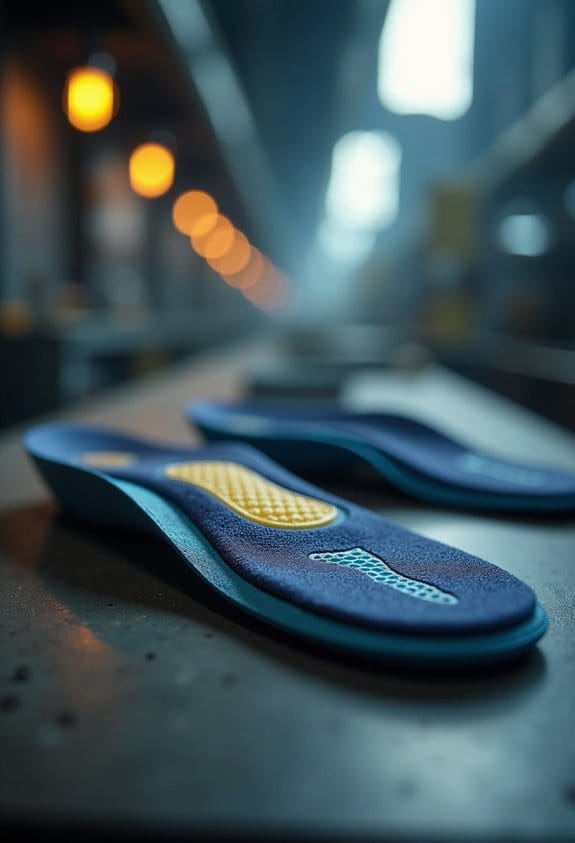
Comfort and injury prevention in physically demanding jobs often depend on proper footwear support, which aftermarket insoles can greatly enhance. How do insoles provide better foot comfort and reduce foot pain?
- They offer cushioning and shock absorption, decreasing fatigue during long hours in work shoes.
- Insoles provide proper arch support and foot alignment, which help prevent plantar fasciitis and reduce risks of chronic conditions.
- By improving stability and posture, insoles support better foot health and can alleviate related knee and lower back pain.
- Customizable insoles adapt to your work environment, offering support that standard work shoes may lack.
- Using insoles consistently enhances overall comfort, leading to improved productivity and fewer foot-related injuries.
Incorporating quality insoles guarantees you maintain comfort and reduce injury risks while on the job. Many top shipyard boots incorporate EVA midsoles and polyurethane insoles to enhance comfort and durability in tough working conditions.
Recommended Products

A cut-resistant 3 layer aramid lining, making the boots chainsaw proof

Motorcycle-Ready Design: 11-inch pull-on design built for motorcycle enthusiasts seeking reliable performance and protection.

Black, Lace to Toe, 16" #100 Vibram Sole, Rolled-Leather top facing
Key Factors to Consider When Selecting Insoles for Work Boots

Although selecting the right insoles can seem straightforward, several key factors determine how well they will perform in your boots throughout the day. What should you consider?
- Foot type: flat feet often need arch support, while high arches may require custom orthotics to address biomechanical issues.
- Durability and comfort: opt for breathable synthetic materials or memory foam that offer cushioning without wearing out quickly.
- Support and cushioning: choose insoles with adequate shock absorption, especially in the heel, to reduce fatigue and injury risk.
- Work environment: heavier-duty insoles are necessary for high-impact roles, while lighter insoles suffice for less strenuous tasks.
- Wear and tear: inspect insoles regularly; worn-out cushioning or support can worsen discomfort and lead to long-term problems.
In addition, selecting insoles compatible with ESD-rated footwear is important to maintain the protective qualities of your occupational shoes.
Assessing these factors guarantees insoles enhance your occupational footwear effectively.
Recommended Products

Circumference: 12 inches Insole: Removable Soft Strike Orthotic

DURABLE men’s hiking boots crafted from a combination of premium full-grain leather and abrasion-resistant 1000 Denier nylon
Types of Insoles Suitable for Occupational Footwear
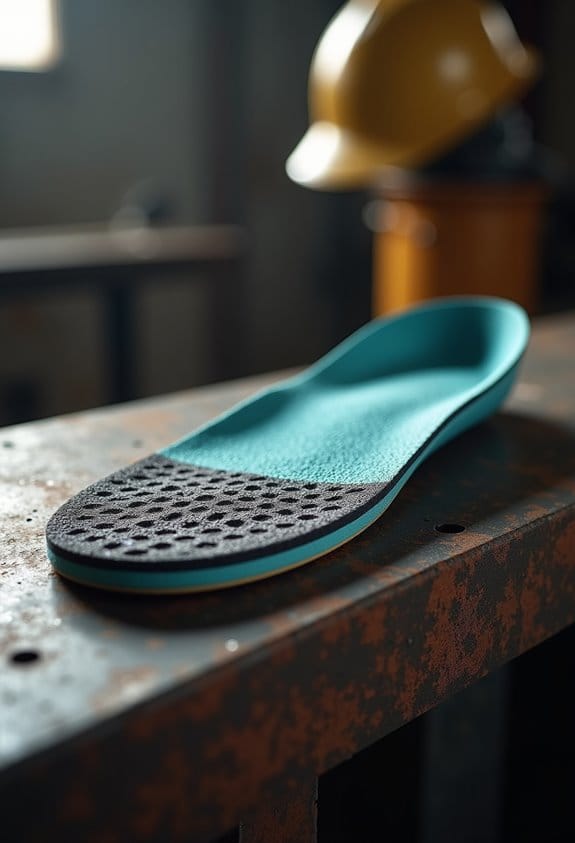
When selecting insoles for occupational footwear, understanding the types available helps guarantee you choose the best option for your needs. What types of insoles suit various work environments and foot concerns?
- Cushioned insoles provide shock absorption and comfort, reducing fatigue during long hours on your feet.
- Orthotic insoles address biomechanical issues, improving foot alignment and offering pain relief for chronic foot conditions.
- Gel inserts target high-impact areas like heels, enhancing shock absorption and overall comfort during strenuous tasks.
- Arch support insoles relieve pressure in the arches, preventing flare-ups especially if you experience arch discomfort.
- Custom orthotics fit your foot shape precisely, supplying superior support and comfort compared to standard options.
Selecting the right insole depends on your job demands and specific foot conditions to maximize comfort and effectiveness. Combining insoles with footwear that features slip-resistant treads can significantly enhance safety and reduce fatigue during long shifts.
Recommended Products

AMERICAN MADE with USA and globally sourced components by the skilled craftsmen and women at Thorogood’s US plants.

AMERICAN MADE with USA and globally sourced components by the skilled craftsmen and women at Thorogood’s US plants

AMERICAN MADE with USA and globally sourced components by the skilled craftsmen and women at Thorogood’s US plants
When and How to Identify the Right Time to Replace Your Insoles
Selecting the appropriate insole type for occupational footwear is the first step in maintaining foot health during demanding workdays. How do you know when to replace your insoles? Look for these signs:
- Visible wear such as cracks, tears, or compressed cushioning
- Increased foot pain, fatigue, or discomfort during or after shifts
- Loss of arch support or cushioning effectiveness
- Uneven wear patterns indicating possible foot problems
- Discoloration or persistent odor affecting comfort and hygiene
Replacing insoles every 6 to 12 months is recommended, but you should do so sooner if any of these signs appear. Timely replacement guarantees your footwear continues to provide adequate support and remains comfortable, helping to prevent further foot pain and related issues. Regular inspection is key to knowing when it is time to replace. Incorporating insoles with cushioned footbeds can greatly enhance comfort and reduce fatigue during long work shifts.
Tips for Maintaining and Extending the Lifespan of Work Boot Insoles
How can workers guarantee their work boot insoles last longer and continue providing effective support throughout their daily tasks? Proper maintenance and care are essential. Follow these tips to extend insole lifespan:
- Clean insoles regularly with mild soap and warm water to remove dirt and moisture, preventing wear and material breakdown.
- Rotate between pairs of insoles to reduce constant pressure and allow recovery, especially in demanding work environments.
- Inspect insoles every 4 to 6 months for signs of wear, such as cracking or flattening; replace insoles when comfort or support decreases.
- Use moisture-wicking socks and breathable footwear to control humidity, protecting the foot and insoles from excessive moisture.
- Store work boots in a cool, dry place to prevent environmental damage that accelerates insole wear and reduces comfort.
- Consider footwear with memory foam insoles that provide personalized foot support to reduce fatigue and extend overall comfort.
Recommended Products
Waterproof

Waterproof
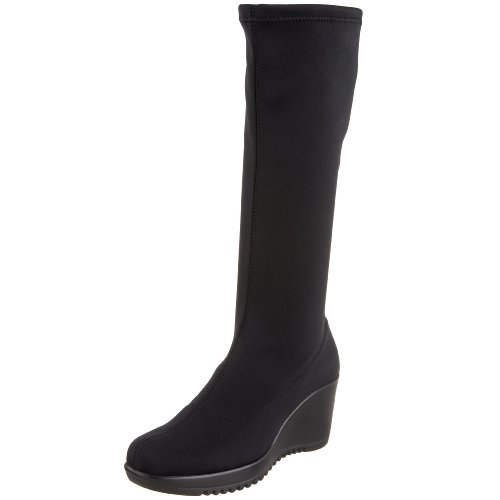
This great boot will look awesome with a skirt or jeans.
Frequently Asked Questions
When to Wear Custom Orthotics?
Like a tailored suit for the feet, custom orthotics benefit those with specific foot types, arch support needs, or signs of discomfort. They impact posture, suit job demands, require footwear compatibility, and need replacement for long-term health and cost effectiveness.
How Often Should You Change Insoles in Work Boots?
Insoles in work boots should be changed every 6 to 12 months, depending on durability factors, comfort levels, insole materials, activity types, daily usage, manufacturer guidelines, and replacement signs to maintain ideal foot health in specific footwear.
Are Aftermarket Insoles Better?
Aftermarket insoles often provide superior comfort enhancement, arch support, and cushioning benefits, reducing foot fatigue and improving alignment. They offer pressure relief, shock absorption, moisture control, odor prevention, and fit adjustment, making them generally better for occupational footwear.
Should I Put Insoles in My Work Boots?
Foot comfort contrasts discomfort; adding insoles enhances arch support and cushioning benefits, essential amid demanding work environments. Considering boot fit, insole materials, foot pain, activity level, and insole lifespan guarantees improved foot health and enduring relief.