As an Amazon Associate, we earn from qualifying purchases. Some links on this site are affiliate links at no extra cost to you. Our recommendations are based on thorough research and editorial judgment.
Choosing Moisture‑Wicking Socks for Long Shifts in Safety Boots

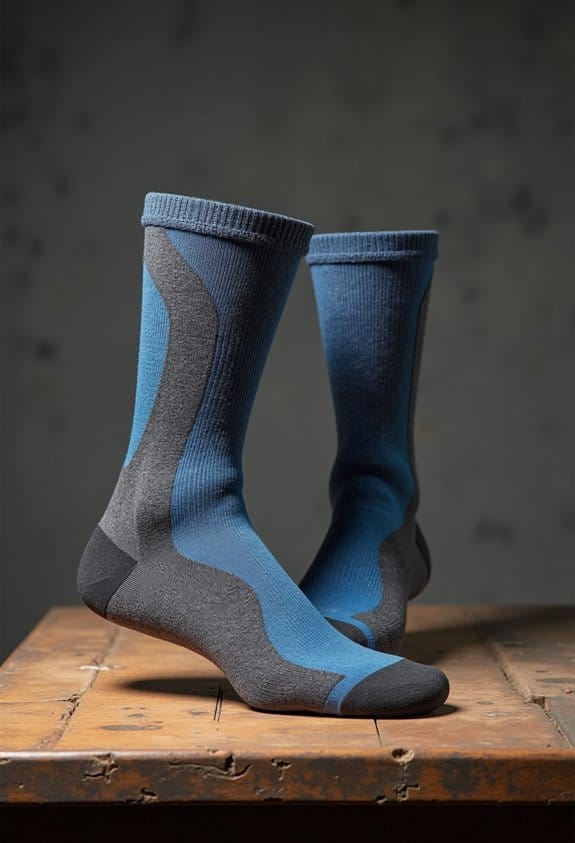
Choosing moisture-wicking socks for long shifts in safety boots involves selecting materials like merino wool or synthetic blends that keep feet dry and prevent blisters. Prioritize socks with targeted cushioning in heel and toe areas to reduce fatigue and reinforced sections for durability. Compression features can enhance circulation and reduce swelling during extended wear. Opt for a thickness that fits your boots comfortably—thin for tight fits, midweight for balance, and heavyweight for extra warmth. Explore these factors to optimize comfort and foot health throughout your shift.
Key Takeaways
- Select socks made from moisture-wicking fabrics like Merino wool or synthetic blends to keep feet dry and comfortable during long shifts.
- Look for reinforced cushioning in heel and toe areas to reduce pressure and prevent blisters inside safety boots.
- Choose socks with arch support and graduated compression to improve circulation and reduce leg fatigue during prolonged wear.
- Prioritize durability features such as reinforced heels, abrasion-resistant yarns, and high-density knitting for longer-lasting performance.
- Ensure proper sock thickness based on boot fit: thin for snug fit, midweight for balance, and heavyweight for extra warmth.
Importance of Quality Work Socks
When considering the best socks for long work shifts, it is crucial to understand why quality work socks matter. What features make these socks valuable for safety boots? First, moisture-wicking properties play a key role in moisture management, helping keep your feet dry and reducing risks of fungal infections to maintain good foot hygiene. Second, materials like Merino wool and durable synthetics provide temperature regulation and long-lasting wear. Third, cushioning and protection help lower foot fatigue and discomfort during extended standing or walking periods. Finally, compression socks improve circulation, enhancing comfort throughout your shift. To sum up, investing in quality work socks with these features helps guarantee healthier, more comfortable feet, combining practical benefits with durable materials for peak performance in demanding work environments. Additionally, pairing these socks with boots that offer arch support and cushioning can significantly improve overall foot comfort.
How Moisture-Wicking Technology Benefits Your Feet

A number of key benefits come from wearing moisture-wicking socks, especially during long shifts in safety boots where feet tend to sweat heavily. How does moisture-wicking technology benefit your feet?
- Moisture-wicking fabrics, such as those using merino wool, draw sweat away from your skin to keep feet dry and comfortable.
- These work boot socks absorb moisture efficiently, reducing sweat buildup that can cause blisters and fungal infections.
- Wool’s natural properties maintain warmth even when damp, enhancing all-day comfort.
- Effective sweat wicking promotes evaporation, preventing moisture retention that leads to foot fatigue and discomfort.
- By managing moisture, these socks support better foot hygiene, helping to prevent blisters and skin irritation during long, demanding shifts.
- Additionally, choosing footwear with proper slip resistance complements moisture-wicking socks by enhancing overall foot safety in wet or slippery work environments.
Best Materials for Moisture-Wicking Work Socks

Frequently, the choice of material markedly influences the performance of moisture-wicking work socks, affecting how effectively they keep feet dry during long shifts in safety boots. Which materials offer the best moisture-wicking properties?
- Merino wool socks provide excellent moisture control by absorbing moisture while remaining dry and provide natural temperature regulation.
- Synthetic materials, such as blends with acrylic, nylon, and spandex, combine moisture-wicking properties with superior durability.
- Alpaca fibers wick sweat faster than Merino wool and help regulate temperature effectively.
- Cotton socks, although breathable and comfortable, lack advanced moisture-wicking features, making them less ideal for heavy sweat.
To guarantee comfort and moisture control, select socks made from high-quality materials that balance durability and temperature regulation, while considering key features like arch support and targeted cushioning for long-lasting wear and protection. Additionally, pairing moisture-wicking socks with breathable materials in work boots enhances overall foot comfort during extended shifts.
Recommended Products

The information below is per-pack only

120 PAIRS OF MENS HEAVY DUTY MILITARY GRADE SOCKS: Army Socks Mid-calf Length Provide Extra Cushioning To Soften The Blows Your Feet Take Every Day, Quick-dry Fibers Make Washing A Simple Task, Superb Fit Minimizes Bunching And Blistering. 70 Gram Weight Army Socks For Long-lasting Wear.

The information below is per-pack only
Cushioning and Support Features to Look For

Although the primary function of work socks is moisture management, cushioning and support features greatly impact comfort and foot health during long shifts. What cushioning and support should you look for?
- Extra padding in heel and toe areas reduces pressure and helps prevent blisters.
- Full-cushion designs provide consistent comfort and shock absorption along the entire foot.
- Targeted arch support systems, such as URfit, relieve fatigue by stabilizing the foot’s arch.
- Cushioning in high-pressure zones, including the forefoot, minimizes discomfort from standing or walking.
- Compression features enhance blood flow, reducing foot fatigue during extended wear.
Selecting moisture-wicking socks that incorporate these cushioning and support elements guarantees better comfort and long-lasting performance in safety boots. Additionally, pairing these socks with boots featuring EVA midsoles can significantly improve overall foot comfort during prolonged use.
Recommended Products

100% Suede Leather/Mesh

Lightweight Support: 4LR Stabilizing Shank

Upper: Tall height, nylon upper for wind-resistant protection with nylon locking snow collar to protect from the elements. Side-to-side lace fastening system with drawstring and toggle. Slip-on style for ease of entry.
Durability and Longevity in Work Socks

Durability plays an essential role in the effectiveness of work socks, especially for those who spend long hours on their feet in demanding environments. Why focus on durability and longevity? Because work socks must resist wear and tear while maintaining moisture wicking and comfort. What materials enhance this? Merino wool blended with nylon and Lycra offers durability and breathability. How do design features help? Reinforced heels, footbeds, and Achilles cushions protect high-friction zones, preventing premature damage. Which synthetic blends perform well? Heavy-duty yarns, like those in Fox River Steel-Toe Work Socks, retain shape and function during long shifts. What construction techniques contribute? High-density knitting and abrasion-resistant yarns improve longevity. To summarize, choosing work socks with these qualities guarantees you get durable, comfortable protection throughout extended wear in safety boots. Additionally, selecting socks made from materials that complement the lightweight work boots you wear can further enhance overall comfort and durability.
Temperature Regulation Properties of Sock Materials
Several key materials contribute to temperature regulation in work socks, helping maintain foot comfort in varying conditions. How do these materials work?
- Merino wool offers excellent thermal regulation by trapping heat while remaining breathable, keeping feet warm in cold environments and cool when it’s warmer.
- Moisture-wicking fabrics manage sweat efficiently, reducing dampness that can cause cold feet and related foot health issues.
- Synthetic blends provide basic temperature control but often lack the breathability and adaptability of natural fibers like Merino wool.
- Breathable materials help maintain a stable foot climate by allowing airflow and evaporating moisture.
Why is this important? Thermal regulation in socks supports all-day comfort and reduces risks like frostbite during long shifts in safety boots. Selecting socks with these properties supports both comfort and foot health. Additionally, choosing socks that complement the insulation properties of neoprene in water rescue boots can further enhance warmth and dryness.
Comparing Natural Fibers and Synthetic Blends
What distinguishes natural fibers from synthetic blends in moisture-wicking socks? Natural fibers like Merino wool excel at moisture-wicking by absorbing significant moisture—up to 35% of their weight—while staying dry to the touch. This feature helps maintain foot comfort and prevent blisters during long shifts. Additionally, Merino wool provides excellent temperature regulation, keeping feet warm even when damp. Synthetic blends, often made from nylon and polyester, focus on durability and effective moisture control, particularly during intense activity. Combining natural fibers with synthetic materials enhances temperature regulation, durability, and moisture management. For all-day comfort in safety boots, socks blending these fibers offer balanced benefits. You should consider both types: natural fibers for superior moisture absorption and comfort; synthetic blends for added durability and structural support. Proper moisture management is especially important when wearing boots designed with waterproofing capabilities to keep feet dry and comfortable throughout long shifts.
Recommended Products
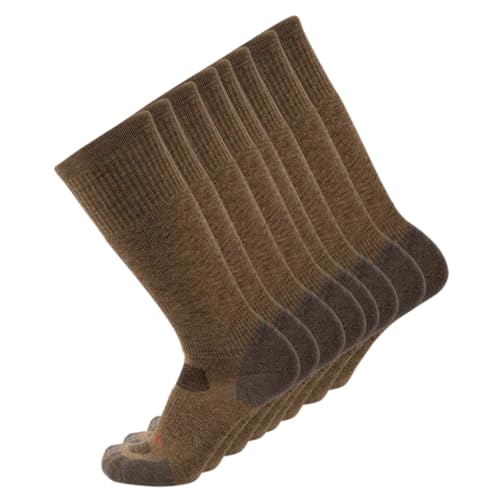
Versatile "Four Season" Design: These thick socks offer a full terry bottom for comfort while eliminating terry in the upper foot and leg, providing a lightweight feel suitable for both shoes and boots. These premium warm socks are warm enough for your winter gear as well as lightweight enough for your summer camping gear

Versatile "Four Season" Design: These thick socks offer a full terry bottom for comfort while still creating a lightweight feel. These premium warm socks are warm enough for your winter gear as well as lightweight enough for your summer camping gear

Premium Ski Socks: 1 Pair of thermal socks with medium padding on the ankles, heels and shins for max warmth and protection while downhill skiing; Ideal for intermediate skiers; For women and teens
Compression Benefits for Long Shifts
Because long shifts often require standing or sitting for extended periods, compression socks offer important benefits by improving blood circulation in the legs. How do compression socks help during long shifts?
- They use graduated compression, applying stronger pressure at the ankle and less toward the calf, which encourages better blood flow.
- This improved circulation reduces leg fatigue and swelling, helping to minimize risk of serious conditions like deep vein thrombosis (DVT).
- Many compression socks also feature moisture-wicking technology, keeping your feet dry and comfortable throughout long hours.
- Additional support and cushioning in key areas provide relief and protect your feet when wearing safety boots.
Wearing compression socks with these qualities supports your legs and feet during extended work periods, promoting comfort and health in demanding environments. Choosing socks that complement the advanced comfort features of safety shoes, such as those with breathable fabrics, can further reduce fatigue during long shifts.
Top Sock Brands for Safety Boot Wearers
When selecting socks for safety boot wearers, it is important to focus on brands that combine durability, moisture control, and comfort features to handle demanding work conditions. Which brands excel in these areas?
- Darn Tough offers moisture-wicking merino wool socks with lifetime durability, perfect for long shifts.
- Fox River produces heavy-duty synthetic socks with reinforced toes and heels for friction resistance.
- Smartwool combines merino wool and synthetics to regulate temperature while managing moisture effectively.
- Carhartt provides budget-friendly socks featuring moisture-wicking technology and cushioned support.
- Thorlos WMX socks add shock absorption and extra padding, enhancing comfort in safety boots.
Choosing from these options guarantees your socks support moisture control, durability, and comfort during extended wear in safety boots. For optimal performance, pairing these socks with boots that have breathable materials can enhance overall foot comfort and dryness throughout long shifts.
Recommended Products

Specially adapted to the female anatomy
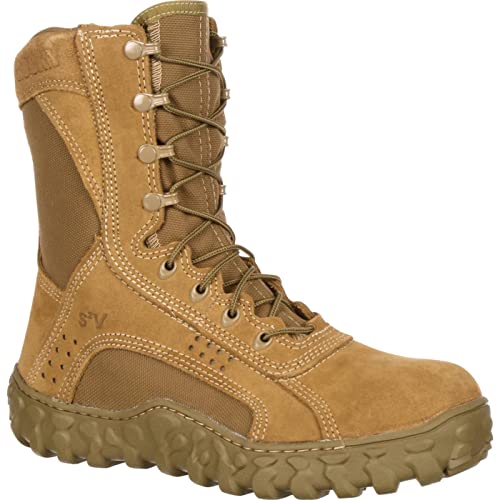
This product is intended for severe wet conditions. Made with PFAS chemicals

Rugged Craftsmanship: Danner Vicious 8 Composite Toe Work Boots are crafted for those who demand durability and real-world performance. Made with full-grain leather, these composite toe boots for men are ideal for demanding environments
Tips for Maintaining Dry and Comfortable Feet
How can workers maintain dry and comfortable feet during long hours in safety boots? Proper sock choice and fit are essential. To keep your feet dry, select moisture wicking socks made from Merino wool or synthetic blends, which absorb sweat and regulate temperature better than cotton. Construction workers should look for targeted cushioning in high-impact areas like the heel and forefoot to reduce fatigue and provide all-day comfort. Properly fitted socks that avoid sagging minimize friction and help reduce the risk of blisters. Additionally, consider socks with compression features to improve blood flow during extended wear. Following these tips guarantees feet stay dry, comfortable, and resistant to common problems associated with long shifts in safety footwear, supporting worker health and performance throughout demanding tasks. Pairing moisture-wicking socks with boots that feature shock-absorbing midsoles can further reduce fatigue and enhance comfort during long shifts.
Choosing the Right Sock Thickness for Your Boots
Choosing the right sock thickness plays an important role in guaranteeing comfort and fit when wearing safety boots for long hours. How does sock thickness affect performance?
- Thin moisture-wicking socks provide a snug fit, ideal for close-fitting safety boots requiring precision.
- Midweight socks balance cushioning and warmth while maintaining fit, making them suitable for most boots.
- Heavyweight socks offer extra warmth and padding but may cause tightness and discomfort in compact boots.
- Merino wool is an excellent material choice across all thicknesses, managing moisture effectively while providing consistent warmth and comfort.
- Always follow manufacturer recommendations regarding sock thickness to optimize comfort and protection during extended wear.
Selecting an appropriate sock thickness tailored to your safety boots guarantees proper fit, adequate cushioning, and moisture control for enhanced comfort throughout long shifts.
Recommended Products

Anti-Fatigue Technology: A comfort system designed with shock-absorbing, geometrical technology that returns energy back to the foot to deliver all-day support and comfort.

WATERPROOF BOOTS with waterproof leather, seam-sealed uppers, and a gusseted tongue to keep water, snow, and mud at bay, while moisture-wicking lining inside pulls sweat away and out

Waterproof leather upper
Frequently Asked Questions
What Socks Are Best for Sweaty Feet Work Boots?
The best socks for sweaty feet in work boots imitate sport socks, balancing breathability factors and sock thickness. They prioritize moisture control, temperature regulation, cushioning options, and sock durability, reducing foot odor while enhancing athletic performance and comfort during extended wear.
What Sock Material Is Best for Moisture-Wicking?
Like Daedalus crafting wings, the best sock material blends synthetic fibers and natural fibers, optimizing moisture management, breathability factors, and heat regulation. This balance guarantees durability comparison favors comfort enhancement through sock thickness and odor resistance.
What Socks Are Best for Safety Boots?
Socks best for safety boots prioritize comfort, cushioning options, arch support, and moisture management to guarantee fit importance across various safety boot styles. Durability factors and thermal regulation enhance wear, while odor control maintains freshness during extended use.
What Socks to Wear Under Long Boots?
When it comes to socks under long boots, the whole nine yards includes selecting ideal sock thickness and length, fiber blends with antimicrobial properties, cushioning levels, breathability factors, ankle support, arch protection, and fit preference for maximum comfort.