As an Amazon Associate, we earn from qualifying purchases. Some links on this site are affiliate links at no extra cost to you. Our recommendations are based on thorough research and editorial judgment.


How to Read Safety Footwear Standards on Work Boot Labels

To read safety footwear standards on work boot labels, look for the ASTM F2413 mark confirming compliance with impact and puncture resistance requirements. Check impact ratings like I/75 for toe protection, and symbols such as a white rectangle with an orange omega for electrical hazard safety up to 600 volts. Identify a green triangle for puncture resistance and letters like C/75 for compression strength. Additional labels indicate static dissipative or chemical resistance features. Understanding these symbols helps you choose footwear suited to specific hazards. Further details explain selecting the best boots for your work environment.
Key Takeaways
- Look for the ASTM F2413 label to confirm the boot meets impact, compression, and puncture resistance safety standards.
- Identify impact resistance ratings like I/30, I/50, or I/75, indicating the foot-pounds of force the toe cap can withstand.
- Check for the electrical hazard symbol (orange omega in a white rectangle) which shows protection against shocks up to 600 volts.
- Recognize the green triangle labeled PR for puncture resistance and ratings such as C/75 for compression resistance against heavy crushing forces.
- Note additional symbols for static dissipative (yellow SD), conductive (red C), and metatarsal protection (M) to match specific workplace hazards.
Importance of Safety Footwear in the Workplace
Although workplace hazards vary, safety footwear plays a critical role in protecting employees from injuries caused by impacts, punctures, and electrical exposure. Why is safety footwear essential?
- Protection: It reduces nearly 25,000 annual foot injuries by providing impact resistance and shielding from electrical hazards.
- Safety features: Includes reinforced toes, puncture-resistant soles, and insulation against electricity.
- Compliance: Adhering to ASTM standards guarantees legal requirements are met, promoting worker safety and reducing liability risks.
- Foot protection benefits: Proper footwear decreases fatigue and improves comfort, which supports productivity and safe navigation in tough environments.
Selecting boots that meet ASTM F2413 safety compliance ensures protection against common workplace hazards, making safety footwear a vital component of employee safety programs.
What should you consider when selecting workplace safety footwear? Focus on matching safety features to your hazard risks and verify compliance with relevant ASTM standards to maintain an effective foot protection program.
Key Safety Footwear Standards and Certifications

Understanding key safety footwear standards and certifications is essential for selecting the right protective shoes for your workplace. What are the main safety footwear standards? ASTM F2413 sets performance requirements for protective footwear, focusing on impact resistance, puncture resistance, and compression protection. Which organizations provide certifications? ANSI, OSHA, and CSA certify footwear to confirm it meets safety and durability benchmarks suitable for different work environments. How do certifications help? They guide you in choosing footwear that adheres to workplace safety rules and offers appropriate protection against hazards. What symbols should you look for? CSA symbols identify footwear features clearly, and ASTM F2892 indicates soft-toe protective footwear. Recognizing these standards and certifications guarantees you pick safety footwear that matches your job’s risks and safety needs. Additionally, considering boots with moisture-wicking linings can enhance comfort during long hours of wear in demanding environments.
Recommended Products

10 inch tall 2.8mm thick full grain leather uppers

10" tall leather uppers made from 2.8 mm full grain leather feature double and triple stitching throughout for added durability

Chainsaw Cut Protection: Get the highest level of safety for your feet with European Class 2 cut protection. Durable European bullhide leather and an extra layer of cut-resistant material provide both long-lasting wear and extra time to react in case of unexpected chainsaw contact.
Understanding Impact Resistance Labels on Work Boots

Safety footwear standards provide a foundation for evaluating protective features, and one of the most important aspects to assess is impact resistance. What does impact resistance mean on a work boot label? It shows the protection level the toe cap offers against heavy objects falling or striking the foot. Ratings such as I/30, I/50, or I/75 indicate the maximum impact force in foot-pounds the toe cap can endure under ASTM F2413 standards. Why is the I/75 rating significant? It signifies that the boot withstands impacts up to 75 foot-pounds, making it suitable for many industrial settings and work environments with higher hazard risk. Understanding these labels is essential to prevent foot injuries and guarantee effective hazard protection through proper safety footwear. Additionally, boots meeting these impact resistance standards often include features like reinforced steel toe caps to ensure maximum protection against heavy impacts.
Recommended Products

FULL-GRAIN LEATHER boots tested nine ways for strength and durability, made in America and triple-stitched for longevity

STEEL TOE boots protect your feet on the job with a steel shank for support and stability
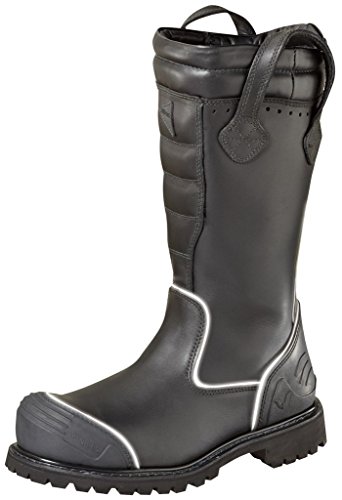
Black Prime Waterproof, Flame, and Cut-Resisting Leather upper
Electrical Hazard Protection and Labeling Explained
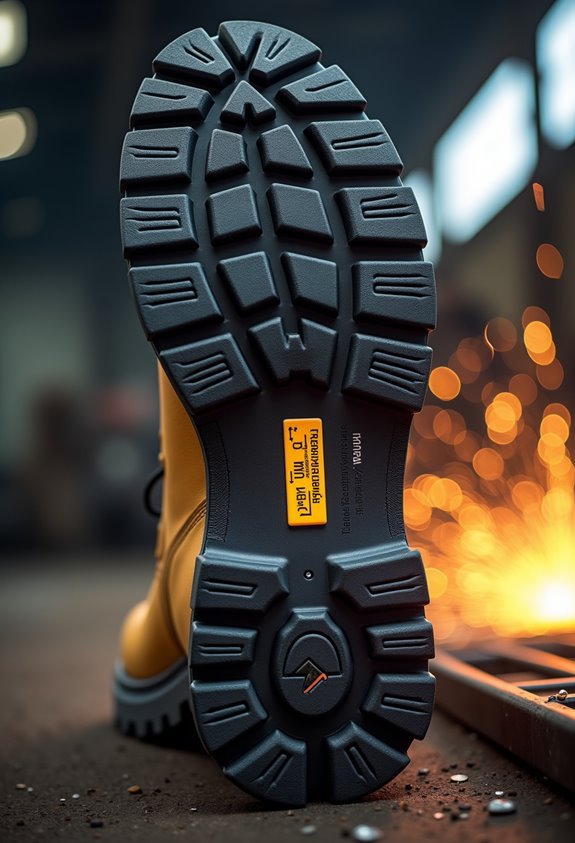
Several types of electrical hazard protection labels can be found on work boots, each indicating specific safety features designed to reduce the risk of electrical shock. What do these protection labels mean? Typically, a white rectangle with an orange omega symbol shows footwear capable of withstanding up to 600 volts under dry conditions. How does ASTM F2413 relate? This standard certifies footwear meets safety standards for electrical hazard and voltage resistance. Why inspect footwear regularly? Wear and tear reduce electrical shock protection, especially if the boots get wet. Is electrical hazard footwear the same as dielectric footwear? No; dielectric footwear protects against direct contact with live electricity, while electrical hazard footwear prevents incidental shocks. How can you guarantee certification? Look for marks from recognized bodies like ASTM or CSA confirming compliance with electrical hazard protection standards. It is also important to regularly replace boots every 6 to 12 months or sooner if damage occurs to maintain protection effectiveness.
Recommended Products

Black Prime Waterproof, Flame, and Cut-Resisting Leather upper
Black Prime Waterproof, Flame, and Cut-Resisting Leather upper
Flexible L-Protection Puncture-Resisting Insole Material Shaft Vapor Exhaust Vents Super Reinforced Leather Pull Straps Flexible Goodyear Storm Welt Construction 3M Scotchlite Reflective Material - High Visibility Piping
Identifying Puncture Resistance Symbols
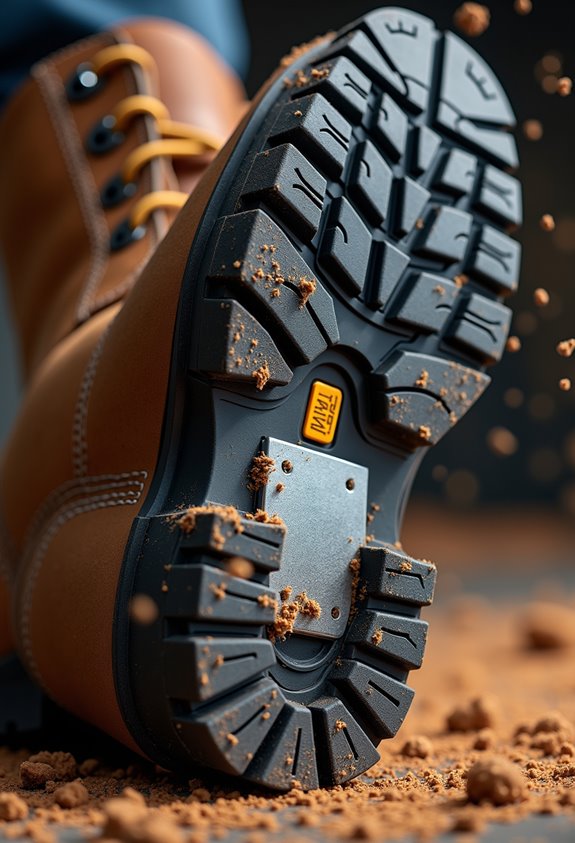
When selecting footwear for environments with sharp objects, it is important to recognize puncture resistance symbols that indicate vital protection features. What label identifies puncture resistance? Safety footwear with the ASTM F2413 PR label meets minimum puncture resistance standards of 270 pounds, shielding against sharp objects. How do you find this symbol on a boot? Look for a green triangle on a white circle, signaling puncture resistance combined with a Grade 1 toe cap, common in construction and industrial settings. What adds to durability? Non-removable metal plates inside the sole prevent accidental punctures and maintain durability by withstanding 1.5 million flexes without cracking. Why does this matter in the workplace? Proper puncture resistance reduces foot injuries by addressing hazards, making it essential that you understand and identify these symbols when choosing safety footwear. Additionally, many steelworker boots feature puncture-resistant soles that provide added foot safety in hazardous areas, enhancing overall protection on the job site.
Recommended Products
10" tall leather uppers made from 2.8 mm full grain leather feature double and triple stitching throughout for added durability
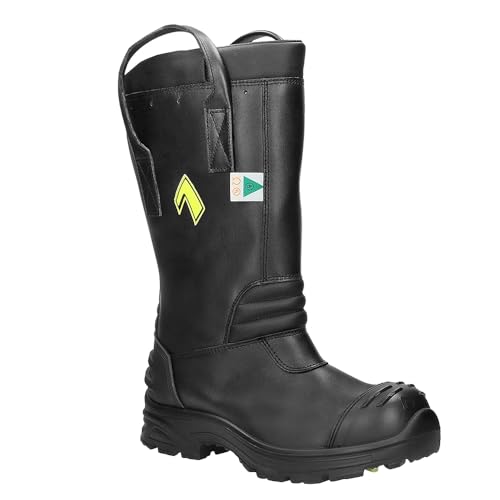
Certified to NFPA 1971, NFPA 1990 (1992), ASTM F2413 & CAN/CSA-Z195

Certified to NFPA 1999, NFPA 1951, NFPA 1977, NFPA 1990 (1992), ASTM F2413 & CAN/CSA-Z195
Compression Resistance Ratings on Safety Boots
Compression resistance ratings on safety boots measure the maximum weight the footwear can endure without being crushed, helping workers select appropriate protection for heavy-duty environments. What do these ratings signify? Compression resistance indicates how well work boots protect against heavy objects, reducing foot injury risk on the job site. According to ASTM F2413 standards, ratings like C/75 show the boots can withstand forces up to 2,500 pounds. How is compression resistance tested? Testing methods apply a load on the toe area, verifying it meets ASTM limits without damage. What should you look for on safety labels? Identify compression resistance ratings to guarantee the footwear matches your job’s hazards. Selecting safety footwear with proper compression resistance guarantees effective protection in environments with heavy equipment or falling materials. Additionally, boots meeting the ASTM F2413-18 certification also ensure other critical protections like impact resistance and puncture protection to enhance overall foot safety.
Recommended Products

8" tall, 2.8mm thick full grain rough-out leather uppers in Coyote Brown (color)

INTERNAL MET GUARD for superior protection against impact, featuring abrasion-resisting properties
INTERNAL MET GUARD for superior protection against impact, featuring abrasion-resisting properties
The Role of Metatarsal Protection in Safety Footwear
Metatarsal protection in safety footwear plays an essential role in preventing injuries to the upper foot area, specifically the metatarsal bones, which are vulnerable to impacts and compressions. What is metatarsal protection? It consists of protective elements that shield the upper foot from heavy objects and workplace hazards. How is it identified? Look for a dark grey rectangle with an ‘M’ mark on the boot label. Why is ASTM F2413 important? Compliance with this standard guarantees the footwear meets performance requirements for impact and compression resistance. Who benefits most? Workers in construction, manufacturing, and warehousing face higher risk of foot injuries. How does it help employers? Providing safety footwear with metatarsal protection supports OHS compliance and reduces injury risks related to heavy objects, enhancing overall workplace safety. Additionally, choosing footwear with durable materials ensures longevity and consistent protection against workplace hazards.
Static Dissipative and Conductive Footwear Markings
Static dissipative and conductive footwear serve critical functions in environments where static electricity poses a risk to safety and equipment. What markings identify these types of protective footwear? Static dissipative footwear features a yellow rectangle with “SD,” showing it meets ASTM F2413 standards and controls static electricity safely. Conductive footwear displays a red rectangle with a white “C,” designed to discharge static electricity but should not be used near live electrical circuits. What resistance levels apply? Static dissipative footwear must maintain resistance between 10^6 and 3.5 x 10^7 Ohms to manage electrical shock resistance and prevent static buildup. How do you select proper footwear? Consider workplace safety needs carefully to avoid electrical hazards or damage to sensitive components. Understanding these markings guarantees effective protection against static electricity risks. For environments requiring electrical hazard protection, always select boots that meet ANSI standards and are tested for dielectric strength to ensure optimal safety.
Chemical Resistance and Dielectric Insulation Features
Chemical resistance and dielectric insulation are essential features for safety footwear used in hazardous environments like chemical plants or electrical work sites. What does chemical resistance mean? It protects against corrosive substances, using materials such as PVC, rubber, or neoprene, guaranteeing safety footwear withstands harmful chemicals. How does dielectric insulation help? These boots follow ASTM standards to resist high voltage, often up to 600 volts, reducing risks from electrical hazards. How can you identify these features? Look for specific symbols on labels showing protective capabilities for your work environment. Why is inspection important? Dielectric boots require regular inspection because moisture or wear can lessen their effectiveness. Understanding these safety footwear features guarantees compliance and proper protection in hazardous environments, helping workers stay safe and meet necessary regulations. Additionally, maintaining boots by checking for pitting and cracks and performing periodic electrical resistance tests is crucial to ensure ongoing dielectric protection.
Tips for Selecting Safety Footwear Based on Label Information
How can workers guarantee their safety footwear meets the necessary protection standards? First, check for the ASTM F2413 label, which confirms compliance with safety footwear regulations, including protective toe caps. Next, review symbols for essential features such as electrical hazard (EH) protection, puncture resistance (PR), and slip resistance. Consider the compression rating (e.g., C/75), indicating the boot can resist crushing forces up to 2,500 pounds. If your work involves heavy objects, look for metatarsal protection (M) on the label. Selection tips include matching footwear features to your job’s specific hazards, ensuring your personal protective equipment (PPE) provides adequate defense. By reading labels carefully and understanding these indicators, you can choose safety footwear that meets both regulatory requirements and practical safety needs effectively. Additionally, prioritizing shoes with anti-fatigue technology can significantly enhance comfort during long work hours.
Frequently Asked Questions
What Is the OSHA Standard for Safety Boots?
The OSHA regulations for safety footwear mandate compliance with protective gear standards, requiring hazard assessments and worksite inspections. Employers guarantee footwear compliance through employee training, selecting appropriate work boot types and durable boot materials aligned with safety standards.
What Is the Difference Between ASTM F2413 and F2412?
ASTM F2412 overview details testing methods for safety footwear, focusing on impact resistance and puncture safety, while ASTM F2413 specifies compliance requirements, addressing electrical hazards and workplace protection. This standard comparison highlights distinct ASTM specifications.
How to Tell if Boots Are OSHA Approved?
Contrasting ordinary shoes, OSHA-approved boots require an OSHA compliance checklist, identifying boot ratings with steel toe importance, slip resistance testing, and safety footwear features. Foot injury prevention, understanding electrical hazards, common boot materials, choosing the right fit, and maintenance finalize selection.
What Markings Are on ASTM F2413 Footwear?
ASTM F2413 footwear markings include safety toe impact/compression ratings, puncture protection (PR), electrical hazard (EH), slip resistance, chemical resistance, steel shank, waterproof feature, comfort rating, boot height, and compliance with specific industry requirements.