As an Amazon Associate, we earn from qualifying purchases. Some links on this site are affiliate links at no extra cost to you. Our recommendations are based on thorough research and editorial judgment.

Differences in Footwear Requirements Between US and EU Safety Standards

US safety footwear standards follow ASTM F2413, requiring minimum 75-foot-pound impact resistance and self-reported testing, focusing on impact, compression, and electrical hazard ratings. In contrast, EU standards under EN ISO 20345 mandate 200-joule impact resistance, 15 kN compression, third-party certification, and stricter chemical and material controls like REACH compliance. EU also classifies footwear by protection levels and slip resistance categories, unlike the US system. Understanding these differences helps guarantee correct compliance and safety measures in each market.
Key Takeaways
- US standards (ASTM F2413) require 75 foot-pounds impact resistance, while EU standards (EN ISO 20345) mandate 200 joules for safety footwear.
- EU footwear undergoes mandatory third-party certification, whereas US compliance is typically self-reported by manufacturers.
- EU regulations demand material labeling and restrict hazardous chemicals under REACH, unlike the US which focuses on performance without specific chemical limits.
- Electrical hazard resistance is defined by ASTM with a minimum of 18,000 ohms in the US; the EU emphasizes overall protection without precise resistance values.
- Slip resistance tests differ: the US uses ASTM varied surface tests; the EU applies SRA, SRB, and SRC classifications for comprehensive slip protection.
Overview of US Safety Footwear Standards
When examining safety footwear standards in the United States, one primary reference is the ASTM F2413 standard, which outlines specific testing requirements to guarantee adequate protection. What does ASTM F2413 cover? It sets impact resistance and compression testing to ascertain footwear can withstand workplace hazards. How does compliance appear? Manufacturers label shoes with these test results, along with gender suitability (M/F) and symbols like Electrical Hazard protection. Why is compliance important? OSHA references ASTM for workplace safety regulations, meaning footwear must meet these criteria to qualify as safe. What features enhance protection? Alongside impact resistance, some footwear offers Electrical Hazard resistance, which guards against electric shocks. To conclude, ASTM defines safety standards that consumers and employers rely on to select footwear that provides proven protection in hazardous work environments. Additionally, meeting the ASTM F2413 standard often requires insulated soles and non-conductive materials to ensure electrical hazard safety.
Overview of EU Safety Footwear Standards
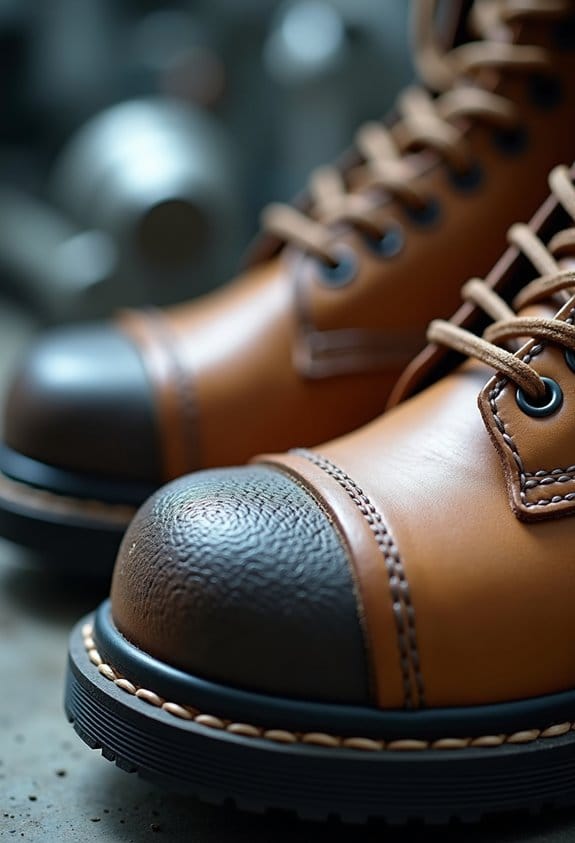
In Europe, safety footwear standards are defined by the EN ISO 20345 regulation, which requires a minimum 200-joule impact-resistant toe cap on all certified shoes. What protective features does EN ISO 20345 cover? It includes slip resistance and water resistance, essential for various occupational environments. How are footwear types classified? The system uses categories like S1, S2, and S3 to mark different levels of protection. Specifically:
- S1: Basic safety footwear with closed heel, antistatic properties, and energy absorption in the heel.
- S2: Includes all S1 features plus water resistance.
- S3: Adds puncture-resistant midsoles and cleated outsole to S2 features.
When selecting safety footwear, understanding these classifications helps guarantee compliance and appropriate protection for your workplace hazards. Additionally, composite or steel toe protection is often incorporated to meet these standards, providing essential impact resistance and safety for various industrial tasks.
Key Testing Criteria in ASTM F2413

ASTM F2413 outlines essential testing requirements that verify the safety performance of footwear used in American workplaces. What are the core testing standards you should know? First, safety toe caps must pass impact resistance tests, absorbing between 75 and 100 Joules depending on classification levels (I or II). Second, compression resistance guarantees footwear can handle heavy loads without injury to the foot. What additional protections does ASTM F2413 cover? It includes codes for hazards like electrical shock and puncture resistance, designed to suit different work environments. How does ASTM F2413 relate to OSHA regulations? It sets mandatory safety benchmarks, requiring manufacturers to test and label safety footwear accurately, verifying compliance. Following these testing standards helps protect workers with reliable, certified footwear tailored to their specific industrial needs. Additionally, boots complying with ASTM F2413-18 often feature padded midsoles that improve shock absorption and reduce fatigue on long shifts.
Recommended Products
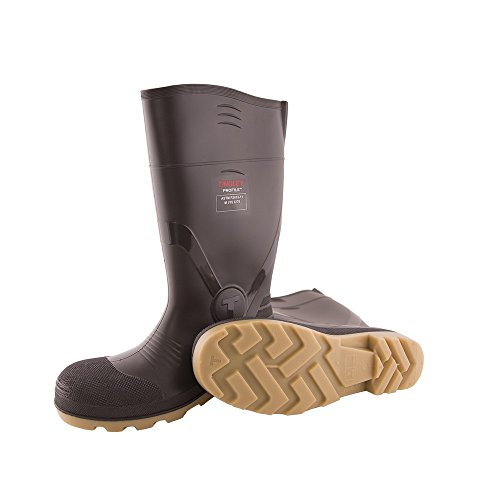
Waterproof: yes

NFPA 1951, NFPA 1971, NFPA 1977, NFPA 1990(1992), ASTM F2413 & CAN/CSA-Z195 certified

10 inch tall 2.8mm thick full grain leather uppers
Core Requirements of EN ISO 20345

While American safety footwear standards emphasize impact resistance of 75 to 100 joules, European regulations require considerably higher protection levels. EN ISO 20345 mandates safety footwear to have a protective toe cap that withstands at least 200 joules impact and 15 kN compression for hazardous environments. What are the main categories? SB offers basic protection, while S1P and S3 include additional protection features like anti-puncture soles and water penetration resistance. How is slip resistance guaranteed? Footwear must pass slip-resistance testing classified as SRA, SRB, or SRC, measuring grip on soapy and oily surfaces. Why is compliance important? Only footwear meeting EN ISO 20345 standards can be sold in the European Union, guaranteeing reliable safety performance and protection in workplace hazards. Additionally, slip-resistant outsoles and molded footbeds contribute to both safety and comfort in stock room shoes.
Recommended Products

Technical safety boots made in Italy by Andrew srl in Montebelluna. Specifically designed for arborists, these boots are slim and incredibly lightweight at 2.4 lb (size 9.5).


Comfortable and high-quality work shoes for men, certified according to EN ISO 20345, according to DGUV112-191 approved for orth. Templates (templates) - Item number: 729201
Differences in Impact and Compression Testing

Because safety footwear protects workers from serious injuries, standards for impact and compression resistance differ markedly between the US and EU. What are the key differences? The ASTM F2413 standard in the US requires safety footwear to withstand 75 foot-pounds (about 101.5 joules) impact resistance and 2,500 pounds (11.1 kN) compression resistance. In contrast, EN ISO 20345 in the EU sets higher thresholds of 200 joules impact and 15 kN compression resistance. How is testing conducted? ASTM’s testing methodology follows specific conditions, with manufacturers self-reporting compliance, while EN ISO 20345 needs third-party certification by a Notified Body. Additionally, EN ISO testing includes varied environmental conditions, reflecting more thorough safety priorities for hazardous work environments. Many of these standards are met by footwear incorporating premium leather and specialized protective features for heat and impact resistance.
Recommended Products

Two large front inlet ports and a ventilated shinplate deliver continuous airflow for optimal cooling and heat exchange.
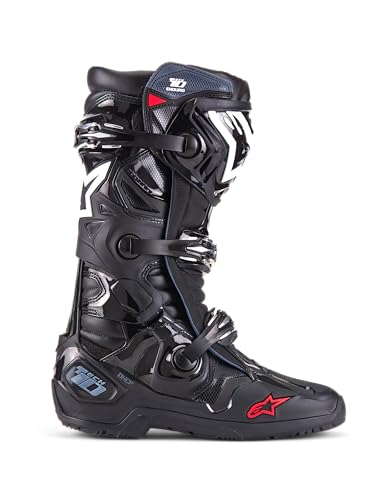
Enduro spec dual compound sole integrated with a multi-density foot base delivers exceptional grip, durability and precise shift control.

Advanced microfiber and TPU construction ensures superior durability and abrasion resistance.
Understanding ASTM Safety Footwear Labeling
Safety footwear labeling plays a key role in communicating the protective features and compliance of the shoes you use in the workplace. What does ASTM F2413 labeling tell you? It shows impact resistance (I) and compression resistance (C) levels, demonstrating the shoe’s ability to protect against heavy objects and pressure. Are there additional safety features? Labels may include Electrical Hazard (EH) for shock protection and Puncture Resistance (PR) for sharp object defense. How does this relate to OSHA compliance? ASTM F2413 is the core U.S. standard referenced by OSHA, ensuring footwear meets essential safety requirements. Does ASTM offer classifications like Europe? No, it focuses on specific protective features rather than broad classifications. What about sizing? Labels also indicate whether the footwear is for men (M) or women (F), helping you find the correct sizing and fit. It is important to confirm certification marks on the labels to ensure the footwear meets these international safety standards.
Decoding EN ISO 20345 Classification Codes
The EN ISO 20345 classification system defines safety footwear categories using letter and number codes that specify required protective features. What do these codes mean? For basic protection, “SB” includes a safety toe cap and slip-resistant soles. What additional requirements exist? “S1” adds closed back, anti-static properties, and hydrocarbon resistance, while “S1P” combines these with puncture-resistant soles. How do other codes reflect protection from various hazards? “S2” footwear features water-repellent uppers without puncture resistance, and “S3” adds puncture-resistant soles to S2’s attributes. Finally, “S4” and “S5” denote waterproof and slip-resistant qualities, enhancing protective footwear for demanding environments. Understanding these classifications helps you select EN ISO 20345 safety footwear that meets precise requirements for safety and workplace hazards. It is also crucial to consider waterproof material quality and breathability to ensure comfort and long-lasting protection in challenging conditions.
Certification Processes in the US vs. EU
Although both the US and EU have established safety requirements for protective footwear, their certification processes differ considerably in structure and enforcement.
– How do certification processes compare?
The US follows ASTM F2413 standards, relying on manufacturer compliance without official certification, focusing mainly on impact resistance and performance.
– What about the EU process?
EU safety footwear requires EN ISO certifications, specifically EN ISO 20345, with mandatory third-party evaluations by Notified Bodies for stronger compliance assurance.
– Why is this important?
The EU’s Personal Protective Equipment Regulation enforces design, manufacturing, and marketing standards, guaranteeing protective features like electrostatic discharge and chemical resistance.
– How does compliance get enforced?
The US depends on OSHA references and periodic audits, while the EU mandates legal certification before sale.
Understanding these differences helps you guarantee safety footwear meets relevant standards where you operate.
Material Regulations Affecting Safety Footwear
Material regulations play a significant role in determining the quality and safety of protective footwear across regions. What are the key differences between the EU and U.S.?
- The EU enforces strict labeling requirements under Directive 94/11/EC, requiring materials covering at least 80% of a shoe’s surface or sole to be labeled.
- The REACH regulation limits hazardous chemicals in safety footwear and demands notification for substances over 0.1% by weight.
- U.S. regulations emphasize compliance with ASTM performance criteria rather than specific material labeling or chemical limits.
- EU compliance also includes testing for heavy metals in packaging, impacting overall safety standards.
- In contrast, U.S. standards focus mainly on how materials perform in testing, without detailed chemical restrictions.
Additionally, safety footwear designed under different regional standards often features variations in material durability to meet specific performance and protection criteria.
Electrical Hazard and Slip Resistance Standards
When selecting safety footwear for electrical hazard protection and slip resistance, understanding regional standards is essential for ensuring appropriate performance. What are the key differences in electrical hazard requirements? In the US, ASTM standards require EH ratings with a minimum resistance of 18,000 ohms to protect against electrical hazards. The EU’s EN ISO 20345 also covers electrical hazards but focuses on overall performance without a specific resistance value. How is slip resistance evaluated? The US uses ASTM standards testing various surfaces, while the EU employs SRA, SRB, and SRC ratings to reflect slip resistance on soapy, oily, and mixed surfaces. SRC represents combined SRA and SRB testing, offering thorough slip resistance. Knowing these distinctions helps you select safety footwear suited to your work environment’s demands. Additionally, the integration of ESD protection features in anti-static work shoes enhances electrical safety by controlling static discharge effectively.
Recommended Products

NFPA 1971, NFPA 1990(1992), ASTM F2413 & CAN/CSA-Z195 certified

10" tall leather uppers made from 2.8 mm full grain leather feature double and triple stitching throughout for added durability

Chainsaw Cut Protection: Get the highest level of safety for your feet with European Class 2 cut protection. Durable European bullhide leather and an extra layer of cut-resistant material provide both long-lasting wear and extra time to react in case of unexpected chainsaw contact.
Customization and Bulk Order Compliance Challenges
Several challenges arise when managing customization and bulk order compliance for safety footwear across US and EU markets. How do you guarantee shoes meet both ASTM and EN ISO standards? Customization must align with core safety features like waterproofing and electrical hazard protection, while complying with regional certification requirements. What issues occur with bulk orders? Differences in labeling pose challenges: the EU mandates detailed material disclosures, whereas the US focuses on performance compliance. How is certification handled? Third-party assessments vary, requiring knowledge of local occupational safety regulations. To navigate these challenges, consider:
- Verifying that all custom features meet ASTM, OSHA, or EN standards
- Guaranteeing labeling satisfies regional requirements
- Coordinating third-party inspections for certification
- Balancing customer customization demands with mandatory safety features.
Additionally, understanding the impact of temperature changes on outsole performance is crucial to ensure durability across different work environments.
Recommended Products

NFPA 1971, NFPA 1990(1992), ASTM F2413 & CAN/CSA-Z195 certified
NFPA 1971, NFPA 1990(1992), ASTM F2413 & CAN/CSA-Z195 certified

Anti-Fatigue Technology: A comfort system designed with shock-absorbing, geometrical technology that returns energy back to the foot to deliver all-day support and comfort.
Regional Market Access and Regulatory Considerations
Managing customization and bulk order compliance sets the stage for understanding regional market access and regulatory considerations in safety footwear. How do EU regulations differ from U.S. rules? In the EU, safety footwear must be EN ISO 20345 certified, meeting strict requirements for occupational safety, including a 200-joule impact-resistant toe cap. This certification supports the classification of safety footwear by protection level (e.g., SB, S1, S3). You should also note that the EU enforces Personal protective equipment (PPE) Regulation 2016/425, requiring EU Type Examination by a Notified Body. What about chemical safety? The EU’s REACH rules restrict hazardous substances in safety work boots, needing third-party testing, unlike U.S. standards, which focus mainly on ASTM testing for impact and compression, without extensive chemical safety controls.
Frequently Asked Questions
What Is the EU Standard for Safety Shoes?
When it comes to the EU standard for safety shoes, EN ISO 20345 sets the bar high, mandating safety toe requirements, EU shoe classifications, slip resistance standards, puncture protection features, impact absorption criteria, water resistance ratings, breathable materials usage, strict certification process details, and manufacturer compliance guidelines.
What Is the EU Footwear Directive?
The EU Footwear Directive is an EU legal framework ensuring footwear safety and worker protection through compliance requirements, hazard assessment, rigorous testing methods, and a certification process. It influences market implications and fosters safety innovations in protective footwear.
What Is the Difference Between ISO 20345 and 20347?
Like a knight’s armor, ISO 20345 mandates impact resistance and slip resistance through rigorous testing methods, while ISO 20347 emphasizes wearability factors and softer footwear materials, reflecting diverse safety features in the certification process within global standards.
What Is the Difference Between S2 and S3 Safety Shoes?
S2 shoes provide water protection and a 200-joule impact-resistant toe cap, lacking puncture resistance. S3 shoes add sole resistance against punctures. Comfort features align with industry requirements and safety standards, distinguishing their protective capabilities.