As an Amazon Associate, we earn from qualifying purchases. Some links on this site are affiliate links at no extra cost to you. Our recommendations are based on thorough research and editorial judgment.


How Often Should Construction Workers Replace Their Work Boots?

Construction workers should replace their work boots every six to twelve months, depending on damage and wear. Signs include torn outsoles, separated uppers, compressed midsoles, and worn traction that reduce safety. Discomfort, foot pain, or loss of support also indicate replacement time. Harsh work environments and exposure to chemicals accelerate wear, shortening boot life. Regular inspection and proper care can extend durability. Understanding these factors helps maintain safety and comfort on the job, with more detailed guidance available.
Key Takeaways
- Construction work boots generally last around six months under regular use before needing replacement.
- Intense work environments can reduce boot lifespan to 3–4 months due to accelerated wear.
- High-quality boots made of durable materials may last up to 12 months with proper care.
- Boots should be replaced immediately if there is visible damage like sole separation, compression, or worn traction.
- Regular inspections and maintenance help determine replacement timing to maintain safety and comfort.
Signs of Physical Damage to Watch For
When evaluating work boots for replacement, it is important to recognize clear signs of physical damage that can affect their safety and performance. What are the key signs of damage to watch for? First, inspect the outsole for tearing or chipping, as these issues may cause insulation loss or hazardous holes. Next, check for separation of the uppers from the soles, a critical indication to replace work boots immediately. How does wear affect support? Look at the midsole; compression or wrinkles signal reduced cushioning. Additionally, examine traction patterns on the outsole—worn areas increase slipping risk. Finally, note any structural changes, like reduced height, often caused by midsole damage. Understanding these signs of wear and tear helps maintain safety and decide when to replace work boots. It is also vital to ensure boots maintain their slip resistance to prevent falls and injuries during demanding work conditions.
How Protective Gear Integrity Affects Safety

The integrity of protective gear, including steel toe caps and metatarsal guards, plays an essential role in guaranteeing foot safety on construction sites. Why is this important? Because any visible dents, cracks, or wear reduce impact resistance and increase injury risk. How can you maintain safety?
- Regularly inspect your protective gear for damage before work.
- Follow personal protective equipment standards to guarantee compliance.
- Replace your work boots immediately if any protective components show signs of compromise.
- Remember, a single impact can damage internal protective elements, even if not visible.
- Employers must provide boots that meet safety criteria, but you should monitor their integrity daily.
Maintaining protective gear integrity is vital for reliable foot protection and effective injury prevention in work environments. Additionally, choosing boots with Goodyear welt construction can enhance durability and allow for resoling, extending the life of your protective footwear.
Recognizing Comfort and Support Issues
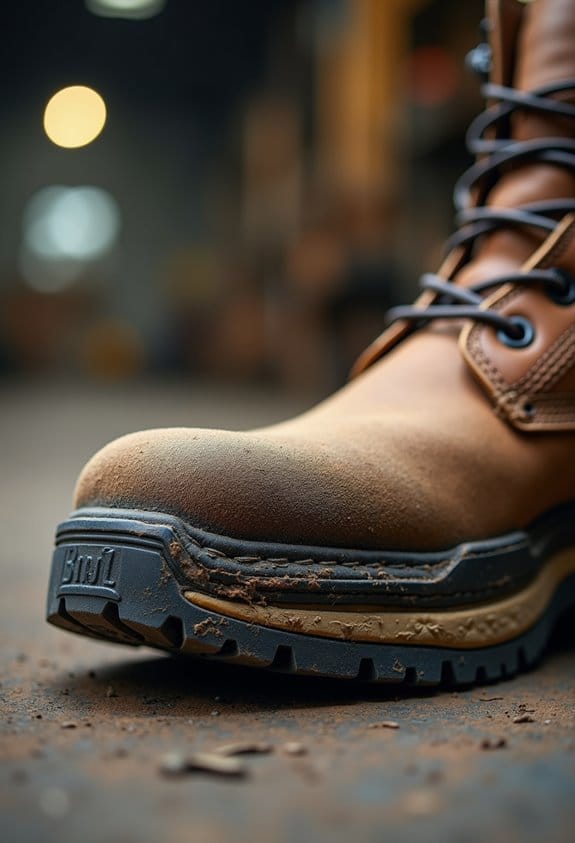
Several signs can indicate that work boots no longer provide adequate comfort or support, signaling it may be time for replacement. How can you recognize these signs? Check for pain developing in your feet, legs, or back, which often points to a loss of structural integrity. Look for boots that tilt on flat surfaces or have wrinkled upper shafts, as these show wear that compromises support. Inspect the insole for flattening or damage, since a worn insole can cause arch pain. Increased flexibility in the toe section also signals deteriorating support. Finally, assess the midsole cushioning—excessive wear reduces comfort and may shorten how long your boots will last. Regularly evaluating these features helps determine the appropriate timing for boot replacement to maintain peak comfort and support. Additionally, paying attention to the memory foam insoles can be crucial, as they provide superior cushioning and indicate when the boots may no longer offer adequate shock absorption.
Average Lifespan of Construction Work Boots
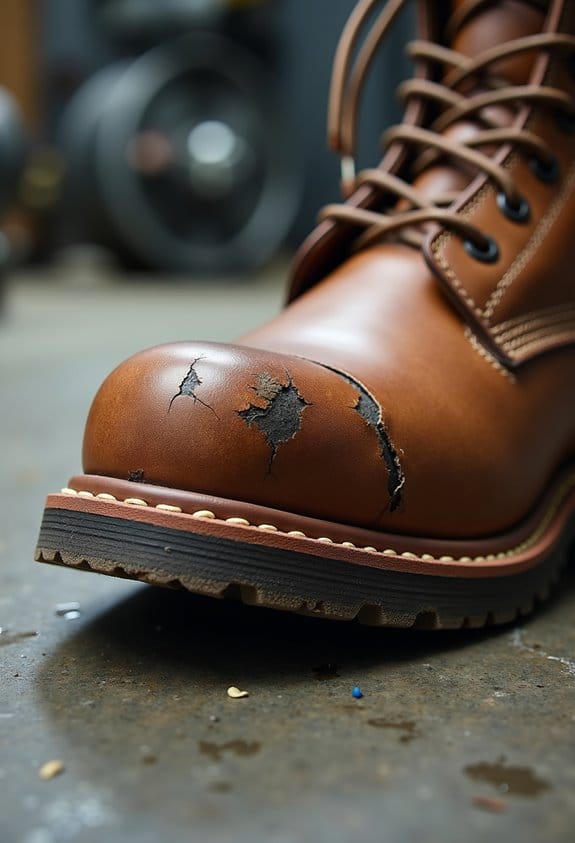
Many construction work boots last around six months, given the tough conditions and regular use involved on job sites. What influences the average lifespan of construction work boots?
- Work environment intensity affects durability; heavy-duty environments often reduce boot life to 3–4 months.
- High-quality work boots, made from durable materials like leather, can reach up to 12 months with proper care.
- Regular maintenance, including cleaning and inspecting for damage, extends safety footwear longevity.
- Proper care involves drying boots after exposure to moisture and storing them correctly to prevent early wear.
If you want to maximize your boots’ service life, focus on selecting quality footwear and practicing consistent upkeep. Understanding these factors helps you anticipate when replacements are necessary, ensuring ongoing foot protection and comfort. Additionally, prioritizing boots with durable materials and proper waterproofing can significantly enhance their lifespan.
Impact of Work Environment on Boot Durability

Although work boots are designed to handle tough conditions, the environment in which they are used plays a major role in how quickly they wear out. For construction workers, heavy-duty environments with abrasive surfaces, concrete, oils, and chemicals cause faster deterioration. These harsh working conditions reduce the lifespan of work boots, requiring replacements every 3 to 6 months or after 300 to 500 miles of use. The protective features of boots, such as waterproofing and reinforced toes, can degrade more quickly when exposed to mud, water, and heavy machinery impacts. To understand how often work boots last, consider daily exposure types and intensity. If your work boots show signs of worn soles, compromised structural integrity, or reduced waterproofing, it’s time to replace them to maintain safety and comfort. Additionally, selecting boots with proven durability technologies can extend their effective lifespan in demanding job sites.
Importance of Regular Maintenance and Care
Since work boots face constant wear from tough conditions, regular maintenance and care are essential for extending their lifespan and preserving safety features. What steps help improve boot maintenance?
- Clean and dry boots after each use to prevent material breakdown.
- Condition leather boots every few weeks to avoid cracks and maintain protective qualities.
- Rotate between multiple pairs to allow thorough drying and reduce wear.
- Conduct regular inspections checking for worn outsoles or damaged insoles that compromise safety.
- Store boots properly in a dry, cool area away from sunlight to protect their structure.
How does this impact the need for new boots? Proper care delays replacement by preserving materials and safety components, helping you get the most value and protection from your work footwear over time. Using boots with durable materials and slip-resistant soles also helps maintain safety and performance throughout their use.
When Pain Signals It’s Time to Replace Boots
When foot pain persists after work shifts, it often indicates that the boots no longer offer sufficient support or cushioning, signaling the need for replacement. How do you know when to replace boots? Consider these signs:
- Pain or discomfort in the arches or heels, which may indicate worn-out insoles or midsoles.
- Increased foot fatigue, suggesting the boots have lost structural integrity.
- Boots tilting on flat surfaces or excessive flexibility in the toe area, showing diminished support.
- Development of blisters or pressure points, indicating poor fit or reduced protection.
These issues reduce comfort and can lead to further foot problems, so it is important to replace boots when pain or fatigue signals arise, ensuring continued foot health and workplace safety. For optimal comfort and to maintain proper support, it is also important to regularly assess and replace your cushioned work insoles every 6 to 12 months.
Tips to Prolong the Life of Your Work Boots
Foot pain and discomfort often indicate the need to replace work boots, but preventing these issues can start with proper care and maintenance. How can you extend the life of your boots? First, regular cleaning after each use removes dirt and debris that degrade materials. Next, allow adequate drying time by letting boots dry naturally overnight; avoid heat sources that cause cracking. You can also rotate between multiple pairs to reduce wear on any single pair, giving each time to dry and recover. Conditioning leather boots every few weeks prevents cracks and preserves flexibility, which can be tested by gently bending the boot. Additionally, paying attention to the material durability of your boots can significantly impact their longevity. These steps collectively help extend the lifespan of safety boots, keeping them supportive and durable for longer periods on the job.
Legal Considerations for Employer-Provided Safety Footwear
Although many workers focus on comfort and durability, understanding legal requirements is crucial when employers provide safety footwear. What are the key legal considerations?
- Employers must provide personal protective equipment, including safety boots, at no cost to workers.
- Safety boots must be CE or UKCA marked to meet legal safety standards.
- Employers must guarantee that safety footwear is suitable for the specific health and safety risks in the workplace.
- Maintenance is the responsibility of employers, who must keep boots protective throughout their use.
- Workers should report lost or damaged safety footwear promptly to allow timely replacement.
- Ensuring that boots have adequate insulation ratings is important to maintain protection and comfort in extreme working conditions.
Frequently Asked Questions
How Long Should Construction Boots Last?
The work boot lifespan typically ranges from six months to over a year, depending on factors affecting durability, signs of wear, safety features importance, material comparison, suitable brands, and balancing cost versus quality for ideal performance.
What Does OSHA Say About Work Boots?
OSHA regulations require work boots to meet safety standards, ensuring protective features like slip resistance and durability against workplace hazards. Regular boot inspections focus on fit, comfort, and integrity to maintain compliance and worker safety.
How Often Do You Replace Boots?
Despite durability factors and boot materials, construction workers should replace boots every 3 to 6 months to balance foot health, budget considerations, and seasonal changes while adhering to safety standards; brand recommendations also influence longevity considerably.
When to Throw Away Work Boots?
Work boots should be discarded when wear and tear cause visible signs of damage, compromised sole integrity, reduced comfort level, or failure to meet safety standards amid harsh workplace conditions. Regular maintenance tips help identify replacements timely.