As an Amazon Associate, we earn from qualifying purchases. Some links on this site are affiliate links at no extra cost to you. Our recommendations are based on thorough research and editorial judgment.

How Jobsite Terrain (Mud, Concrete, Gravel) Shapes Footwear Needs

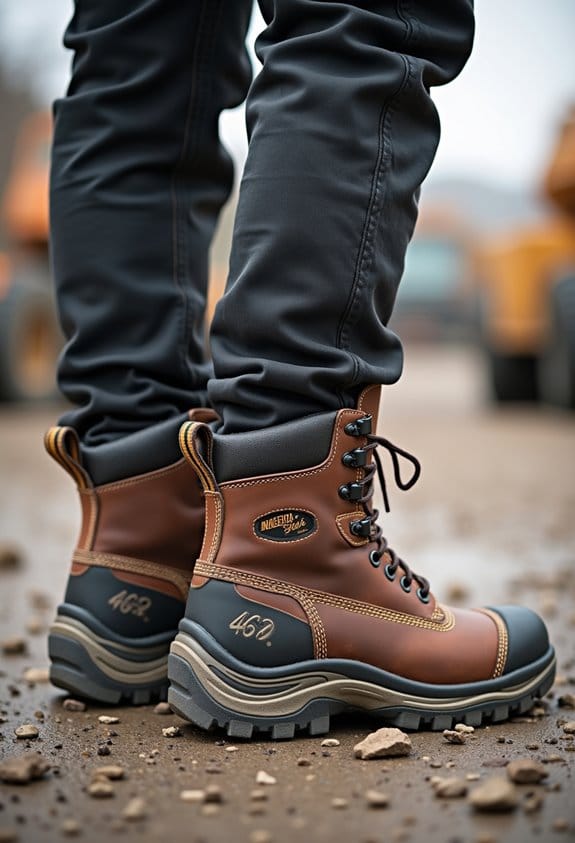
Jobsite terrain like mud, concrete, and gravel greatly shapes your footwear needs. For muddy areas, choose waterproof boots with deep lugs and slip-resistant soles to maintain grip and keep feet dry. Gravel surfaces require boots with heeled outsoles, strong ankle support, and spaced traction lugs to prevent twisting. On concrete, opt for durable, slip-resistant boots with composite toes and cushioned support. Proper boot height adds stability, while insulation and maintenance guarantee comfort and durability. Explore specific features to match your work environment effectively.
Key Takeaways
- Muddy terrains require slip-resistant outsoles with deep lugs and waterproof materials to prevent slipping and water ingress.
- Footwear for gravel surfaces features deep traction lugs, heeled outsoles, and ankle support to enhance stability on loose ground.
- Concrete worksites demand slip-resistant soles, composite toe protection, and heat-resistant outsoles for safety and comfort.
- Taller boots with higher shafts offer better ankle support and block mud and water, especially in rugged and wet environments.
- Proper traction patterns and tailored features like toe caps and arch support improve safety and comfort based on terrain challenges.
Slip-Resistant Boots for Muddy Terrains
How do slip-resistant boots improve safety on muddy job sites? Slip-resistant outsoles are essential for maintaining traction on uneven terrain, especially where mud creates slippery conditions. Boots with deep lugs are designed to dig into the soft ground, providing grip that reduces the chance of slips and falls. Waterproof work boots also play a key role by preventing water and mud from entering the footwear, keeping feet dry and comfortable during prolonged exposure. Key features to look for include:
- Wedge-shaped slip-resistant outsoles with low lugs that channel water away
- Deep, spaced lugs that enhance stability by gripping slippery surfaces
- Durable waterproof materials to resist saturation in wet conditions
Ensuring that boots also have cushioned arch support can significantly improve comfort during long shifts in challenging environments.
Understanding these features helps you select appropriate boots that increase safety and productivity on muddy job sites.
Recommended Products

Material: High-quality durable polypropylene fibres, PE material on the surface, environmentally friendly, plastic on the back, with drainage holes, water resistant with great drainage, no need to worry about stagnant water

Face NUBS are reinforced with rubber to resist crushing, maintaining high performance and extending product life
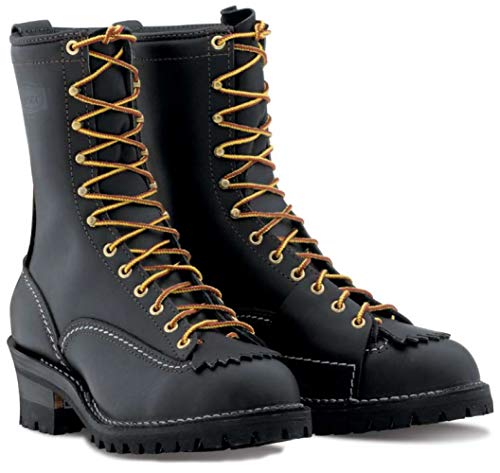
Premium Construction: The ultimate climbing boot worldwide, featuring 10 inches of 7 ounce oiled-leather top and foot for maximum durability and protection
Footwear for Stability on Gravel Surfaces

Stability is essential when working on gravel surfaces, which can be uneven and unstable underfoot. What type of footwear guarantees stability on these terrains? Footwear designed for gravel surfaces typically includes:
- Deep traction lugs that provide grip on loose gravel, enhancing slip resistance.
- Heeled outsoles that grip irregularities, offering better footing and balance.
- Slip-resistant outsoles made for outdoor conditions to reduce fall risk.
- Proper ankle support to minimize twists and sprains when traversing uneven ground.
Logger and lineman boots often meet these criteria, featuring pronounced heels and spaced lugs tailored for rugged use. When selecting footwear for gravel surfaces, prioritize these features to maintain stability and protect ankles during work on unstable terrain. Additionally, choosing boots with reinforced shanks improves support and stability on hard and uneven surfaces commonly found on gravel job sites.
Recommended Products

16 inches of heavy black oiled cowhide for long wear

Motorcycle-Ready Design: 11-inch pull-on design built for motorcycle enthusiasts seeking reliable performance and protection.

10″ of 7-ounce black oil tanned leather
Choosing Durable Boots for Concrete Worksites

Working on gravel surfaces requires specialized footwear for balance and ankle support, but concrete worksites pose different challenges that boots must address. What makes boots suitable for concrete work? First, slip-resistant soles are essential to prevent falls on slick, often wet concrete surfaces. Composite Toe Work footwear is recommended to protect feet from heavy tools and equipment found onsite. How should durability factor in? Choose boots with a durable leather upper, as concrete can quickly wear down less resistant materials. Additionally, heat-resistant outsoles help maintain comfort when concrete heats up under the sun. Finally, lightweight and breathable designs reduce foot fatigue during long work hours. Prioritizing these features guarantees the footwear supports jobsite safety and endurance effectively. It is also crucial to select boots that provide shock absorption to reduce impact and enhance comfort during long shifts.
Recommended Products

【Made in the USA】Crafted for optimal versatility and effortless maintenance, our 4' and 3’ wide rubber floor mat rolls, proudly manufactured in the USA, are a perfect addition to gyms, workout areas, and various commercial settings. These gym floor mats, designed for simple customization around walls, corners, and objects, offer a seamless padded surface with endless applications, making them ideal gym floor options.

DURABLE full-grain leather boots tested six different ways for strength, made in America and triple-stitched for longevity

FULL-GRAIN LEATHER boots tested nine ways for strength and durability, made in America and triple-stitched for longevity
The Role of Boot Height in Terrain Adaptability

Several factors related to boot height directly impact terrain adaptability, influencing ankle support, protection, and environmental resistance. How does boot height affect your performance on uneven ground? Taller boots offer increased ankle support, reducing the risk of twists and strains during movement. They also provide greater stability on slopes and loose surfaces, essential for construction or farming tasks. What advantages do taller boots provide against environmental elements? Their higher shafts help block mud and water ingress, keeping feet dry in wet conditions. However, consider these trade-offs: taller boots may weigh more and limit ventilation compared to shorter options, which are lighter and cooler but offer less protection. For rugged jobs, look for taller boots designed to maximize stability and guard against hazards, such as Thorogood’s 11-inch Western models. Additionally, choosing boots with waterproof and breathable materials ensures your feet stay dry and comfortable during long hours on demanding terrain.
Insulation and Waterproofing for Outdoor Conditions

When choosing footwear for outdoor work, understanding the importance of insulation and waterproofing can help protect your feet from harsh conditions. Why is insulation critical? It keeps feet warm during cold weather, using materials like 3M Thinsulate for effective heat retention without bulk. How does waterproof work feature aid you? It prevents water, mud, and debris from entering the boots, ensuring dryness and comfort. What should you look for in outdoor settings? Consider boots with breathable insulative layers, especially if you work in fluctuating temperatures, as they manage moisture vapor to reduce sweat buildup. For muddy or wet environments, higher shafts add protection. Selecting waterproof and insulated footwear that matches your job demands improves comfort and performance, making your outdoor workday safer and more efficient. Additionally, durable materials like abrasion-resistant rubber improve the longevity and safety of boots used in harsh terrains.
Safety Toe Options for Varying Jobsite Hazards
Safety toe footwear is essential for protecting your feet from impacts, crushing hazards, and sharp objects commonly found on job sites. What safety toe options suit different hazards in construction work?
- Steel toe boots provide maximum protection against heavy impacts and crushing injuries, ideal for high-risk environments.
- Composite toe boots offer lighter protection and reduce heat conduction, making them better for hot climates or agile tasks.
- Puncture-resistant midsoles add another layer of safety by shielding feet from sharp debris like nails or shards found on gravel or concrete surfaces.
- Always look for certified safety toes meeting ASTM or CSA standards to guarantee proper protection according to your specific jobsite hazards.
Choosing the right safety toes depends on balancing protection needs with comfort and mobility required for your daily construction work environment. Incorporating features like waterproof materials enhances both safety and comfort, especially when working in wet or muddy terrain.
Recommended Products

Complete CAT 4 Protection: Stay protected while navigating electrical environments with our Arc Flash Kit, featuring a large 40 Cal FR bib overall, coat, class 2 rubber voltage gloves, face shield, safety glasses, gear bag, and tools
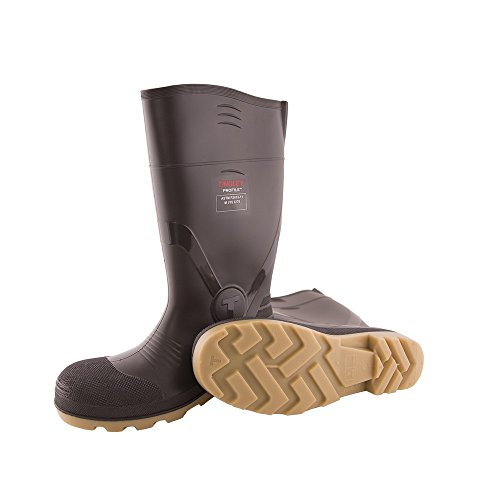
Waterproof: yes

LARGE STORAGE CAPACITY - The coat locker has 5 sections. Each section has 2 double coat hooks, an overheard shelf, and a lower shelf. Perfect for coats, backpacks, boots, lunchboxes, and more. The edge acts as a bench for tying or untying shoes.
Comfort and Support for Long Hours on Tough Grounds
Beyond selecting the appropriate safety toes for protection, workers must consider comfort and support to endure long hours on challenging surfaces like mud, concrete, or gravel. What footwear features improve comfort and support during extended shifts on tough grounds?
- Cushioned insoles and arch support reduce foot fatigue and enhance workplace productivity.
- Proper fit minimizes blisters and discomfort, helping maintain focus on tasks.
- Supportive ankle structures stabilize movement on uneven terrain, preventing strains.
- Lightweight designs improve mobility over long walking distances, reducing overall tiredness.
- Durable, high-quality materials sustain comfort and support despite harsh conditions.
- Features such as cushioned insoles and supportive arches are essential for comfort during extended wear.
Breaking In and Maintaining Terrain-Specific Footwear
Although terrain-specific footwear is designed to withstand harsh conditions, proper breaking in and ongoing maintenance are essential for maximizing performance and comfort. How should you break in boots for uneven terrain on job sites? Gradually wearing them allows the boots to mold to your feet, reducing blisters and discomfort. What maintenance steps are necessary?
- Clean mud and debris regularly from the rubber outsole to maintain slip resistance.
- Apply leather conditioner to preserve flexibility and waterproofing, especially in muddy or damp environments.
- Inspect the outsole frequently for wear to guarantee grip on gravel and concrete surfaces.
- Store boots in a cool, dry area to prevent material degradation.
Additionally, choosing boots with non-slip outsoles can significantly enhance safety and traction on diverse jobsite terrains.
Following these guidelines will extend the life and effectiveness of your terrain-specific boots.
The Importance of Traction Patterns for Different Soils
Several types of traction patterns are designed to enhance safety and performance on various soil surfaces encountered at job sites. Why do these patterns matter? Different surfaces need specific traction features:
- Mud requires deep, spaced lugs on toe work boots to prevent slipping and maintain stability.
- Concrete demands slip-resistant soles that reduce fall risks, especially in high-traffic areas.
- Gravel terrain benefits from aggressive treads and heeled outsoles that grip uneven ground and support movement over rocks.
How do traction patterns affect work? They help workers carry heavy loads safely by improving footing and reducing accidents. Selecting the right outsole design directly influences your safety and efficiency. Always consider the soil type you face when choosing work boots, ensuring the traction pattern matches the challenges of your job site environment. High-traction soles with anti-slip rubber properties are essential to maximize grip on wet and slippery conditions often found outdoors.
Tailoring Boot Features to Specific Jobsite Challenges
When selecting jobsite footwear, it is crucial to match boot features to the specific challenges presented by your work environment to maintain safety and efficiency. How can boots be tailored for different conditions? Consider these features:
- Toe caps provide protection against impacts and heavy objects.
- Slip-resistant outsoles with deep lugs improve traction on wet, muddy, or gravel surfaces by channeling water and catching uneven terrain.
- Waterproof materials keep feet dry during work in puddles or mud.
- Arch support enhances comfort and reduces fatigue, especially on hard surfaces like concrete.
- Heeled outsoles, typical in logger and lineman boots, offer stability on uneven ground.
Choosing boots with these specific features guarantees your footwear matches terrain demands, improving safety and comfort throughout your workday. Additionally, ensuring boots meet ASTM F2413 safety standards offers protection against crucial hazards like impact and compression.
Recommended Products

A cut-resistant 3 layer aramid lining, making the boots chainsaw proof

10" tall leather uppers made from 2.8 mm full grain leather feature double and triple stitching throughout for added durability

EXTREME FULL-GRAIN LEATHER DURABILITY - Built with 2.8mm premium full-grain leather, these boots feature a one-piece vamp construction with no tongue seams, delivering superior abrasion resistance, enhanced waterproofing performance, and long-lasting durability in harsh, high-altitude and rugged terrain conditions
Frequently Asked Questions
What Shoes to Wear for a Construction Site?
Construction shoe types with rugged work boot features act as a fortress for feet, meeting safety shoe standards. Footwear traction options and seasonal footwear considerations guarantee stability and comfort amid mud, gravel, or concrete’s unpredictable dance.
How Should Safety Footwear Be Used to Prevent Foot Injuries on a Construction Site?
Safety footwear should comply with safety regulations, integrating slip resistance and comfort features to reduce injury risk. Regular footwear maintenance guarantees durability, while proper fit and protective elements support injury prevention on construction sites effectively.
Which Material Is Most Suitable for Durable Outdoor and Work Footwear?
Leather stands firm like a seasoned guardian, its durability tested through rigorous trials. Its material composition balances stiffness and flexibility, offering unmatched traction performance, waterproof features, and insulation properties, making it the most suitable choice for durable outdoor and work footwear.
Can a Company Force You to Wear Steel Toe Shoes?
A company can require steel toe shoes under employer policies aligned with safety regulations. Protective gear aims to prevent workplace injuries, balancing employee rights with legal mandates to guarantee a safe working environment and regulatory compliance.