As an Amazon Associate, we earn from qualifying purchases. Some links on this site are affiliate links at no extra cost to you. Our recommendations are based on thorough research and editorial judgment.

Ankle Support vs. Mobility: Finding the Right Balance in Tactical Footwear

Balancing ankle support and mobility in tactical footwear is essential. Ankle support stabilizes joints, reducing injury risks during rapid movements, while excessive stiffness limits agility. Choose mid-top boots for moderate support with flexibility or high-tops for rugged terrain requiring more stability. Lightweight materials and breathable mesh panels enhance comfort and reduce fatigue. Prioritize slip-resistant soles and cushioned insoles for traction and shock absorption. Proper fit with adequate toe space improves performance and comfort. Exploring these factors helps optimize tactical footwear selection.
Key Takeaways
- Proper ankle support stabilizes joints during rapid movements, reducing injury risk without overly restricting mobility.
- Mid-top boots balance ankle protection and flexibility, ideal for varied tactical operations requiring agility and support.
- Lightweight materials and breathable panels maintain mobility while providing essential ankle reinforcement and comfort.
- Flexible designs with reinforced ankle collars prevent fatigue and allow quick directional changes during missions.
- Sole traction and cushioned midsoles complement ankle support by enhancing stability and shock absorption for dynamic movement.
Understanding the Importance of Ankle Support in Tactical Boots
When you choose tactical boots, why is ankle support so important? Ankle support in tactical boots plays a critical role in preventing injuries by stabilizing the ankle during rapid movements and uneven terrain traversal. Key reasons include:
- Protection: Reinforced ankle support reduces the risk of sprains and fractures in high-impact scenarios common to law enforcement.
- Comfort: Properly designed ankle support alleviates foot fatigue during extended wear, maintaining comfort over long shifts.
- Performance: Stabilized ankles help uphold consistent performance throughout demanding operations.
- Injury prevention: Enhanced ankle stability cuts down strain, reducing the likelihood of injuries.
While mobility matters, tactical boots must provide sufficient ankle support to safeguard users traversing challenging environments, ensuring foot protection without compromising overall functionality. Additionally, features like padded collars in boots contribute significantly to enhancing ankle support and overall comfort during prolonged use.
How Mobility Influences Tactical Performance

How does mobility impact tactical performance in demanding environments? Mobility allows personnel to move swiftly and react faster, directly influencing operational effectiveness. When tactical footwear offers flexibility, it supports dynamic movement without sacrificing ankle support. Consider these points for ideal performance:
- Mobility in tactical boots reduces lag and improves reaction times during critical moments.
- Lightweight designs minimize ankle constriction, enhancing freedom of movement.
- Proper ankle support combined with flexibility helps prevent fatigue during prolonged activities.
- Tactical footwear that balances flexibility and support enables quick maneuvers across various terrains.
- Enhanced mobility increases endurance and responsiveness, vital for successful missions.
- Materials like lightweight cushioning and synthetic uppers enhance comfort without adding weight, further supporting mobility.
Comparing High-Top, Mid-Top, and Low-Top Tactical Boots
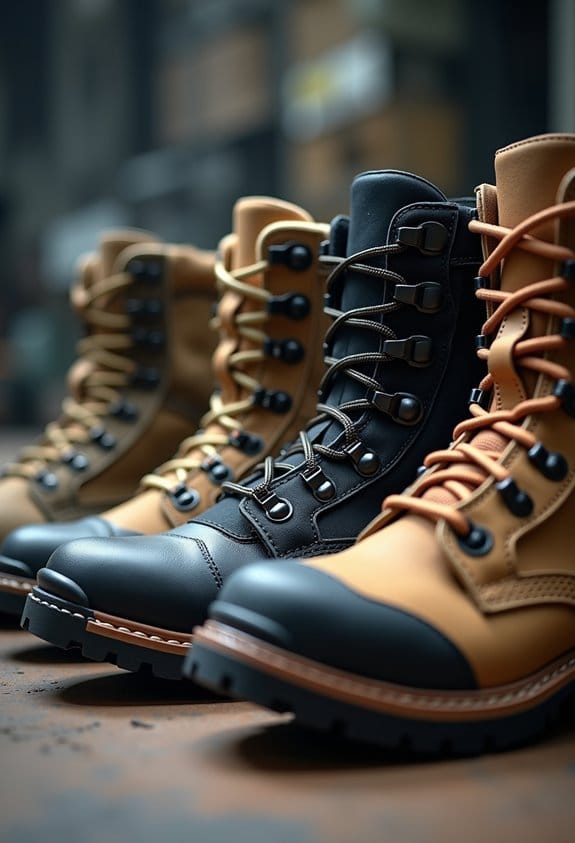
Tactical boots vary primarily by their height, which influences ankle support, mobility, and protection during missions. How do you choose between high-top, mid-top, and low-top boots? Consider these points:
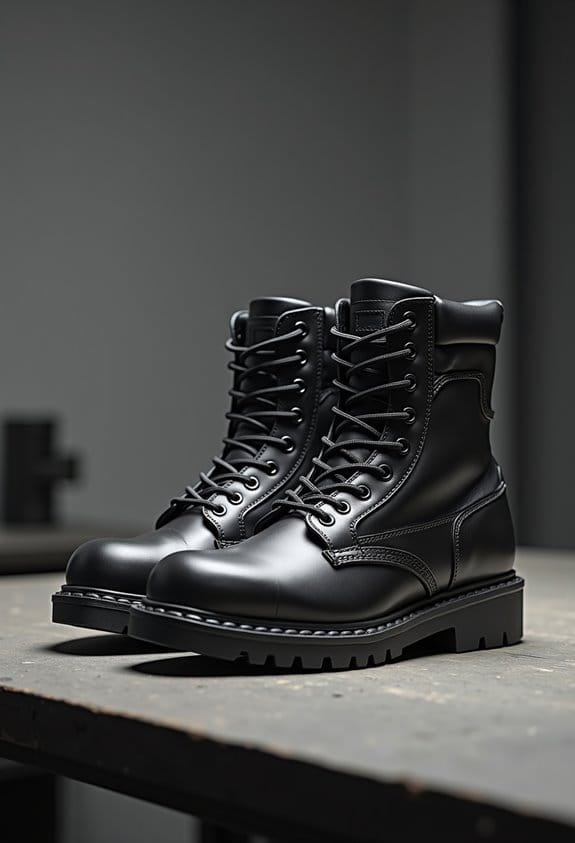
- High-top boots provide the most ankle support, ideal for rugged terrain and activities requiring strong protection and stability.
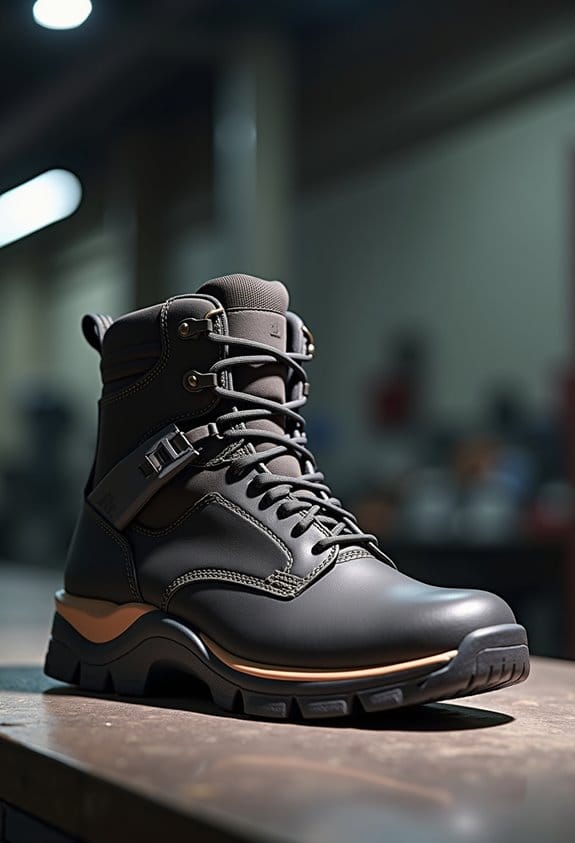
- Mid-top boots balance ankle support and mobility, making them versatile for different operational requirements where both protection and flexibility matter.
- Low-top boots prioritize mobility and flexibility, best suited for environments demanding quick footwork but sacrificing some ankle support.
Which boot height fits your needs depends on terrain, mission duration, and required protection level. For example, high-tops work well on uneven ground, while low-tops enhance speed in urban settings. Understanding these differences helps optimize tactical performance. Lightweight designs with breathable synthetic uppers also contribute significantly to comfort and durability in tactical footwear.
Material Choices and Their Impact on Support and Flexibility

Choosing the right boot height influences ankle protection, but material composition plays a significant role in support and flexibility as well. How do materials affect your tactical footwear’s performance? Consider these points:
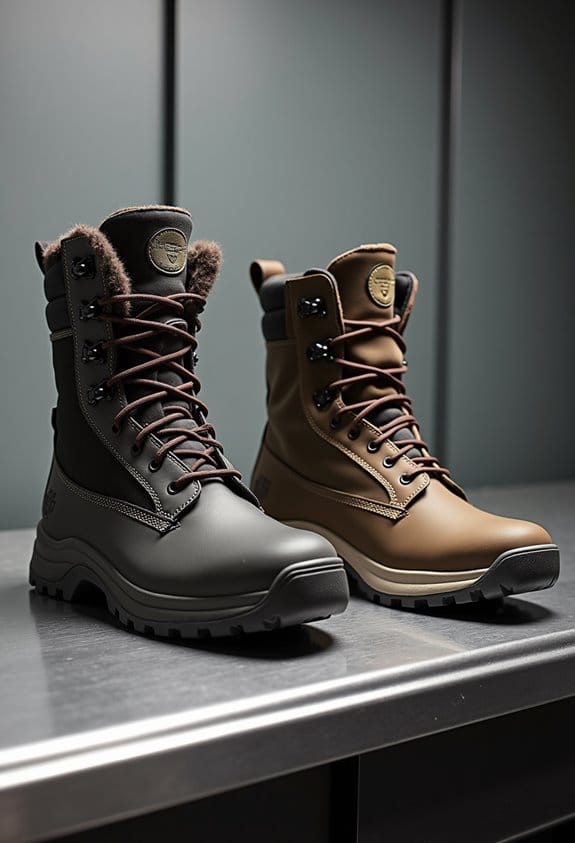
- Durable materials like leather and nylon provide strong ankle support while maintaining mobility.
- High-density textiles with reinforced stitching balance flexibility and durability for tough conditions.
- Breathable mesh panels improve flexibility and comfort by allowing airflow, reducing moisture and blisters.
- Waterproof membranes, such as Gore-Tex®, keep feet dry without sacrificing flexibility or mobility in wet environments.
- Shock absorption depends on midsole materials like EVA or PU, which cushion impacts while enabling agile movement.
Additionally, choosing boots with premium waterproof leather not only enhances durability but also ensures protection against moisture and harsh conditions common in demanding environments.
The Role of Sole Design in Balancing Traction and Agility

A well-designed sole plays an essential role in balancing traction and agility for tactical footwear, impacting both performance and safety in diverse environments. How does sole design affect these factors?
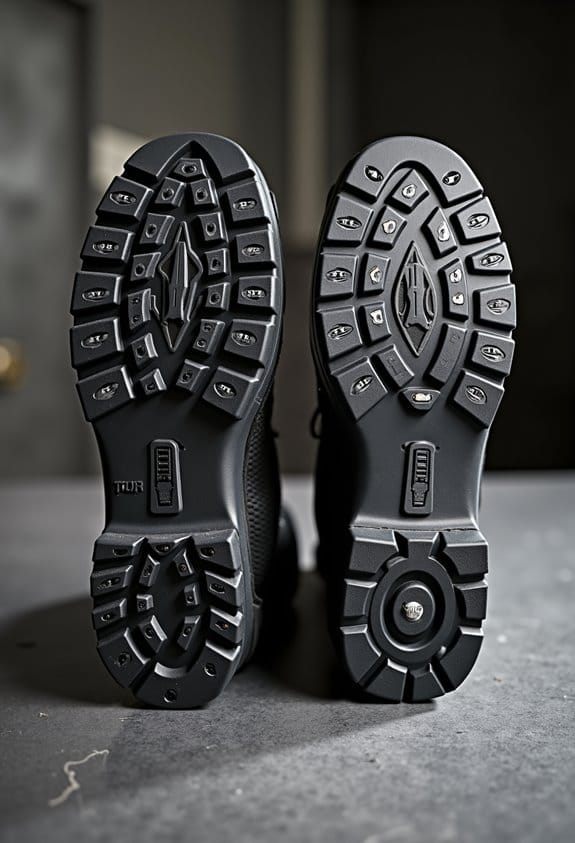
- Aggressive tread patterns improve traction by gripping various surfaces, allowing quick, confident movements.
- Slip-resistant soles maintain grip on slick grounds, reducing slip risks while supporting agility.
- Outsole design uses rubber with different hardness levels to combine urban mobility flexibility and rugged terrain durability.
- Midsoles made of EVA or PU provide cushioning to absorb shock, reducing fatigue and enhancing support during sudden actions.
- Stability is increased by sole features that adapt to uneven terrain, guaranteeing you maintain balance without sacrificing mobility.
Additionally, tactical boots with ASTM F3445-21 certified slip- and oil-resistant outsoles provide maximum traction and safety in challenging conditions.
Choosing footwear with these sole attributes guarantees optimized traction, agility, support, and durability for tactical demands.
Weight Considerations: Protection vs. Speed
Frequently, selecting footwear involves balancing protection against speed, as heavier boots offer durability and support but can reduce quickness and mobility. What weight considerations matter for tactical boots?
- Heavier boots weigh more and provide better protection, ankle support, and durability for rugged environments.
- Lighter boots enhance mobility, allowing quick movements essential for law enforcement in urban settings.
- Tactical boots between 1.5 to 2.5 pounds per pair often balance protection and speed, improving overall performance.
- Material innovations help maintain durability without excessive weight, supporting both ankle support and mobility.
Additionally, advancements such as alloy toe designs reduce weight while maintaining impact protection, contributing to better performance without sacrificing safety.
Selecting Tactical Boots Based on Operational Needs
Operational needs play a significant role when selecting tactical boots because different environments and mission types require specific features. How do you choose the right pair? Consider these factors:
- Terrain: High-cut boots provide maximum ankle support for rugged environments; low-cut boots enhance mobility in urban settings.
- Waterproofing: Boots with membranes like Gore-Tex® keep feet dry in wet conditions.
- Slip-resistant soles: Aggressive tread patterns improve traction and stability on various surfaces.
- Durability: Choose materials that withstand harsh conditions without compromising comfort.
- Support and comfort: Cushioned insoles reduce foot fatigue during long missions.
- It is essential to prioritize waterproofing, durable materials, and a proper fit to ensure both safety and comfort in demanding conditions.
Ergonomic Features That Enhance Both Stability and Movement
Ergonomic design elements are fundamental in tactical footwear to balance stability with freedom of movement during demanding tasks. How do these features enhance both stability and mobility? Consider the following:
- Cushioned insoles and padded collars reduce foot fatigue, allowing you to maintain agility over long periods.
- Reinforced ankle support offers sufficient stability without restricting flexibility, supporting quick directional changes.
- Breathable mesh panels improve ventilation, keeping feet dry and comfortable, which decreases the risk of blisters and enhances mobility.
- Slip-resistant rubber outsoles with lug patterns guarantee reliable grip across diverse surfaces, promoting both stability and flexibility.
- Lightweight materials keep the boots from feeling cumbersome, helping you move swiftly while preserving ankle support.
Additionally, the inclusion of shock-absorbing midsoles helps reduce fatigue by cushioning each step, further enhancing comfort and mobility in tactical scenarios.
The Impact of Fit and Cushioning on Ankle Support and Comfort
Choosing tactical footwear with the correct fit and cushioning greatly affects both ankle support and overall comfort. How does fit influence stability and mobility? A snug but comfortable fit reduces foot pain and blisters, improving stability without sacrificing mobility. What role does cushioning play? Cushioned insoles and shock-absorbing midsoles reduce foot fatigue and absorb impacts, enhancing comfort during long missions. How does this affect performance? Proper fit and cushioning prevent fatigue, allowing better focus and agility. What features improve ankle support? Padded collars and reinforced structures protect against injuries on uneven terrain. What happens with poor fit or insufficient cushioning? Discomfort and foot pain increase, which lowers performance in demanding environments. Consequently, selecting tactical footwear with balanced fit and cushioning is essential for ideal ankle support, comfort, and lasting performance. Incorporating waterproof materials in tactical boots also enhances overall foot protection and comfort, especially in wet conditions.
Practical Tips for Testing and Choosing the Right Tactical Footwear
After understanding how fit and cushioning affect ankle support and comfort, it becomes important to apply this knowledge during the selection process. How should you approach testing and choosing the right tactical boots?
- Fit: Guarantee a snug fit with room to wiggle your toes, preventing blisters and discomfort.
- Ankle Support: Try high-cut combat boots if you expect uneven terrain to reduce sprain risk.
- Mobility: Walk, run, and perform side movements to check flexibility without losing support.
- Breathability: Wear boots briefly to assess moisture-wicking linings that enhance comfort.
- Weight: Balance lightweight design for agility with heavier materials for protection based on your mission needs.
- Additionally, consider features like slip-resistant soles to maintain traction and safety in various environments.
Frequently Asked Questions
Are Shoes With Ankle Support Better?
Shoes with ankle support enhance ankle stability and injury prevention, benefiting tactical performance and foot health. However, maintaining shoe flexibility and appropriate boot height is essential to balance support vs. mobility, terrain adaptability, cushioning options, and fit importance.
How to Tell if a Boot Has Good Ankle Support?
Unstable wobble contrasts with firm grip; good ankle support reveals itself through ankle stability indicators like reinforced boot design features, effective cushioning impact analysis, durable materials comparison, secure fit and comfort, precise lacing techniques, ideal height preferences, balanced weight distribution, terrain adaptation, and evaluation of long-term usage effects.
How to Choose Tactical Boots?
Choosing tactical boots involves evaluating boot materials, weight distribution, and durability factors. Attention to arch support, sole traction, waterproof features, insulation types, ankle height, and lacing systems guarantees terrain adaptability and peak performance during varied missions.
Are Combat Boots Good for Ankle Support?
Combat boots provide effective ankle support through tactical footwear design, incorporating cushioning technology and weight distribution impact. Boot height effects and flexibility specifications balance support vs. mobility, enhancing ankle injury prevention. User comfort ratings reflect terrain adaptability and overall combat boot features.