As an Amazon Associate, we earn from qualifying purchases. Some links on this site are affiliate links at no extra cost to you. Our recommendations are based on thorough research and editorial judgment.


Comparing Construction Boots, Tactical Boots, and Service Shoes by Design

Construction boots focus on durability with heavy-duty leather, reinforced steel toes, slip-resistant soles, and puncture protection for harsh environments. Tactical boots combine lightweight materials, breathable mesh, ankle support, and puncture-resistant soles for agility and stability in active settings. Service shoes prioritize comfort with cushioned insoles, slip-resistant outsoles, and a professional appearance for long shifts in safer indoor spaces. You’ll find detailed comparisons on features, materials, and suitability as you explore specific footwear needs.
Key Takeaways
- Construction boots prioritize rugged durability with reinforced toes, heavy-duty leather, and slip-resistant soles for harsh work environments.
- Tactical boots balance lightweight design and protection using breathable mesh, nylon, and ballistic materials with ankle support for agility and rough terrain.
- Service shoes emphasize comfort, slip resistance, and a professional appearance, using softer leather and cushioned insoles for long shifts.
- Safety features vary: construction boots often have steel toes, tactical boots offer puncture resistance and ankle stability, while service shoes resist fluids and slipping.
- Material choices reflect purpose: construction boots use heavy leather and composites, tactical boots use lightweight textiles with reinforcement, and service shoes focus on comfort and style.
Overview of Construction Boot Design Features
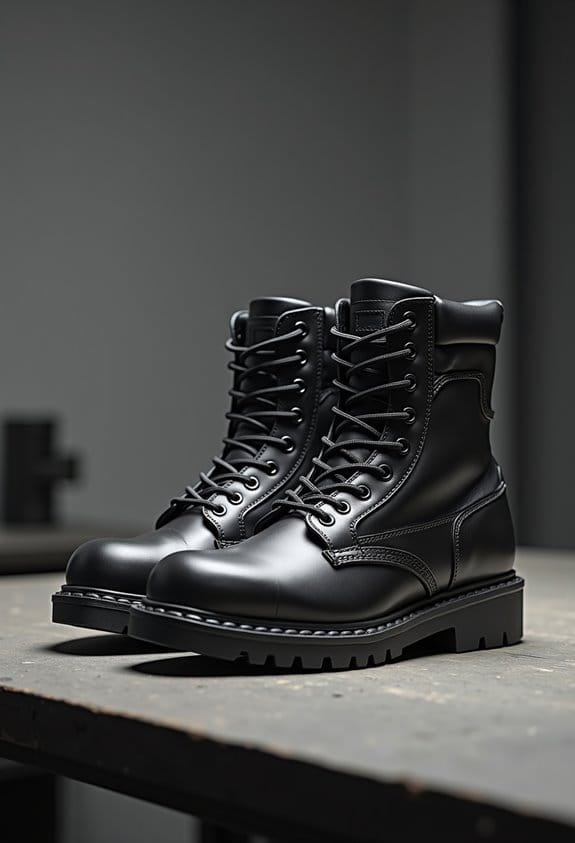
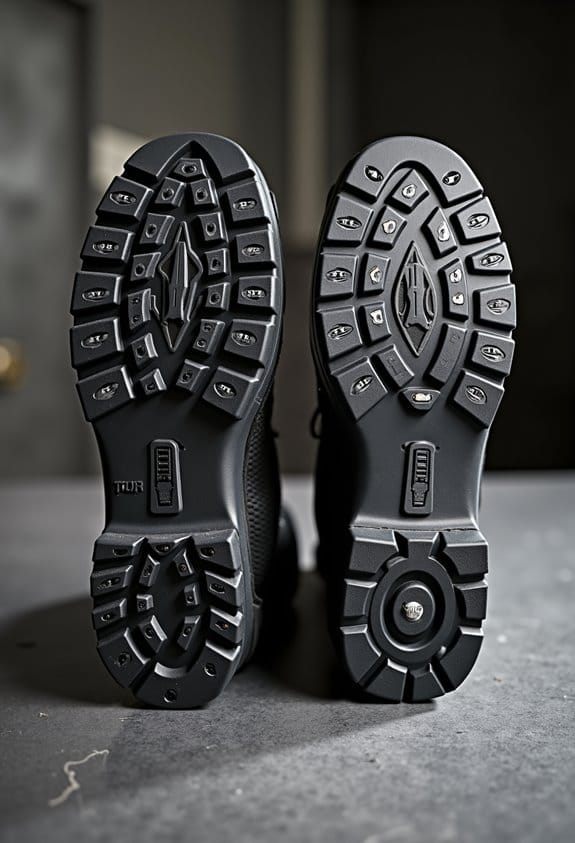
Construction boots are built to protect your feet in tough work environments using durable materials and safety features. What materials make construction boots durable? Commonly, leather or synthetic composites are used to resist harsh conditions and wear. Which safety features enhance protection? Reinforced toe caps, made from steel or composite materials, shield against impacts and compression, following ASTM F2413-18 standards. What else improves safety on job sites? Slip-resistant outsoles help prevent falls by offering better traction on various surfaces. Are additional protections included? Some boots have metatarsal guards and puncture-resistant midsoles to block sharp objects, meeting OSHA regulations. How do these features aid comfort? Waterproofing and breathability keep feet dry from moisture and sweat during long work hours. Choosing soles with multi-directional treads also enhances grip and reduces slip hazards on uneven or slippery surfaces. Using these design elements, construction boots effectively balance durability, safety, and comfort for demanding job sites.
Recommended Products

NFPA 1951, NFPA 1971, NFPA 1977, NFPA 1990(1992), ASTM F2413 & CAN/CSA-Z195 certified

A fully CE-certified boot incorporating full leather and suede with a 100% waterproof Gore-Tex membrane

10 inch tall 2.8mm thick full grain leather uppers
Key Characteristics of Tactical Boots

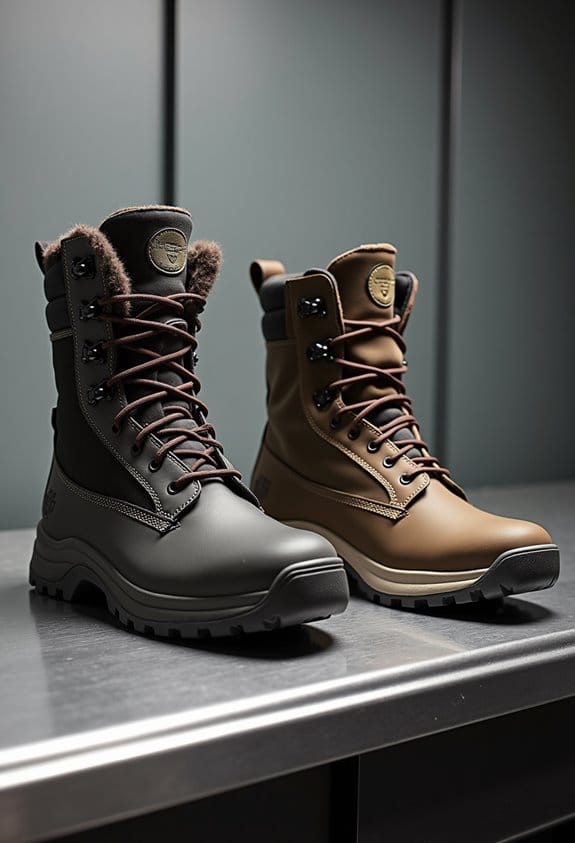
After examining the design features that make construction boots suitable for demanding work environments, it is important to recognize how tactical boots address similar needs with different approaches. What key characteristics define tactical boots? Tactical boots prioritize durability and support, often including reinforced toes and waterproof materials to endure harsh conditions. How do they enhance safety? Many have slip-resistant outsoles to improve traction on varied surfaces, reducing slip risks. What about comfort during long use? They are typically lightweight and use breathable mesh combined with ballistic nylon, offering ease of movement and comfort. What additional features improve stability? Tactical boots often feature padded collars and ankle support to minimize injuries during intense activities. Understanding these characteristics helps you choose boots suited for tactical environments requiring agility and protection. Some models also incorporate fast-roping compatibility to prevent wear during climbing activities, enhancing durability for military use.
Recommended Products
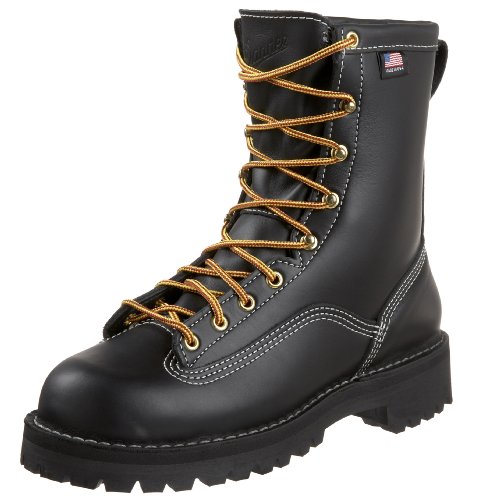
Danner's famous stitch down construction

GORE-TEX waterproof breathable lining

GORE-TEX waterproof breathable lining
Design Elements of Service Shoes

Service shoes emphasize comfort and practicality, making them well-suited for individuals who spend extended periods on their feet. What design elements define service shoes? First, they often include cushioned insoles and breathable materials to enhance comfort during long hours of use. Second, many feature slip-resistant outsoles, helping reduce accidents in workplaces with spills or uneven floors. How do service shoes balance appearance and function? They typically have a classic, understated look, allowing wearers to maintain a professional appearance in various settings. Ultimately, lightweight construction is common, which helps reduce foot fatigue throughout the day. Overall, service shoes prioritize comfort, safety, versatility, and style, making them practical for jobs in healthcare, hospitality, and retail environments. Additionally, the inclusion of slip resistance certifications ensures that these shoes meet established safety standards to protect wearers from falls.
Materials Used in Construction Boots Vs Tactical Boots Vs Service Shoes

When comparing the materials used in construction boots, tactical boots, and service shoes, it is important to understand how each type balances protection, comfort, and durability according to its purpose. What materials define construction boots? They mainly use heavy-duty leather, rubber, and synthetic composites to withstand tough job site conditions. How do tactical boots differ? These boots combine lightweight nylon and microfiber with reinforced stitching, promoting agility without sacrificing durability. What about service shoes? Typically, they feature softer leather or suede for comfort and professional appearance, often paired with rubber soles for grip. Construction boots emphasize ruggedness, tactical boots blend flexibility with protection, and service shoes focus on comfort and support. Understanding these materials helps you select footwear suited to specific work demands and environments. It is also crucial to consider boots that meet ASTM F2413 safety standards to ensure necessary protection and compliance with workplace regulations.
Recommended Products

The Seatcraft experience is where craftsmanship meets functionality. Engineered for unparalleled quality and ergonomic comfort. Sit with us and experience the decades of mastery and passion we’ve put into our seats. Don’t settle for less.

18″ of 7-ounce black oiled leather

A cut-resistant 3 layer aramid lining, making the boots chainsaw proof
Safety Features Incorporated in Different Footwear Types

Safety features in various types of footwear reflect the specific risks and demands of their intended work environments. What safety features can you expect in different safety footwear?
- Construction boots often include steel toes to resist impacts, slip-resistant soles to prevent falls, and waterproof materials to protect against wet conditions. They frequently meet ASTM F2413-18 standards for electrical and compression hazards.
- Tactical boots provide puncture-resistant soles and ankle support, offering stability and protection on rough terrain. They also comply with ASTM F2413-18 in many cases.
- Service shoes focus on slip-resistant outsoles and fluid-resistant uppers, important for wet, slippery surfaces in healthcare or service settings.
Understanding these features helps you choose the right safety footwear for specific workplace risks while maintaining compliance and protection. Additionally, lightweight designs combined with cushioned insoles contribute significantly to comfort and fatigue reduction during long work shifts.
Recommended Products

NFPA 1971, NFPA 1990(1992), ASTM F2413 & CAN/CSA-Z195 certified

10" tall leather uppers made from 2.8 mm full grain leather feature double and triple stitching throughout for added durability

Anti-Fatigue Technology: A comfort system designed with shock-absorbing, geometrical technology that returns energy back to the foot to deliver all-day support and comfort.
Comfort and Support Considerations Across Footwear Categories
Although different types of work footwear serve unique purposes, comfort and support remain key concerns for all users. What specific comfort and support features do these footwear categories offer?
- Construction boots provide reinforced toe caps and sturdy soles for stability on uneven surfaces, while including cushioning to ease long work hours.
- Tactical boots focus on cushioned insoles and mid-sole support to enhance agility and reduce foot fatigue during rapid movements.
- Service shoes prioritize cushioning and arch support, designed for extended standing and walking with slip-resistant soles in professional settings.
Why is proper fit important? A correct fit guarantees ideal comfort and support, preventing fatigue and improving performance. Manufacturers supply sizing guides tailored to each type, helping you select footwear that meets your daily comfort and support needs efficiently. Additionally, incorporating customizable insoles can further optimize arch support and shock absorption across all footwear types.
Durability and Performance in Varied Work Environments
Durability and performance are critical factors to evaluate when selecting footwear for demanding work environments, as each job presents unique hazards and conditions. How do construction boots compare in these areas?
- Construction boots offer rugged durability with reinforced toes and tough soles, designed to resist heavy impacts and punctures typical on building sites.
- They meet ASTM F2413-18 standards, ensuring protection against impact and electrical hazards.
- Compared to tactical boots and service shoes, construction boots prioritize long-lasting wear on rough surfaces, providing stability where you need it most.
- If your work involves sharp debris or heavy materials, construction boots maintain their integrity better than lighter, more flexible options.
- Selecting footwear with adequate durability for your environment helps reduce accidents and supports consistent performance during physically demanding tasks.
- Features such as puncture-proof steel toes and waterproof materials further enhance safety and comfort in harsh construction conditions.
Selecting the Right Footwear for Specific Job Needs
When choosing footwear for a particular job, it is essential to match the shoe’s features with the specific demands you face daily. What should you consider when selecting safety shoes?
- Identify hazards: For construction, reinforced toes and slip-resistant soles guard against heavy objects and slippery surfaces.
- Assess activity type: Tactical boots provide ankle support and moisture-wicking materials suited for active, outdoor work.
- Consider environment: Service shoes prioritize comfort and slip resistance for indoor or customer-facing roles.
- Verify standards: Validate compliance with ASTM F2413-18 safety standards for puncture, compression, and electrical hazard resistance.
- Prioritize fit: Proper sizing reduces foot fatigue and injury risk during long shifts.
Additionally, selecting boots made from premium treated leather or synthetic materials with reinforced seams ensures reliable waterproof protection tailored to your work conditions.
Matching these factors helps you select footwear that enhances safety, comfort, and performance, based on your specific job needs.
Recommended Products

The Union crafted Tailings work boot is built for warmth and protection

INTERNAL MET GUARD for superior protection against impact, featuring abrasion-resisting properties

These Union Crafted Copper work boots are built to keep you safe and comfortable no matter the job
Frequently Asked Questions
What Is the Difference Between Tactical Boots and Work Boots?
The difference between tactical boots and work boots lies in footwear durability focus—tactical boots emphasize lightweight materials and versatile traction for agility, while work boots prioritize heavy-duty construction and protective features to endure prolonged, hazardous labor conditions.
What Boots Do Navy SEALS Prefer?
Which boots withstand relentless missions and harsh environments? Navy SEALS prefer Navy Gear like Salomon XA Forces and Oakley SI Tactical Boots, featuring lightweight durability, Gore-Tex waterproofing, reinforced protection, and customization for unmatched comfort and performance.
Which Work Boot Brand Is Best for Construction?
The best work boot brand for construction often emerges from brand comparison among Caterpillar, Timberland Pro, Red Wing, and Wolverine. These brands meet ASTM F2413-18 standards, ensuring safety, durability, and comfort for demanding job sites.
What Makes Tactical Boots Different?
Tactical boots possess tactical features that make them as indispensable as a soldier’s shield. Their slip-resistant soles, reinforced puncture resistance, ankle support, moisture-wicking materials, and lightweight design uniquely equip wearers for demanding, dynamic environments.