As an Amazon Associate, we earn from qualifying purchases. Some links on this site are affiliate links at no extra cost to you. Our recommendations are based on thorough research and editorial judgment.


The Role of Padding and Collars in Ankle Comfort for Work Boots

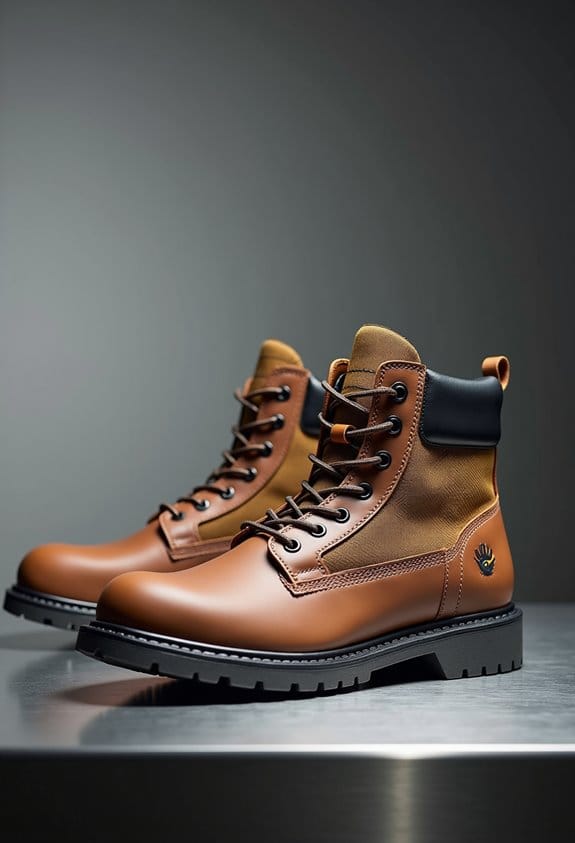
Padding and collars in work boots are essential for ankle comfort and support. Padding reduces pressure points and cushions impacts, using materials like memory foam or EVA foam for shock absorption and warmth. Collars, especially higher and padded ones, stabilize ankles by limiting excessive movement and preventing injuries. They also improve fit and reduce heel slippage. Proper design and maintenance of these features help prevent joint strain and fatigue during long shifts. Explore further to understand their full benefits.
Key Takeaways
- Padding cushions pressure points, reducing discomfort and enhancing ankle support during long work shifts.
- Higher padded collars stabilize the ankle, preventing excessive movement and reducing injury risk.
- EVA and memory foam padding offer shock absorption and mold to the ankle for personalized comfort.
- Padded collars minimize heel slippage and improve overall fit for better ankle alignment and stability.
- Durable, breathable materials in collars and padding regulate temperature and provide lasting comfort.
Understanding Ankle Support in Work Boots
Ankle support is an essential factor to take into account when choosing work boots because it helps prevent injuries and improves stability during physical tasks. What does effective ankle support include? First, a higher ankle design offers greater ankle stability by limiting excessive movement and reducing the risk of twists and rolls. How does proper fitting affect ankle support? Boots with adjustable lacing systems guarantee personalized ankle security, maintaining alignment throughout the day. What materials contribute to comfort and durability? Full-grain leather combined with breathable fabrics enhances ankle support and prolongs boot life. Why is comfort important? Proper ankle support reduces fatigue during long shifts, promoting better foot health. Key features to look for include: • Higher ankle height • Adjustable fit • Durable materials • Structured collars providing ankle stability and comfort. Additionally, selecting boots with a rubber slip-resistant outsole can contribute to overall stability and reduce the risk of falls on job sites.
How Padding Enhances Ankle Comfort
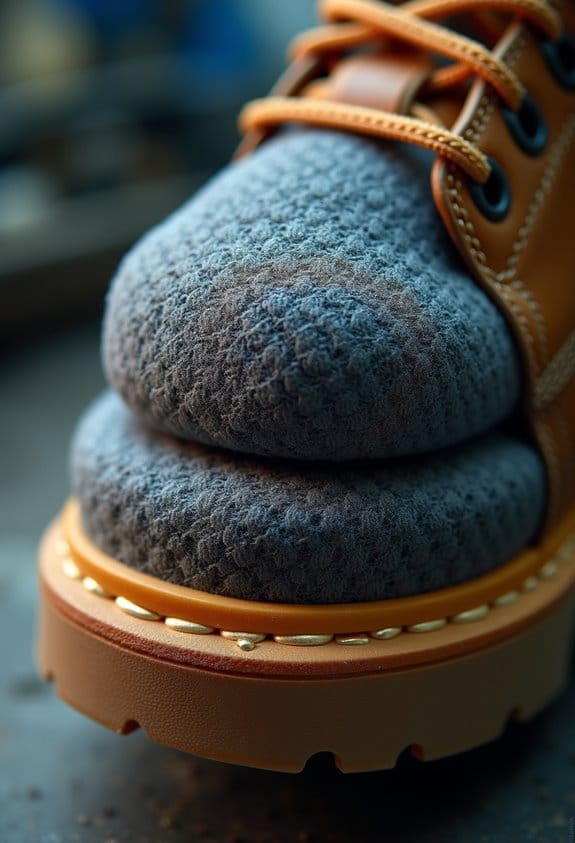
Cushioning plays an essential role in enhancing comfort around the ankle area in work boots, especially during extended periods of wear. How does padding improve ankle comfort? First, padding reduces pressure points by providing a soft barrier between your ankle and the boot, which prevents discomfort over long shifts. Second, properly padded ankle collars minimize chafing and irritation, letting you focus on tasks without distraction. What materials contribute to effective padding? Soft, durable materials also offer thermal insulation, keeping your feet warm in cold conditions. How thick should the padding be? Ideal padding thickness ranges from 1 to 3 inches, balancing ankle support and mobility. To sum up, padding in work boots greatly enhances comfort by cushioning ankles, reducing friction, and maintaining warmth while supporting your ankles effectively. Additionally, incorporating breathable insoles alongside padding can significantly improve airflow and reduce foot fatigue during long shifts.
Recommended Products

Leather uniform boot featuring lace-to-toe vamp, lightly padded collar, and lugged outsole. Narrow fit

Explore the outdoors in the durable, supportive and comfortable SALEWA Rapace GTX shoes. These shoes offer a lace-up closure in a round toe silhouette with a leather and textile upper, textile lining and insole, and a 3F System for ankle support, fle

Mixed-media hiking boot featuring speed lacing hardware and padded tongue and collar
The Importance of Collars for Ankle Stability
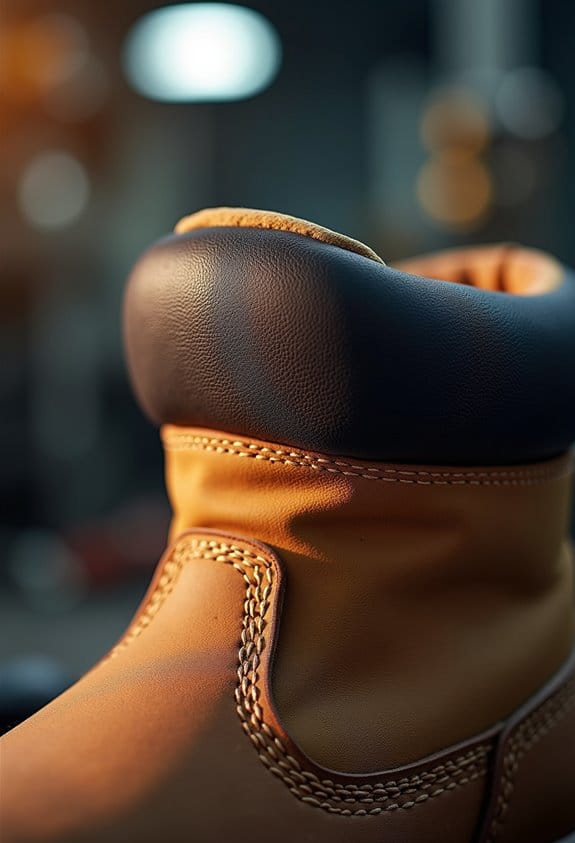
The collar height of work boots greatly influences the stability provided to your ankle, particularly during physically demanding tasks. How do collars contribute to ankle stability? Higher collars limit excessive ankle movement, reducing the risk of sprains and twists. What comfort benefits do collars offer? Padding around collars cushions impacts, improving comfort during long wear. How does collar design affect heel slippage? Properly designed collars minimize heel slippage, ensuring a secure fit that prevents fatigue. Why is proper alignment important? A supportive collar promotes proper ankle alignment, essential for balance on uneven surfaces. What role do breathable collars play? They maintain comfort by preventing overheating in hot conditions. To conclude, selecting boots with well-constructed collars enhances ankle stability and comfort, supporting safety and performance throughout your workday. Additionally, incorporating anti-fatigue technology in boot design can further reduce foot and ankle fatigue during extended wear.
Materials Commonly Used for Ankle Padding
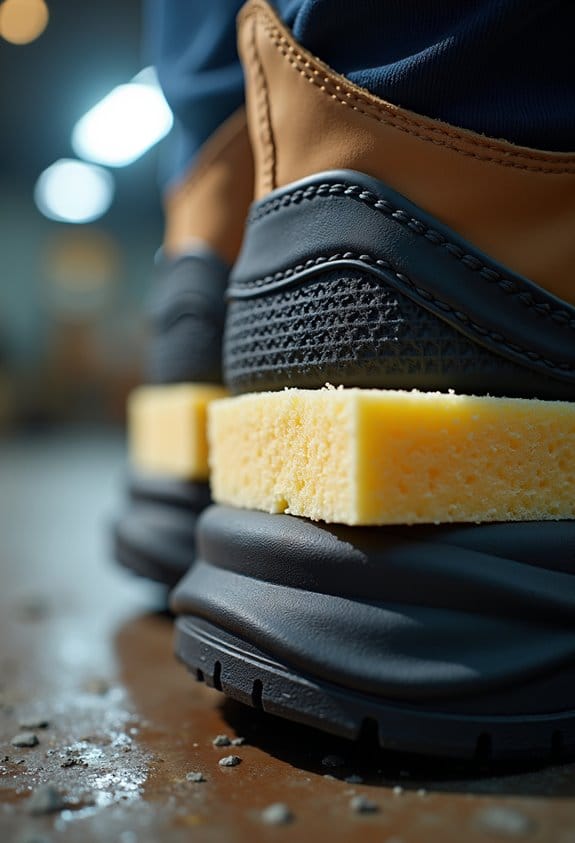
Materials used for ankle padding play an essential role in enhancing comfort, support, and durability in work boots. What materials are common for this padding? Consider these options:
- EVA foam provides lightweight shock absorption and reliable ankle support.
- Memory foam conforms to your ankle’s shape, offering personalized comfort.
- Breathable fabric, like mesh or moisture-wicking textiles, helps regulate temperature and reduces sweat buildup.
- Neoprene or rubberized padding adds durability and water resistance, ideal for wet conditions.
- High-quality leather contributes to ankle support while enhancing the boot’s overall durability.
- Some foam padding includes antibacterial properties to prevent odor and maintain hygiene during long wear.
Selecting padding that integrates with the boot’s overall shock absorption technologies can further reduce foot fatigue and improve long-term comfort.
Recommended Products

Replaceable Sole System (SRS): Features the innovative Sole Replacement System for quick and easy sole swaps, including enduro-specific options, ensuring optimal grip and longevity for motocross performance.
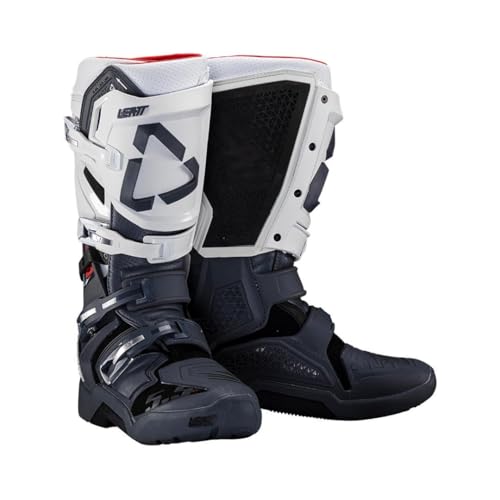
Fit: Outstanding comfort with first-class fit even for wide feet

The Crossfire 3 TA is for those riders who prefer the feel of a sewn on sole vs. the more firm SR version.
Boot Height and Its Impact on Ankle Protection
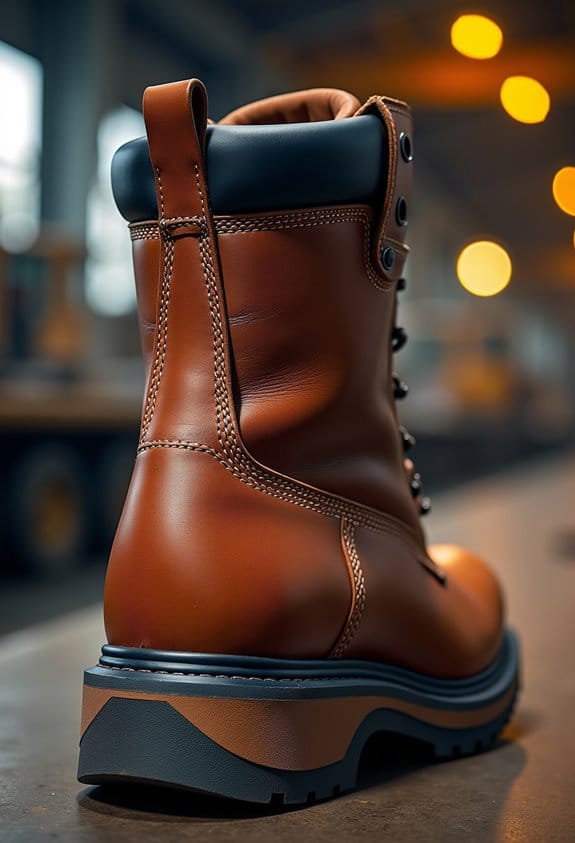
Ankle padding plays a significant role in comfort, but boot height greatly influences ankle protection by providing structural support around the joint. How does boot height affect ankle support? Work boots with higher collars, generally at least 6 inches, offer better ankle protection by stabilizing the joint and reducing risky movement like sprains or twists. What benefits do work boots provide with proper ankle support? They improve slip resistance, helping you maintain traction on slippery or uneven surfaces. Why is proper ankle support important? It not only prevents injuries but also reduces fatigue by supporting your ankle’s natural mechanics during long shifts. Ensuring your work boots meet safety standards with adequate boot height guarantees better protection and comfort tailored to demanding work environments. Additionally, boots featuring cushioned insoles and good arch support contribute significantly to reducing fatigue during long shifts by enhancing overall foot comfort.
Balancing Breathability and Support in Padding
Work boots designed with a balance of breathability and support in padding guarantee comfort and safety during extended wear. Why is this balance important? Adequate padding around the ankle reduces pressure points and friction, enhancing overall comfort. How can breathability be integrated without losing support? Using materials like mesh or moisture-wicking fabric in the padding allows airflow, keeping feet dry and preventing irritation during hot conditions. What role does support play? Support limits excessive ankle movement, reducing injury risk while maintaining comfort. Key benefits of balanced padding include:
- Regulating temperature around the ankle
- Minimizing blisters through moisture control
- Offering cushioning that protects without restricting movement
Choosing work boots with breathable, supportive padding guarantees comfort and ankle protection throughout long shifts. Additionally, incorporating shock-absorbing midsoles can further enhance comfort by reducing foot fatigue during prolonged wear.
Choosing the Right Collar Design for Your Work Environment
Beyond choosing padding that balances comfort and breathability, the collar design of a boot plays a significant role in maintaining ankle stability and protection. What should you consider when choosing the right collar design for your work environment?
- Collar height affects ankle support; higher collars increase stability, ideal for uneven terrain or heavy lifting.
- Work boots are designed with padded collars to prevent chafing and improve comfort during extended wear.
- Choosing the right footwear means matching collar design to task demands, such as climbing or walking on slippery surfaces.
- Proper protection requires a snug fit that limits excessive ankle movement while enabling flexibility.
- Evaluate your work environment’s specific challenges to guarantee collar height and padding provide the ankle support that helps reduce injury risk and fatigue.
- Additionally, selecting boots with shock absorption features in the sole complements collar support by reducing strain on ankles and joints during prolonged wear.
Recommended Products

10 inch tall 2.8mm thick full grain leather uppers

Wind-Tex Waterproof membrane keeps you dry and comfortable

Lace-up hiking boot featuring D-ring eyelets and speed-lacing hardware
The Relationship Between Padding, Collars, and Injury Prevention
When selecting footwear for demanding jobs, understanding the relationship between padding, collars, and injury prevention is essential. How does padding contribute to ankle support and injury prevention? Padding absorbs shock and cushions impacts, reducing muscle fatigue and joint pain. What role do collars play? Higher collars stabilize the ankle, limiting excessive movement that causes sprains or twists. How do padding and collars work together? Properly padded collars enhance fit and alignment, preventing discomfort and instability that can lead to accidents. Why focus on ankle support? Strong support reduces injury risk during jumping or lateral movements common in many jobs. To summarize, adequate padding and sturdy collars offer comfort, protect the ankle from injuries, and improve overall foot health, which is critical for long work shifts. Additionally, features like high padded collars are known to reduce strain on joints and provide excellent ankle support.
Tips for Maintaining Padding and Collar Integrity
Although proper fit and quality materials lay the foundation for ankle support, maintaining the padding and collar integrity is equally important to preserve that comfort and protection over time. How can you guarantee your work boots continue to provide adequate ankle support? Follow these tips for effective maintenance:
- Regularly inspect padding and collars for wear, as damaged areas reduce comfort and support.
- Clean them according to manufacturer instructions to prevent material breakdown.
- Store boots in dry, cool places to avoid moisture that deteriorates padding and collars.
- Condition leather collars periodically to keep flexibility and prevent cracking.
- Replace boots when padding compresses or collars lose shape, since worn features compromise ankle support and comfort.
- Additionally, keeping the boots properly maintained helps preserve essential material durability and performance in tough work conditions.
Recommended Products


Nubuck, Mesh Upper

The lappland is a fully adjustable backstrap sandal with two hook and loop straps at the instep
Common Challenges With Ankle Padding and Collar Fit
Maintaining padding and collar integrity helps preserve comfort, yet common challenges with ankle padding and collar fit can still arise. What issues should you watch for?
- Insufficient collar padding often causes discomfort and increased pressure points, which may lead to blisters and fatigue during long shifts.
- A collar that is too high or stiff can restrict ankle movement, reducing comfort and mobility while increasing chafing risks.
- Inadequate ankle support due to poor collar fit can result in heel slippage, compromising stability and causing unnecessary strain on feet and ankles.
- Selecting boots with adjustable collars and sufficient cushioning enhances fit, minimizes pressure points, and improves overall ankle comfort.
- Additionally, choosing boots with memory foam insoles can significantly boost cushioning and support around the ankle area.
Recommended Products

Complete CAT 4 Protection: Stay protected while navigating electrical environments with our Arc Flash Kit, featuring a large 40 Cal FR bib overall, coat, class 2 rubber voltage gloves, face shield, safety glasses, gear bag, and tools

HYDRX PRO WEATHER PROTECTION – 10,000mm waterproof and 8,000g/m² breathability rating with 450D polyester shell and HydrX Pro laminate provides reliable protection against snow and moisture in challenging winter conditions
Sealed & Taped
Frequently Asked Questions
How to Stop Work Boots From Hurting Ankles?
To stop work boots from hurting ankles, one should analyze boot materials, use proper lacing techniques, consider custom insoles options, evaluate ankle protection features, and assess the impact of boot height for ideal comfort and stability.
How to Make Your Work Boots More Comfortable?
Before smartphones, comfort in work boots fundamentally depended on lacing techniques and fit adjustments. Emphasizing arch support importance, boot material selection, and insoles benefits enhances cushioning, breathability, and stability, ultimately improving all-day comfort on demanding jobsites.
How to Support Ankles in Boots?
Ankle stability techniques in boots involve integrating boot design features like higher collars and enhanced cushioning technology advancements. Materials influence comfort, making proper sizing importance vital to guarantee effective support and prevent unwanted ankle movement during activity.
What Makes a Shoe Have Good Ankle Support?
An ideal shoe boasts ankle stability features so robust they defy gravity, with cushioning technology benefits that cradle every step. Boot height considerations, precise lacing techniques effectiveness, and material flexibility impact converge for unparalleled ankle support.