As an Amazon Associate, we earn from qualifying purchases. Some links on this site are affiliate links at no extra cost to you. Our recommendations are based on thorough research and editorial judgment.

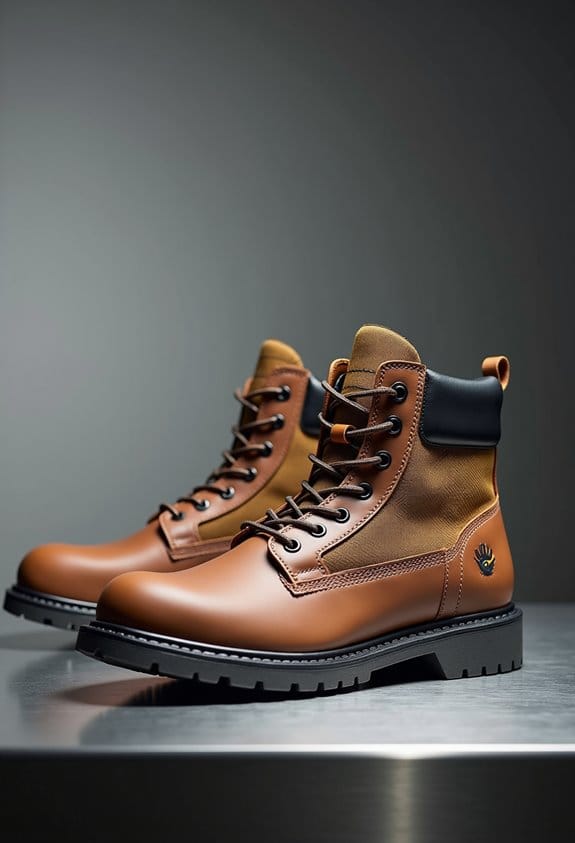
Breathable Work Boots for Hot Climates: What Features to Look For

Breathable work boots for hot climates should feature lightweight mesh panels or perforated leather to enhance airflow and reduce sweat buildup. Look for moisture-wicking linings with FastDry technology to control odor and keep feet dry. Composite toe caps provide essential protection without trapping heat, while waterproof membranes that allow moisture escape maintain comfort. Ventilation technologies like VentTEK improve airflow, and slip-resistant soles guarantee safety. These combined features support comfort, durability, and safety during extended wear. Further details reveal ideal materials and maintenance tips.
Key Takeaways
- Look for boots with breathable mesh panels or perforated leather for increased airflow and reduced sweat buildup.
- Choose lightweight materials with moisture-wicking and FastDry technology to manage sweat and enhance comfort in heat.
- Opt for composite toe boots to reduce heat retention and lower foot fatigue during prolonged wear.
- Select waterproof boots with breathable membranes and moisture-wicking linings to maintain airflow while keeping feet dry.
- Prioritize boots featuring engineered venting or VentTEK technology to maximize ventilation and prevent overheating.
Importance of Breathability in Work Boots
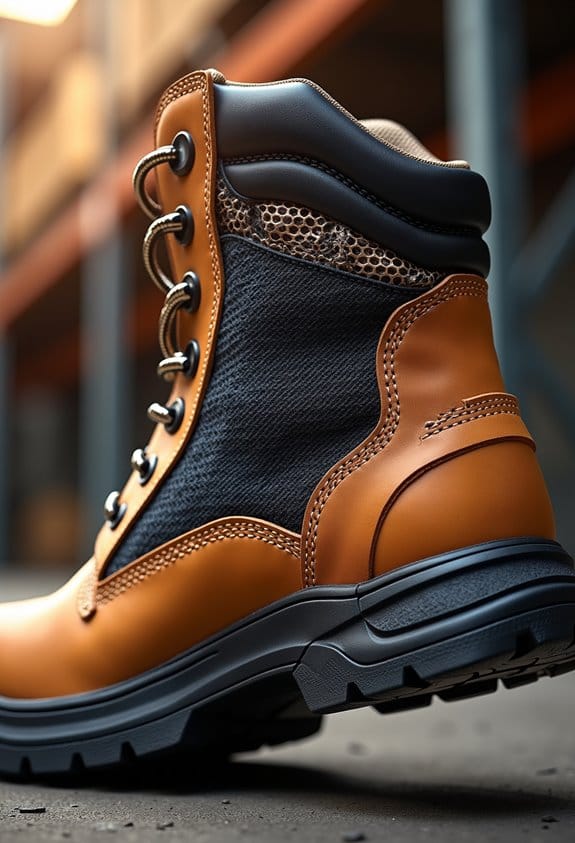
Although work boots must provide safety and support, breathability is equally important in hot climates to maintain comfort and foot health. Why choose breathable work boots? They offer increased airflow through materials like mesh and perforated leather, keeping your feet cool and reducing sweat buildup. What role do moisture-wicking properties play? Effective moisture-wicking linings prevent discomfort and help reduce odor by managing perspiration. How does breathability impact foot health? Enhanced airflow helps prevent blisters and other foot issues common in warm conditions. Should you consider lightweight work boots? Yes, lightweight designs reduce foot fatigue while maintaining durability and essential safety features. To summarize, breathable work boots effectively balance ventilation with protection, ensuring long-lasting comfort without compromising your safety on demanding job sites. Look for boots constructed with ballistic nylon uppers as these materials enhance both protection and breathability.
Ideal Materials for Hot Weather Work Boots
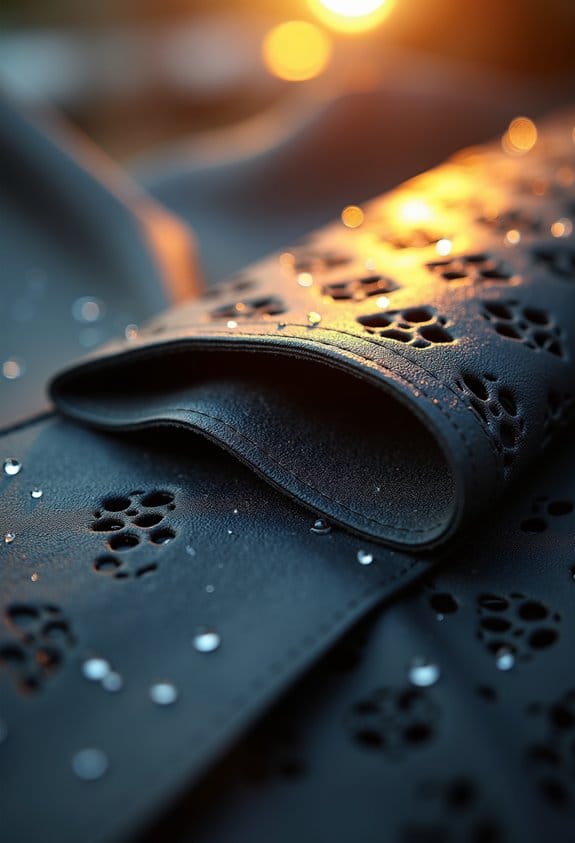
Choosing the right materials is crucial when selecting work boots designed for hot weather, as they directly affect comfort, breathability, and moisture control. What breathable materials best support airflow and ventilation features? Boots made with mesh panels or perforated leather allow air to circulate freely, promoting cooling. How do moisture-wicking properties help? Lightweight synthetic fabrics with FastDry technology reduce sweat accumulation by quickly moving moisture away from your skin, keeping your feet dry and comfortable. Why is lightweight construction important? It lessens foot fatigue while maintaining protection. What design elements enhance comfort in hot climates? Incorporating ventilation features like structured airflow systems improves breathability. Selecting boots with these ideal materials guarantees maximum comfort, reduces overheating, and supports long-lasting wear during demanding workdays in heat. Additionally, considering boots with engineered nylon mesh lining can optimize breathability and overall comfort in hot environments.
Benefits of Composite Toe vs. Steel Toe in Heat
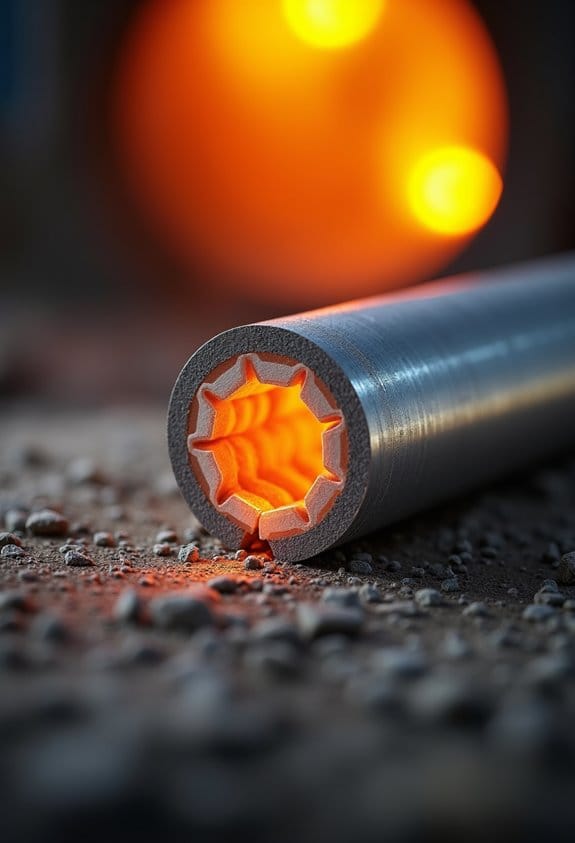
Work boots that use breathable materials enhance comfort, but the toe protection style also affects heat management. What are the benefits of composite toe versus steel toe in hot weather work? Composite toe boots are lighter, reducing foot fatigue and heat buildup. Unlike steel toes, composite materials do not conduct heat, improving thermal comfort. How do ventilation features contribute? Composite toe boots often include breathable designs and moisture-wicking linings that boost airflow and keep feet cooler. Does protection differ? Steel toes offer superior impact protection, but composite toes provide adequate safety without the extra weight, making them suitable for extended wear in heat. For hot climates, choosing composite toe boots with ventilation and moisture-wicking features enhances overall comfort while maintaining necessary protection during demanding work. It is also important to select boots that comply with ASTM F2413 safety standards to ensure both protection and comfort in hazardous environments.
Waterproofing Solutions That Enhance Airflow
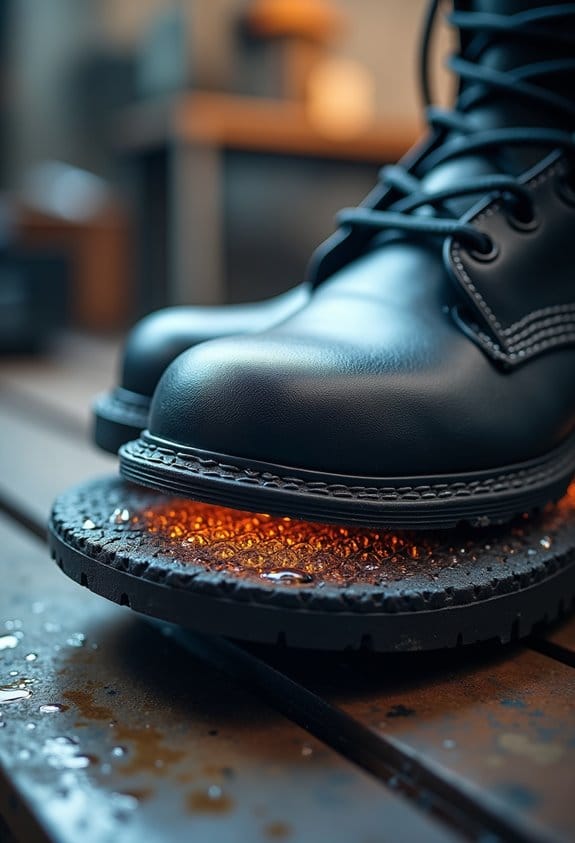
A key factor in selecting breathable work boots for hot climates is how waterproofing solutions impact airflow and foot comfort. How do waterproofing solutions improve airflow without sacrificing dryness?
- Waterproof membranes block water entry but allow moisture to escape, keeping feet dry and ventilated.
- Moisture-wicking linings, paired with FastDry technology, pull sweat away from skin while promoting airflow.
- Mesh panels integrated into water-resistant boots enhance ventilation without compromising waterproofing.
- Lightweight materials used in these designs maintain durability and allow air circulation, reducing heat buildup.
- This combination helps prevent odor and bacterial growth, supporting better foot health during long wear in hot conditions.
Additionally, choosing boots with waterproof membranes like Gore-Tex ensures effective moisture protection while maintaining breathability.
Ventilation Technologies in Modern Work Boots
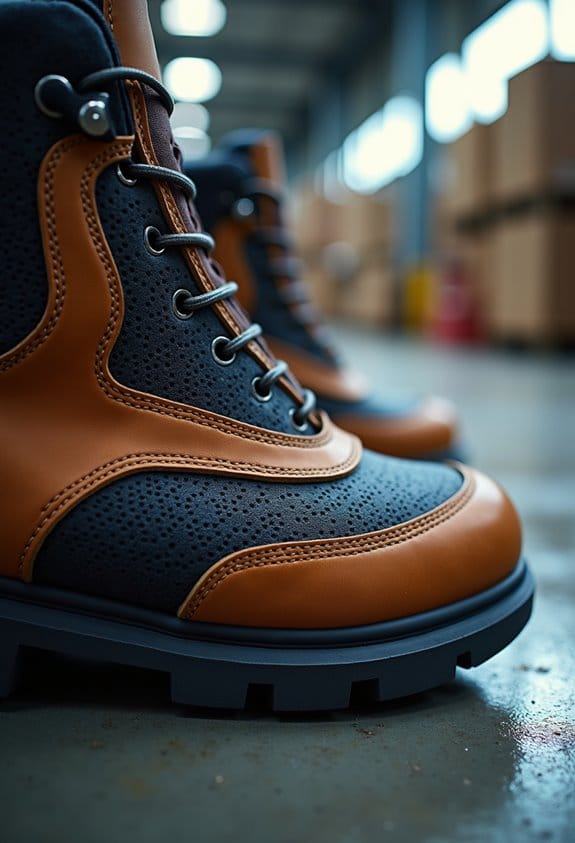
Building on waterproofing solutions that promote airflow, modern ventilation technologies further improve comfort by increasing air circulation inside boots. What features help enhance airflow in comfortable work boots?
- Breathable mesh and perforated uppers allow heat escape, keeping feet cooler.
- VentTEK technology offers targeted ventilation with specially designed mesh panels, maintaining structure while improving airflow.
- Moisture-wicking materials in linings draw sweat away from the foot, reducing sweat buildup and discomfort.
- FastDry technology actively removes excess moisture, limiting odor and helping feet stay dry during long wear.
- Lightweight materials such as synthetic leathers and rubber soles reduce boot weight, boosting ventilation and lowering foot fatigue.
Additionally, incorporating moisture management technologies is essential to prevent internal moisture buildup while ensuring breathability in work boots.
Choosing the Right Boot Height for Maximum Airflow
When selecting footwear for hot climates, choosing the right boot height plays a key role in guaranteeing maximum airflow and comfort. How does boot height affect ventilation? Low-profile boots offer superior airflow and ventilation compared to taller options because they expose more of your ankle and lower leg to open air. What features enhance this effect? Breathable mesh panels in low-profile boots increase airflow, supporting moisture management and helping to keep feet comfortable. Are there adjustable options? Boots with adjustable ankle heights provide versatility so you can customize airflow depending on temperature and workload. What balance should you seek? Selecting a boot height that balances support with breathability guarantees you receive protection without compromising ventilation, while lightweight construction reduces heat buildup during extended wear in hot conditions.
Moisture-Wicking Features to Reduce Foot Sweat
Effective moisture-wicking features play a crucial role in reducing foot sweat and maintaining comfort in breathable work boots. What happens when sweat accumulates? It can lead to discomfort, bacterial growth, and blisters. How do moisture-wicking materials help? They draw sweat away from your skin to keep feet comfortable. Which technologies enhance this effect? FastDry technology rapidly evaporates moisture, reducing dampness inside boots. How can insoles assist with moisture management? Ortholite insoles wick away sweat while cushioning your feet for all-day comfort. What additional benefits do moisture-wicking linings offer? They prevent bacterial growth and control odors linked to foot sweat. Why choose boots with combined moisture-wicking and breathable features? This pairing effectively reduces sweat buildup and helps in preventing blisters, ensuring your feet stay dry and comfortable during hot climate work conditions. Additionally, moisture-wicking properties complement cushioned, molded footbeds to reduce fatigue during long hours of wear.
Safety Features Compatible With Breathable Designs
Comfort in hot climate work boots extends beyond moisture management, as safety remains a key priority in these designs. What safety features can you expect in breathable designs? Consider the following:
- Steel toe caps provide strong protection against heavy impacts up to 2004 joules while maintaining durability and lightweight comfort.
- Composite toe options offer similar protection but reduce heat transfer, making them better for hot climates.
- Puncture-resistant plates guard against sharp objects without blocking ventilation.
- Met-guards shield the metatarsal bones and still allow air flow to keep feet cool.
- Many boots comply with ASTM standards for electrical safety, ensuring functional protection.
These features combine durability with breathability, making hot climate work boots safe and comfortable. Selecting boots with slip-resistant soles is also crucial to maintain stability on wet or icy surfaces often encountered outdoors.
Best Boot Styles for Warm Climate Work Environments
Selecting the best boot styles for warm climate work environments requires attention to materials, design, and functionality that promote airflow and reduce heat buildup. What are the best work boots for hot conditions? Consider these features:
- Lightweight and breathable materials like mesh or perforated leather increase air to flow, reducing heat accumulation.
- Ventilation panels and moisture-wicking linings help keep feet comfortable and hygienic by managing sweat.
- Styles such as lace-up, pull-on, Chelsea, and low-profile boots offer enhanced ventilation and mobility.
- Safety features including composite toes and slip-resistant outsoles provide protection without sacrificing breathability.
Additionally, selecting boots with waterproofing technology ensures feet remain dry and comfortable even in variable weather conditions.
Tips for Maintaining Breathable Boots in Hot Conditions
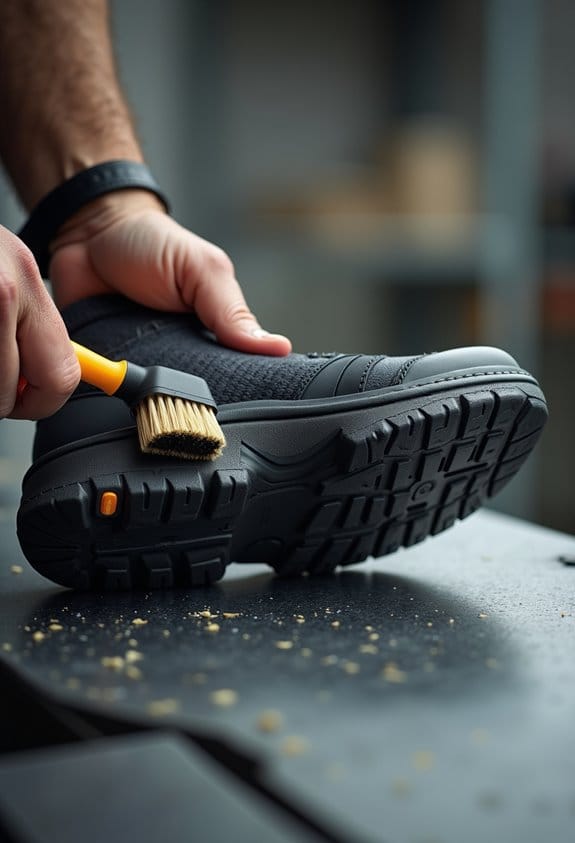
When working in hot conditions, maintaining breathable boots correctly is essential to preserving their airflow and durability. To maintain peak performance, regularly clean your breathable boots with a damp cloth to remove dirt and debris that can block airflow and trap moisture. Always allow boots to dry fully after use, preventing mold and preserving moisture management. Incorporate moisture-wicking socks to reduce sweat buildup and support airflow inside the boots. Store your boots in a cool, dry place away from direct sunlight to protect their structural integrity and material quality. Periodically apply a breathable waterproofing spray to maintain protection against external moisture without compromising airflow. Following these steps will help you maintain breathable boots effectively, ensuring they perform well in hot climates and last longer. Additionally, choosing boots with mesh panels and engineered venting can enhance airflow and comfort during prolonged wear.
Frequently Asked Questions
What Boots to Wear in Hot Weather?
In hot weather, choosing summer work boots with breathable materials, ventilation technology, airflow channels, and moisture management enhances comfort. Prioritize lightweight design, slip-resistant soles, protective features, footbed cushioning, ankle support, and durability testing for climate adaptability and style.
What Work Boots Are Breathable?
Breathable work boots feature upper mesh and breathable materials that promote air circulation and footbed ventilation. They incorporate moisture management, cooling technology, lightweight construction, odor control, heat resistance, and insulation properties to optimize comfort in hot conditions.
What Is the Most Important Feature You Look for in a Pair of Work Boots?
Though some prioritize style options, the most important feature remains comfort level, integrating arch support, slip resistance, and weight distribution. Additional factors include waterproof technology, sizing accuracy, toe protection, durability ratings, and sole flexibility for superior performance.
What Makes Boots Breathable?
Boot breathability results from ventilation technology, moisture wicking materials, and mesh panels that enhance air circulation. Lightweight construction, temperature regulation features, sock liners, and waterproof breathability also contribute to effective heat resistance and ideal foot breathability.