As an Amazon Associate, we earn from qualifying purchases. Some links on this site are affiliate links at no extra cost to you. Our recommendations are based on thorough research and editorial judgment.


When Lightweight Composite‑Toe Boots Make More Sense Than Steel Toe

When should lightweight composite-toe boots be chosen over steel toe? Composite boots provide equal impact protection but weigh 30-50% less, reducing foot fatigue and improving mobility during long shifts. They offer better insulation, keeping feet warmer in cold environments, and do not set off metal detectors, making them ideal for security-sensitive jobs. Additionally, composite toes resist rust and often last longer. If you want to understand best uses and performance differences, further details clarify key advantages.
Key Takeaways
- Composite-toe boots are ideal for reducing fatigue during long shifts due to their 30-50% lighter weight compared to steel toe boots.
- They provide non-conductive protection, making them safer for electricians and environments with electrical hazards.
- Composite toes offer better insulation, maintaining foot warmth in cold climates without added weight.
- These boots pass metal detectors, which is beneficial for workers frequently undergoing security checks.
- Composite toe boots resist rust and corrosion, often lasting longer than steel toe boots in harsh conditions.
Understanding the Basics of Safety Toe Boots
Although safety toe boots come in different materials, they all share a common purpose: protecting feet from workplace hazards by featuring reinforced toe caps. What are safety toe boots? They are designed to provide impact protection through tough materials such as steel or composite. How do steel toe boots perform? These traditional boots offer strong protection but tend to be heavier and may lack thermal insulation. What about composite toe boots? Made from lightweight materials like carbon fiber, they weigh 30-50% less and provide better thermal insulation. Are safety toe boots regulated? Both types meet ASTM standards for impact and compression resistance, ensuring reliable protection against workplace hazards. When choosing your boots, consider factors like weight, insulation needs, and the specific tasks you perform. Additionally, features such as waterproof design using materials like rubber and neoprene can play a crucial role in maintaining dry and comfortable feet during wet conditions.
Key Differences Between Composite and Steel Toe
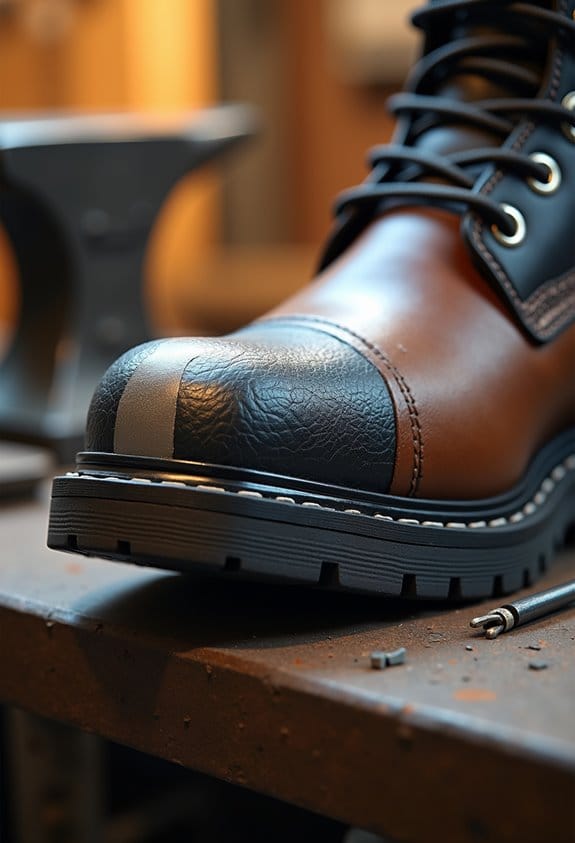
When selecting between composite and steel toe boots, understanding their differences helps you make an informed choice tailored to your work environment. What sets composite toe boots apart includes:
- They are 30-50% lighter than steel toe options, providing more comfortable safety footwear that reduces fatigue during long shifts.
- Composite toe materials do not trigger metal detectors, unlike steel toe boots made of metal.
- They offer better insulation from temperature extremes, preventing discomfort from heat or cold.
How do steel toe boots compare?
- They generally provide superior impact protection due to their metal construction.
- Steel toe boots are heavier, which can increase strain on knees and back.
- Their metal nature can conduct heat or cold, making them less comfortable in extreme temperatures.
Additionally, some composite toe boots come with metatarsal guards that provide extended protection for the upper foot area, enhancing overall safety.
Recommended Products

Black Prime Waterproof, Flame, and Cut-Resisting Leather upper
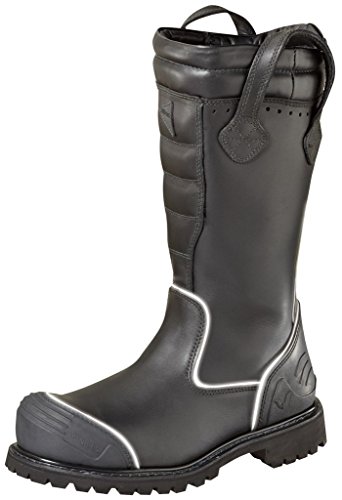
Flexible L-Protection Puncture-Resisting Insole Material Shaft Vapor Exhaust Vents Super Reinforced Leather Pull Straps Flexible Goodyear Storm Welt Construction 3M Scotchlite Reflective Material - High Visibility Piping

Delivers maximum Linesman performance and durability witha steelstability shank
Advantages of Composite Toe Boots in the Workplace

Understanding the distinct benefits of composite toe boots clarifies their increasing popularity in many workplaces. What advantages do composite toe boots offer to improve workplace safety and comfort? First, composite toe boots are lightweight, reducing fatigue during long shifts by 30-50% compared to steel toe boots. How do they perform in challenging conditions? Their metal-free construction offers excellent impact protection without conducting heat or cold, providing a comfortable experience in extreme temperatures. Who especially benefits from these features? Workers such as electricians, who require metal-free footwear to pass through detectors safely, find composite toes ideal. Additionally, composite toe boots absorb impacts effectively, preventing injuries caused by steel toes under heavy force. Overall, composite toe boots combine safety, comfort, and practical features that suit various demanding work environments. Their combination with breathable insoles further enhances comfort by reducing foot fatigue during extended use.
Recommended Products
Composite toe is ASTM F2413-11 M I/75 C/75 EH rated

10 inch tall 2.8mm thick full grain leather uppers
When Steel Toe Boots Are the Better Choice
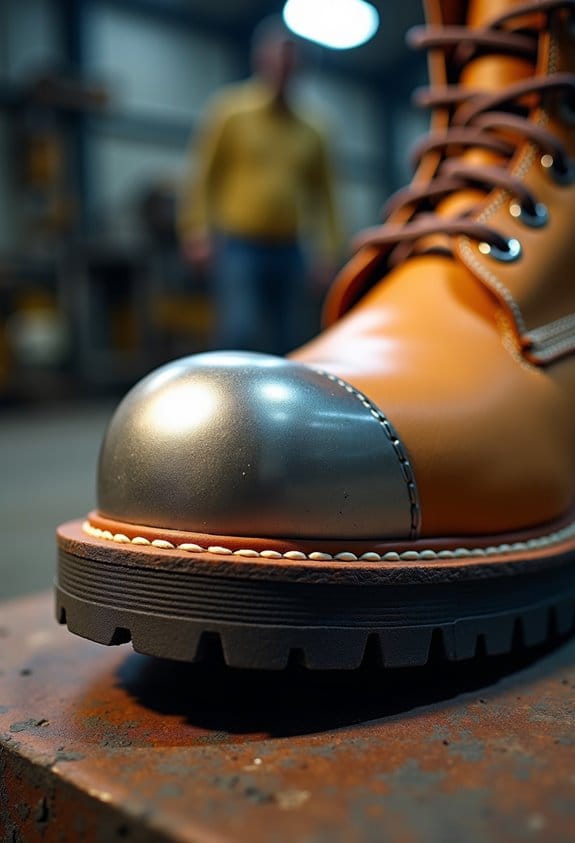
Since some work environments demand maximum protection and durability, steel toe boots often serve as the better choice. What makes steel toe boots ideal for tough jobs? Consider these key factors:
- Impact protection: Steel toe boots withstand impacts up to 75 pounds, protecting your feet from heavy falling objects.
- Stainless steel construction: This feature provides exceptional durability and resists cracking when working near heavy machinery.
- Safety features: The steel cap guards against puncture injuries from sharp objects commonly found on construction sites.
- Budget-conscious buyers: Steel toe boots usually cost less than composite options while maintaining robust protection.
- Design advantage: For machinists and welders, the boots’ slim profile allows better toe movement in confined spaces.
If your work involves heavy machinery or sharp hazards, steel toe boots offer reliable safety and long-lasting durability. Many steel toe boots also feature electrical hazard protection to safeguard against live circuits and energized components on the job.
How Weight Affects Worker Comfort and Performance
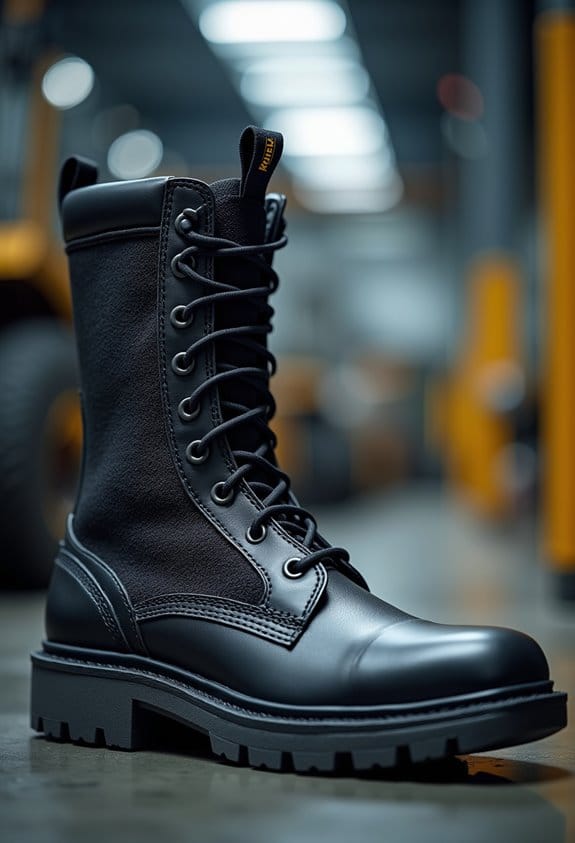
Although protective features are critical, the weight of work boots plays a significant role in worker comfort and job performance. How does boot weight affect you on the job?
- Composite toe boots weigh 30-50% less than steel toe boots, reducing fatigue during long shifts.
- Less weight decreases strain on knees and back, enhancing overall worker comfort.
- Improved mobility and agility are common with lighter composite options, helping you move more easily.
- The design often offers a roomier fit, preventing toe jamming and discomfort.
- Reduced fatigue means better focus and job performance, as you feel less distracted by heavy, uncomfortable footwear.
Ultimately, choosing the right weight in boots supports both your physical comfort and your ability to work efficiently throughout the day. Additionally, incorporating cushioned insoles and built-in arch support can further minimize foot fatigue and enhance comfort for extended wear.
Recommended Products
Black Prime Waterproof, Flame, and Cut-Resisting Leather upper
Black Prime Waterproof, Flame, and Cut-Resisting Leather upper

CERTIFIED to NFPA 1971 & 1992. Quick drying and stain resistant.
Electrical Safety and Composite Toe Benefits
Lightweight composite toe boots offer more than comfort advantages; they also provide specific benefits for electrical safety. What makes composite boots safer for electrical work? First, they are 100% metal-free, eliminating the risk of electrical conduction when working near live wires. How do these boots meet safety standards? Composite materials like carbon fiber and Kevlar meet ASTM requirements for impact protection, matching steel toe boots. What about fatigue during long shifts? Their lightweight design reduces fatigue by weighing 30-50% less than steel options. Additionally, composite boots provide thermal insulation, keeping feet warm in cold environments, which helps maintain comfort and focus. They also easily pass through metal detectors, making them practical for secure job sites. Additionally, many composite toe boots feature slip-resistant outsoles to enhance stability on slick surfaces commonly found in industrial environments. Overall, composite toe boots combine electrical safety, protection, and comfort for specialized work conditions.
Insulation Properties: Composite Toe Vs Steel Toe
Footwear insulation plays a critical role in protecting feet from temperature extremes during work. How do composite toe boots compare to steel toe boots in insulation properties? Composite toe boots use non-metal materials like Kevlar and carbon fiber, which are poor thermal conductors. This limits heat transfer, making them effective in extreme heat and cold environments. In contrast, steel toe boots conduct temperature more readily, creating a “freezer effect” in cold or unwanted heat in hot settings. What benefits does this provide for temperature-sensitive work?
- Composite toe boots keep feet warmer and cooler by minimizing heat flow.
- This supports better foot comfort and reduces fatigue during long shifts.
- They are well suited for outdoor jobs involving temperature swings.
Choosing composite toe footwear helps maintain stable foot temperature and enhances overall comfort. Additionally, many composite toe boots feature advanced insulation like 400g 3M Thinsulate or KEEN.WARM, which significantly enhances warmth without adding weight.
Navigating Metal Detectors With Composite Toe Footwear
How can composite toe boots improve your experience when passing through metal detectors? Composite toe boots are made from non-metal materials like Kevlar and carbon fiber, allowing you to pass smoothly through metal detectors without setting off alarms. This feature is especially beneficial in restricted areas such as airports and secure facilities. Choosing composite toe boots can streamline the security process by reducing delays caused by metal footwear. Despite being lighter and more comfortable for extended wear, composite toe boots still provide reliable impact protection equivalent to steel toes. Their thinner profile also aids ease of movement during security checks. Using composite toe boots helps guarantee a more efficient, hassle-free experience when traversing environments where metal detectors are mandatory. Additionally, many composite toe boots are designed to meet ASTM F2413 safety standards, ensuring protection without compromising on non-metal properties.
Recommended Products
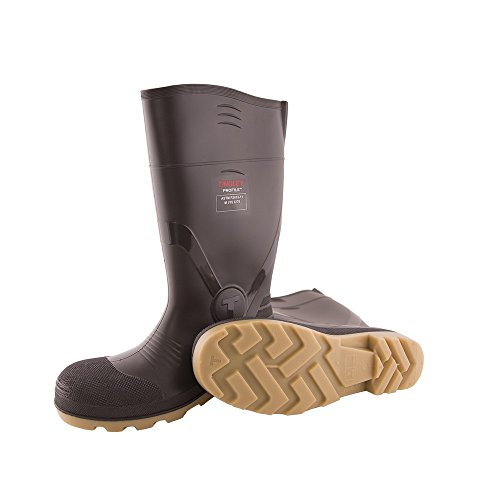
Waterproof: yes

NFPA 1951, NFPA 1971, NFPA 1977, NFPA 1990(1992), ASTM F2413 & CAN/CSA-Z195 certified

NFPA 1971, NFPA 1990(1992), ASTM F2413 & CAN/CSA-Z195 certified
Job-Specific Recommendations for Toe Protection
When selecting toe protection, it is crucial to contemplate the specific demands of your job environment, as different industries have unique safety requirements and comfort needs. How do you match protective footwear to your job site?
- Are you an electrician? Choose lightweight composite-toe boots for non-conductive safety against electrical hazard risks.
- Working in a warehouse? Opt for composite-toe boots to minimize fatigue, aiding longer shifts.
- Need compact footwear for tight spots? Steel-toe boots provide durability, though composite options enhance comfort if hazards are lower.
- Facing cold climates? Composite-toe boots offer better thermal insulation, keeping your feet warmer.
- Passing through metal detectors often? Composite-toe boots guarantee compliance without setting off alarms.
Selecting the right toe protection improves safety and comfort tailored to your work conditions. Additionally, considering features like slip-resistant soles can provide better stability on slippery surfaces, enhancing overall safety.
Recommended Products
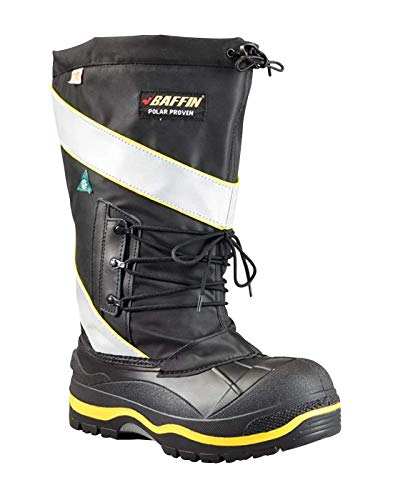
100% fabric synthetic sole temperature rating: -100ºc/-148ºf oil and acid resistant neoprene upper design oil and acid resistant stitching and laces
Addressing Common Misconceptions About Composite Toes
Why do many workers continue to question the safety and practicality of composite toe boots despite their growing popularity? Common misconceptions about composite toe footwear include doubts about protection, durability, and comfort. Consider these facts:
- Both composite toe and steel toe boots meet ASTM standards for impact resistance, providing similar protection.
- Composite toes resist rust and corrosion, often lasting longer than steel toe boots under certain conditions.
- Advances in design have made composite toe boots lightweight and less bulky, improving comfort without compromising safety.
- Although some believe composite toes fit only light-duty roles, they are suitable for high-impact jobs like construction and electrical work.
Understanding these points helps you evaluate composite toe boots based on performance, not outdated assumptions. Additionally, selecting boots with breathable materials can enhance comfort by promoting airflow and moisture control during long shifts.
Enhancing Comfort Through Proper Boot and Sock Selection
Where comfort begins with safety footwear often depends on the choice of both boots and socks. How can you enhance comfort and energy levels during long workdays? Proper fit is essential; boots that are too tight or loose cause discomfort and foot problems. Composite toe boots offer a weight difference of 30-50% less than steel toes, reducing fatigue. Why choose breathable socks? They provide cushioning that reduces friction and blister risk while managing moisture. How does thermal conductivity affect comfort? Steel toes conduct cold, creating a “freezer effect,” whereas composite toes maintain warmth. For enhancing comfort, select composite toe boots that fit well and pair them with breathable socks featuring padding. This combination supports foot health and energy, making workdays safer and more comfortable.
Frequently Asked Questions
Are Composite Toe Boots as Good as Steel Toe Boots?
Composite toe boots meet safety standards comparable to steel toes, offering composite benefits like lighter weight, superior insulation properties, and enhanced comfort levels. Boot durability varies by material, influencing industry preferences and cost comparison based on weight considerations.
How Much Lighter Is Composite Toe Than Steel Toe?
In a construction site study, composite toe boots were found 40% lighter than steel toes, enhancing comfort levels and flexibility factors. Despite weight differences, durability comparison and workplace safety, including heat resistance and electrical hazards, remain comparable, though cost analysis favors composites.
What Are the Downsides of Steel Toe Boots?
Steel toe boots meet safety standards but often compromise comfort level due to poor weight distribution and temperature sensitivity. Their impact resistance is strong, yet durability concerns and electrical hazards persist, while cost comparison shows they are generally less expensive than composite alternatives.
Are Composite Toe Boots Better for Security?
Like a feather in a storm, composite toe boots offer security benefits through superior workplace comfort and a significant weight difference. Their versatile design guarantees composite safety, impact protection, electrical hazard resistance, and reliable toe protection.


