As an Amazon Associate, we earn from qualifying purchases. Some links on this site are affiliate links at no extra cost to you. Our recommendations are based on thorough research and editorial judgment.


Key Differences Between Steel‑Toe and Composite‑Toe Work Boots

Steel-toe boots feature strong steel caps that offer robust impact protection but add weight and may rust. Composite-toe boots use lighter, corrosion-resistant materials like Kevlar, providing better insulation and non-conductive benefits for electrical safety. Both types meet ASTM standards and suit different environments—steel is preferred for heavy machinery, composite for wet or security-sensitive sites. Steel-toe boots tend to cause more foot fatigue, while composite boots improve comfort. Explore further to understand their specific applications and fit considerations.
Key Takeaways
- Steel-toe boots have metal caps offering strong impact protection but are heavier and prone to rust, while composite-toe boots use lightweight, non-metal materials.
- Composite toes resist corrosion, are non-conductive, and better for electrical hazard environments; steel toes conduct electricity and heat, posing risks in such conditions.
- Steel-toe boots can trigger metal detectors, making composite-toe boots preferable for security-sensitive settings like airports.
- Comfort-wise, composite-toe boots are lighter, reduce foot fatigue, and usually provide a roomier fit compared to heavier, snugger steel-toe boots.
- Both types meet ASTM F2413 safety standards, but selection depends on industry needs like temperature, weight, and specific workplace hazards.
Overview of Steel-Toe Work Boots
Steel-toe work boots are designed with reinforced toe caps made from steel, providing strong protection against impact and compression in demanding work settings like construction and manufacturing. What makes steel-toe safety boots essential for many work environments? They offer high impact resistance, meeting strict ASTM standards to guarantee durability and worker protection. However, steel toes can be heavier, possibly increasing foot fatigue during long shifts. Are there any safety concerns? Steel conducts heat, cold, and electricity, so these boots might not be ideal in extreme temperatures or around electrical hazards. What benefits do steel-toe boots offer? They come in various styles to match different job requirements, combining protection with comfort. Understanding these factors helps you choose the right footwear for your workplace needs. Additionally, features such as electrical hazard protection can enhance safety for those working near live circuits or energized components.
Recommended Products

Motorcycle-Ready Design: 11-inch pull-on design built for motorcycle enthusiasts seeking reliable performance and protection.
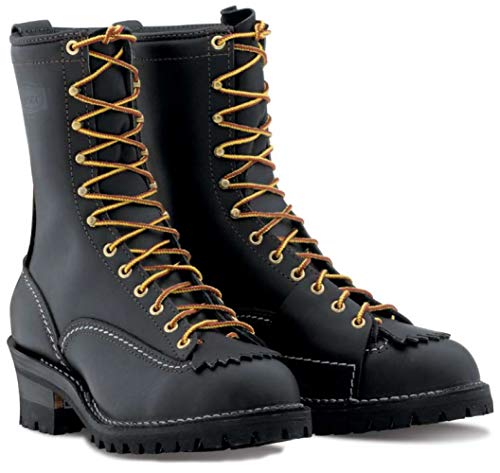
Premium Construction: The ultimate climbing boot worldwide, featuring 10 inches of 7 ounce oiled-leather top and foot for maximum durability and protection

10 inch tall 2.8mm thick full grain leather uppers
Overview of Composite-Toe Work Boots

While steel-toe boots offer robust protection, composite-toe work boots provide an alternative that combines safety with lighter weight and improved insulation. What makes composite-toe boots unique is their use of lightweight materials like Kevlar, carbon fiber, and fiberglass. How do these materials benefit you?
- They guarantee comfort by reducing foot fatigue during long work hours.
- Composite-toe boots provide excellent insulation, keeping your feet protected from extreme temperatures.
- Being non-conductive, they reduce the risk of electrical shock, which is essential around electrical hazards.
- Despite their lightness, these boots meet ASTM F2413 standards for impact resistance and compression protection.
If you require safety without added weight and enhanced insulation, composite-toe boots offer a practical option tailored to various work environments. Additionally, choosing the right toe protection type is crucial based on your work setting, whether it’s steel, alloy, or composite toe protection types.
Recommended Products

Black Prime Waterproof, Flame, and Cut-Resisting Leather upper
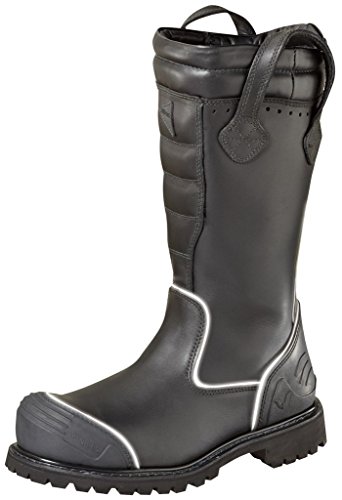
Flexible L-Protection Puncture-Resisting Insole Material Shaft Vapor Exhaust Vents Super Reinforced Leather Pull Straps Flexible Goodyear Storm Welt Construction 3M Scotchlite Reflective Material - High Visibility Piping

Delivers maximum Linesman performance and durability witha steelstability shank
Material Composition and Durability
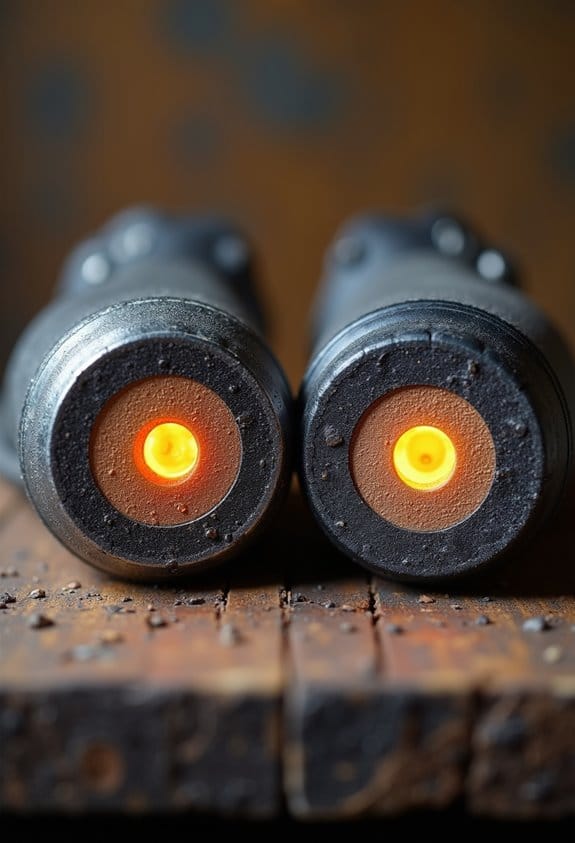
Material composition plays an essential role in determining the durability and suitability of work boots for various environments. What are the key differences between steel toe caps and composite toe caps? Steel toe caps consist of thin layers of steel, offering strong impact resistance and high durability, especially in harsh industrial conditions. However, they conduct heat and cold depending on environmental conditions. Composite toe caps are made from Kevlar, carbon fiber, or fiberglass, providing comparable impact resistance with a lightweight design. How do corrosion resistance and environmental suitability compare? Composite toe caps resist corrosion and do not rust, making them ideal for wet or humid settings. Steel toes may be less durable in such conditions due to corrosion risks. Understanding these material factors helps you select boots suited to workplace demands. Additionally, boots with reinforced metatarsal guards enhance protection by providing superior heat and slag resistance, essential for hazardous work environments.
Weight Differences and Impact on Comfort

Weight differences between work boots greatly affect comfort and fatigue levels, especially during long shifts or extensive walking. How do steel toe boots and composite toe boots compare in this aspect?
- Steel toe boots are heavier due to steel construction, which can increase foot fatigue and reduce mobility over time.
- Composite toe boots use lighter materials like Kevlar and carbon fiber, appreciably reducing weight and enhancing comfort during prolonged wear.
- Lighter materials in composite toe boots minimize strain, helping users maintain better energy and agility on job sites.
- While both boot types offer similar protective capabilities, the weight differences make composite toe boots a preferred choice for those prioritizing comfort and reduced fatigue.
Understanding these factors helps you select work boots that balance protection with daily comfort. Additionally, integrating boots with shock mitigation systems can further reduce foot impact and improve comfort throughout demanding workdays.
Recommended Products
Composite toe is ASTM F2413-11 M I/75 C/75 EH rated
10 inch tall 2.8mm thick full grain leather uppers
Protection Levels and Safety Standards
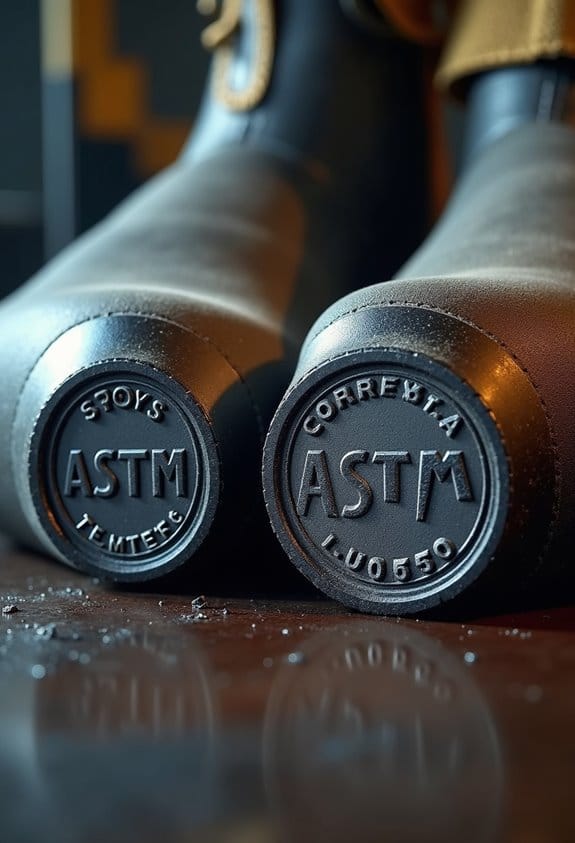
After considering the effects of weight on comfort, attention must also be given to the protection levels and safety standards of steel-toe and composite-toe work boots. What safety standards guarantee adequate protection? Both safety toe types meet ASTM F2413 standards, offering impact resistance against 75 pounds of force and compression resistance up to 2,500 pounds. How do steel toe and composite toe boots compare? Steel toe boots provide recognized strength and durability, ideal for heavy-duty environments. Composite toe work boots offer similar protection but are preferred where electrical hazards exist, due to their non-conductive material. How do you guarantee compliance? Look for safety toe markings and codes indicating protection levels, including resistance to punctures and electrical hazards, to match the specific hazards of your job and maintain regulatory compliance. Additionally, steel toe boots designed for electrical work environments must have ASTM F2413-18 EH rating to ensure proper electrical hazard protection.
Recommended Products
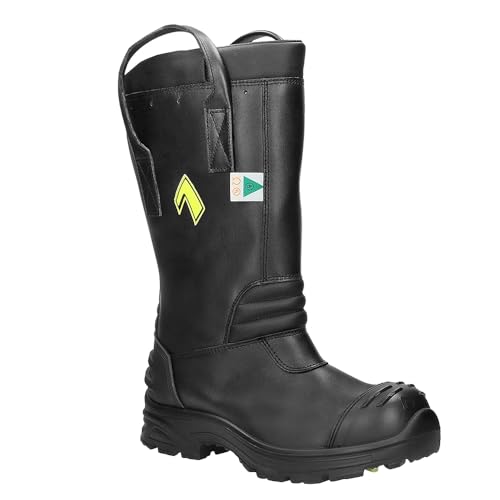
Certified to NFPA 1971, NFPA 1990 (1992), ASTM F2413 & CAN/CSA-Z195

Non-metallic composite safety toe, ASTM F2413 M/I/C rated

Certified to NFPA 1999, NFPA 1951, NFPA 1977, NFPA 1990 (1992), ASTM F2413 & CAN/CSA-Z195
Electrical Hazard and Metal Detection Considerations
When working in environments with electrical hazards or security screenings, choosing the right type of work boot is essential to guarantee safety and convenience. What are the electrical hazard considerations for safety toe boots? Composite toe boots are non-conductive, providing protection against electrical hazards and making them ideal for electricians or similar jobs. In contrast, steel toe boots may conduct electricity, despite offering high-impact protection, and are less suitable in such conditions. How do metal detectors affect your boot choice? Steel toe boots with metal components often trigger metal detectors, causing delays in security-sensitive areas like airports. Composite toe boots are available in fully non-metallic designs, helping you pass metal detectors smoothly. For protective footwear, select composite toe boots when electrical hazard safety and metal detector compliance are priorities. Additionally, ensuring your boots meet ANSI standards guarantees effective electrical protection and quality assurance.
Temperature Resistance and Cold Weather Performance
Although both steel-toe and composite-toe boots offer protection, their ability to handle temperature extremes differs considerably, especially in cold weather. How do these boots perform in cold weather conditions?
- Steel toe boots conduct heat and cold because of their metal components, which can reduce comfort in low temperatures by transmitting cold to your feet.
- Composite toe boots use non-metallic materials like Kevlar, providing better temperature insulation and maintaining comfort in cold weather.
- In uninsulated environments, composite toe boots keep a more consistent internal temperature, ideal for prolonged wear.
- Some steel toe boots include added insulation to improve performance in insulated environments and colder climates.
- Composite toe boots also tend to be lighter, making them preferable in wet or cold outdoor conditions where temperature insulation is critical.
- Footwear with lightweight materials further enhances comfort and agility in cold weather environments.
Suitability for Different Work Environments
Understanding the temperature performance of steel-toe and composite-toe boots offers insight into their suitability for various work environments. Which safety footwear suits your job depends on specific risks and conditions:
- Steel toe boots excel in environments with heavy machinery and falling objects, providing superior impact resistance and protection against sharp hazards.
- Composite toe boots are ideal where electrical hazards exist, as they are non-conductive and reduce shock risk.
- For outdoor work in cold or wet conditions, composite toe boots provide better insulation and comfort due to their heat and cold resistance.
- Jobs requiring metal detector passage, such as aviation or law enforcement, benefit from non-metal composite toe boots. Selecting between steel toe and composite toe footwear depends on your work environment’s hazards and practical needs to maintain maximum safety and comfort.
- Additionally, waterproof materials in boots enhance durability and foot protection in wet or rugged conditions, which is essential for many steelworker environments.
Common Myths and Misconceptions About Toe Types
Why do misconceptions about steel-toe and composite-toe work boots persist despite clear safety standards? The safety and health administration (OSHA) accepts both steel or composite toe boots if they meet impact and compression resistance criteria. Common misconceptions include these points:
- The belief that steel toes are superior in electrical risks is false; composite toes can also pass safety tests for electrical hazard protection.
- Some think toe caps are lighter but less durable; in reality, composite materials do not rust and can last as long as steel.
- It’s assumed composite boots degrade quickly after an impact, but they offer long-term protection unless visibly damaged.
- Advantages of steel boots include strong resistance, yet lighter alloy or composite vs steel alternatives provide viable, comfortable options.
Additionally, composite toe boots often feature slip-resistant soles and electrical hazard ratings to ensure safety on slippery surfaces and near live wires.
Understanding these facts helps clarify the composite vs steel debate accurately.
Fit, Comfort, and Insole Quality
When selecting safety toe boots, fit and comfort greatly influence overall wearability and foot health, especially during extended shifts. What should you consider about fit? A snug fit reduces blisters and foot ailments, while an ill-fitting boot causes discomfort and limits productivity. How do steel toe and composite toe boots differ in fit? Composite toe boots usually feature a roomy design, ideal for wider feet or those needing more toe movement, whereas steel toe boots often fit tighter. How important is insole quality? High-quality insoles provide cushioning and support, decreasing foot fatigue and aiding posture during long work periods. Finally, since steel toe boots tend to be heavier, they may increase foot fatigue compared to lighter composite toe options. Trying different styles guarantees the best fit, comfort, and insole quality for your specific needs. Additionally, features like removable full-cushioned footbeds enhance lasting comfort and shock absorption for all-day wear.
Industry Applications and Professional Preferences
Although both steel-toe and composite-toe work boots offer foot protection, their use varies across industries depending on specific safety requirements and professional preferences. What are the typical industry applications for each type of safety footwear?
- Steel-toe work shoes are widely used in manufacturing, construction, and warehousing, where maximum impact protection against heavy machinery and falling objects is essential.
- Composite-toe boots suit electricians and airport workers due to their electrical protection and non-metallic design, avoiding detection issues.
- Welders prefer composite toe for heat insulation and rust resistance in metalworking environments.
- Security personnel favor composite toe boots for comfort during extended shifts and compliance with metal detector protocols.
How do personal preferences influence your choice of work shoes based on your daily tasks and hazards?
Tips for Selecting the Right Safety Toe Work Boots
How should workers approach selecting the right safety toe work boots for their needs? First, consider the workplace hazards; steel toe boots suit heavy machinery areas, while composite toe boots are better for electrical risks and metal-free zones. Next, verify the boots meet ASTM F2413 standards for impact resistance, confirming reliable foot protection. Evaluate comfort by choosing a snug fit with good toe mobility and quality insoles to reduce fatigue. Think about environmental conditions: composite toe boots provide better insulation from temperature extremes, whereas steel toes might conduct heat or cold. Finally, assess weight preferences; composite toes are lighter and may increase mobility, but steel toes are heavier and could cause tiredness. Following these tips helps workers select safety footwear tailored to their specific needs.
Recommended Products

NFPA 1951, NFPA 1971, NFPA 1977, NFPA 1990(1992), ASTM F2413 & CAN/CSA-Z195 certified

NFPA 1971, NFPA 1990(1992), ASTM F2413 & CAN/CSA-Z195 certified

NFPA 1971, NFPA 1990(1992), ASTM F2413 & CAN/CSA-Z195 certified
Frequently Asked Questions
What Is the Difference Between Composite and Steel Toe Work Boots?
Before the dawn of the digital age, the difference between composite and steel toe work boots lies in weight comparison and comfort levels; composite boots offer superior insulation properties and electrical hazard protection, while steel toes excel in durability factors and style options within varied price ranges and safety ratings.
What’s the Difference Between Steel and Composite?
Steel and composite work boot materials differ in weight, insulation, and durability. Steel offers higher durability but less insulation and increased weight. Composite guarantees better comfort and insulation, complies with safety standards, varies in cost, and suits specific industry usage.
What Are the Disadvantages of Steel Toe Boots?
Steel toe boots exhibit weight concerns and temperature sensitivity, causing comfort issues. They lack insulation against electrical hazards, have durability factors like rust, smaller toe box space, higher moisture retention, and often differ in cost compared to alternatives.
Are Composite Toe Shoes OSHA Approved?
Like a lightweight shield in battle, composite toe materials meet OSHA’s safety standards comparison for impact resistance, offering superior comfort levels, temperature resistance, and durability factors, while reflecting workplace regulations and price variations without the weight differences typical of steel.


