As an Amazon Associate, we earn from qualifying purchases. Some links on this site are affiliate links at no extra cost to you. Our recommendations are based on thorough research and editorial judgment.

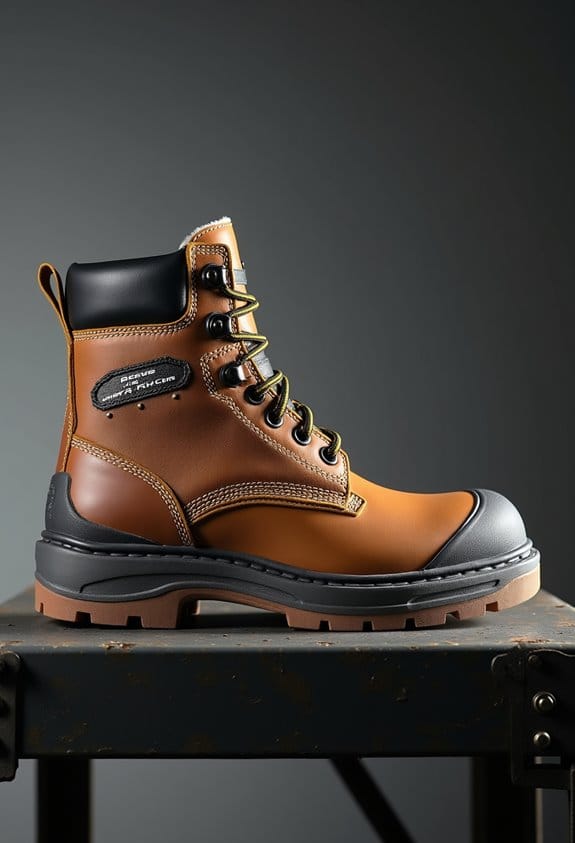
The Role of Puncture‑Resistant Plates in Construction Footwear

Puncture-resistant plates in construction footwear protect your feet by blocking sharp objects like nails from penetrating the sole. These plates, made from steel or composite materials, balance durability and comfort while meeting safety standards such as ASTM F2413 and CSA Z195. Steel plates offer strong protection but add weight, whereas composite plates are lighter and flexible. Properly certified footwear displays “PR” markings, ensuring reliable defense. Understanding these plates helps you choose suitable boots for on-site safety and longevity.
Key Takeaways
- Puncture-resistant plates block sharp objects like nails, preventing foot injuries on construction sites.
- They are made from steel or composite materials, balancing durability and comfort.
- Certified plates meet safety standards like CSA Z195 and ASTM F2413, ensuring reliable protection.
- Steel plates provide strong resistance but are heavier; composite plates offer lighter, flexible protection.
- Regular maintenance and inspection of plates extend boot life and maintain safe performance.
Understanding Puncture-Resistant Plates in Work Boots
Although work boots vary in design, what sets puncture-resistant models apart is the presence of a protective plate beneath the footbed that blocks sharp objects from penetrating the sole and injuring your foot. What are puncture-resistant plates? These plates act as firm barriers inside construction footwear to protect against puncture hazards like nails or metal shards. What materials are used? Common options include steel plates, known for durability, and composite plates, which are lighter and non-metallic. How do safety standards apply? To guarantee reliable foot protection, puncture-resistant plates must meet safety standards such as CSA Z195 and ASTM F2413. How can you verify protection? Look for “PR” markings on the boot’s label or outsole to confirm the inclusion of puncture-resistant safety features in your work boots. Additionally, combining puncture-resistant plates with features like steel toes and shanks can provide ultimate foot protection against a variety of construction hazards.
Steel Plates Versus Composite Plates: Key Differences
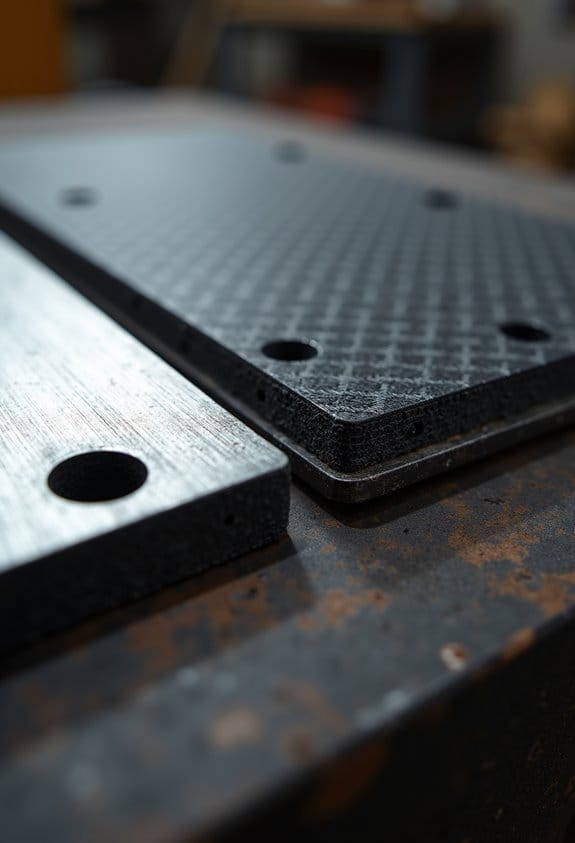
Work boots that include puncture-resistant plates protect against sharp objects by incorporating either steel or composite materials beneath the footbed. What are the key differences between steel plates and composite plates in safety footwear?
- Steel plates offer strong puncture resistance and durability, making them suitable for high-risk construction sites. However, they add weight and reduce flexibility, which may affect comfort.
- Composite plates, made from materials like Kevlar or engineered plastics, provide similar protection while being lighter and more flexible. They enhance comfort by allowing better movement and temperature neutrality.
- Steel plates can conduct heat and cold and may trigger metal detectors, unlike composite plates.
- Both types meet safety standards (CSA Z195 & ASTM F2413) for protection, ensuring they withstand forces up to 1200 Newtons.
- The choice depends on balancing protection needs with comfort, considering the work environment and footwear demands.
- Incorporating advanced cushioning features such as removable full-cushioned footbeds can further improve the comfort of boots with puncture-resistant plates.
How Puncture-Resistant Plates Enhance On-Site Safety
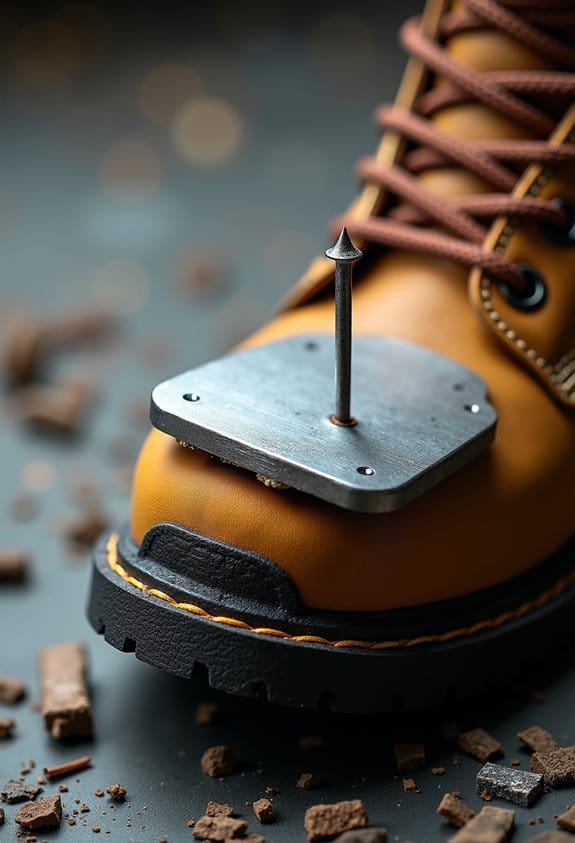
Puncture-resistant plates play an essential role in maintaining safety on construction sites by preventing sharp objects from piercing footwear soles. How do these plates enhance worker safety?
- They act as a strong barrier in construction footwear, blocking hazards like nails and glass shards.
- Made from steel or composite, they protect your feet by balancing durability with comfort.
- As part of personal protective equipment, they help reduce the risk of foot injuries considerably.
- These plates comply with rigorous safety standards, ensuring reliable protection under tough conditions.
- Combining puncture-resistant plates with steel shanks provides additional underfoot protection and structural support.
The Importance of Meeting Industry Safety Standards
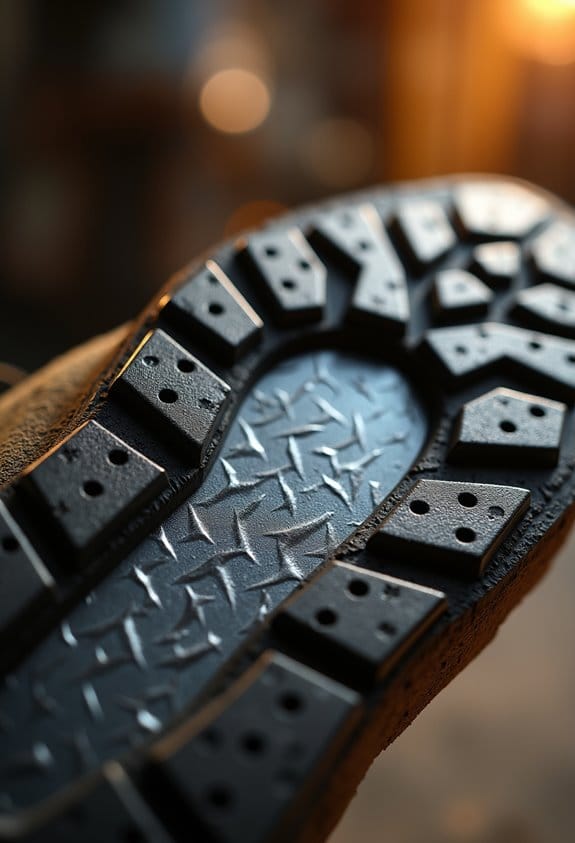
Assuring that footwear meets recognized industry safety standards is essential for effective protection against on-site hazards. Why are industry standards important for puncture-resistant work boots? They guarantee that construction footwear includes a certified puncture-resistant plate able to withstand sharp objects, as specified in ASTM F2413-18, which rates protection up to 1,200 Newtons. How can you identify compliant boots? Look for the “PR” marking, indicating certified puncture resistance. What role do these standards play in safety protocols? They assure footwear qualifies as personal protective equipment, reducing foot injuries and employer liability. Adhering to standards like ASTM F2413-18 and CSA Z195 promotes uniformity and reliability in protective gear, helping workplaces maintain safety compliance and protecting workers from potential hazards effectively. Additionally, choosing boots with durable construction and protective features enhances long-term safety and comfort on demanding job sites.
Selecting the Right Puncture-Resistant Footwear for Your Job
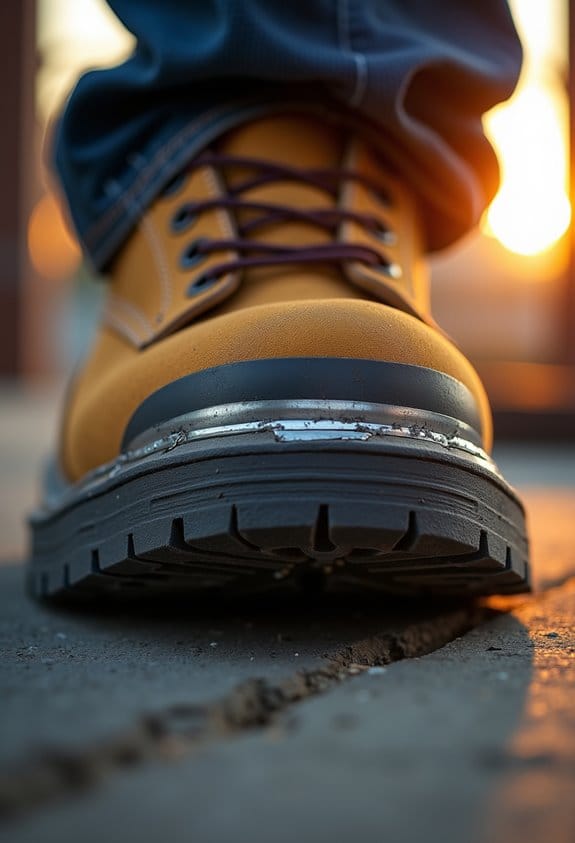
Although various safety features exist, selecting footwear that matches the specific job requirements is crucial for ideal protection and comfort. How do you verify your puncture-resistant footwear fits the task? First, check compliance with ASTM F2413-18 safety standards, which guarantee reliable protection from sharp objects. Next, consider the midsole type: steel midsoles offer maximum protection for high-risk construction sites, while composite midsoles suit lighter tasks or metal-free environments. What additional features improve safety and comfort? Choose boots with slip-resistant outsoles to prevent falls and cushioned insoles for long hours of standing. Finally, check for the “PR” marking on the label, which confirms the presence of a puncture-resistant plate. These factors together guarantee ideal protection and suitability for your job’s demands. Additionally, boots featuring composite toes provide non-conductive protection without added weight, enhancing both safety and comfort on the job.
Maintenance Tips to Prolong the Life of Puncture-Resistant Boots
Once you have selected the right footwear with adequate protection, maintaining those boots is necessary to keep their safety features intact and extend their useful life. How can you optimize performance and protect your feet? Here are essential maintenance tips for puncture-resistant boots:
- Regularly clean boots with a damp cloth and mild soap to remove dirt and prevent material degradation.
- Inspect the sole and puncture-resistant plate frequently for damage or wear; replace if necessary.
- Apply waterproofing treatments designed for work boots to enhance resilience against water damage.
- Store your boots in a cool place, away from direct sunlight, to avoid material breakdown.
- Avoid exposure to extreme temperatures or prolonged moisture, which can weaken the protective layers and allow sharp objects to penetrate.
Additionally, ensuring your boots have properly reinforced steel toe caps can maintain optimal impact protection while extending boot lifespan.
Following these steps helps prolong safety and durability.
Frequently Asked Questions
What Is a Puncture Resistant Plate?
A puncture-resistant plate is a protective gear component in construction footwear that enhances puncture resistance and impact protection against workplace hazards, combining long-lasting durability and various footwear materials while maintaining comfort levels and slip resistance as essential safety features.
What Does Puncture Resistant Shoe Mean?
A puncture-resistant shoe is a type of safety shoe designed with advanced footwear technology to protect employees from workplace hazards. Its durable materials and boot features enhance comfort levels while ensuring compliance with industrial standards for injury prevention in construction safety.
What Is the Standard for Puncture Resistant Boots?
The standard for puncture-resistant boots includes ASTM F2413-18 and CSA Z195, reflecting footwear safety standards. These address puncture resistance technology, boot material durability, protective shoe features, and employee safety regulations relevant to industrial work conditions and construction site hazards.
What Is ISO 20345 Standard for Safety Footwear?
The ISO 20345 standard defines safety regulations for protective footwear, specifying testing methods and durability standards. It guarantees foot protection against construction hazards, mandates safety certifications, and includes requirements for footwear materials, ankle support, and slip resistance.