As an Amazon Associate, we earn from qualifying purchases. Some links on this site are affiliate links at no extra cost to you. Our recommendations are based on thorough research and editorial judgment.

What Makes a Boot “Tactical” Compared to a Regular Work Boot?

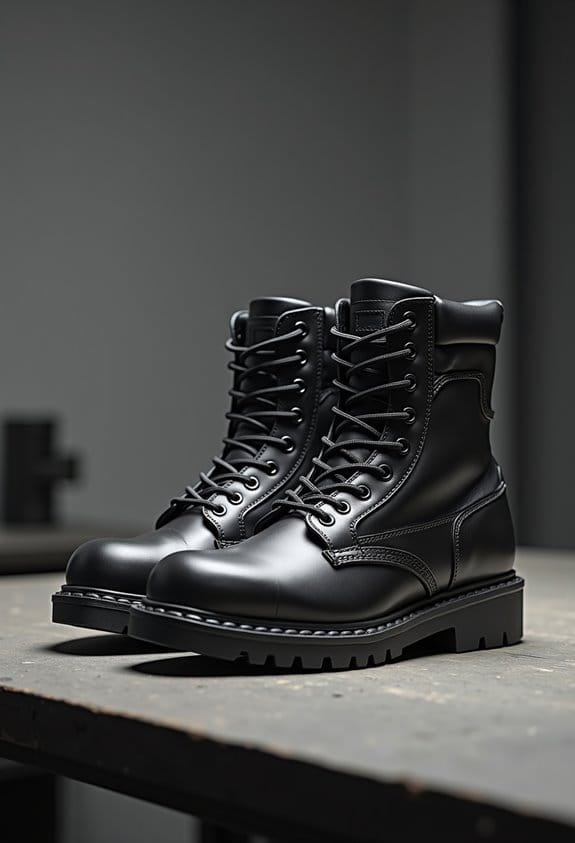
Tactical boots differ from regular work boots in weight, materials, and purpose. They are lightweight, often under two pounds, allowing swift movement, and use synthetic leather and nylon for durability and comfort. Tactical boots feature deep treads for better traction on varied terrains and provide enhanced ankle support with reinforced toe caps. Regular work boots are heavier, focused on impact protection and stability in industrial settings. To understand which boot suits your needs, explore their specific design and features further.
Key Takeaways
- Tactical boots are lightweight and designed for high mobility across varied terrains, unlike heavier, stability-focused regular work boots.
- They use materials like nylon and synthetic leather, providing breathability and moisture-wicking properties absent in most traditional work boots.
- Tactical boots offer superior ankle support and reinforced protection with impact-resistant toe caps and puncture-resistant shanks.
- Their outsoles have deep tread patterns and advanced rubber compounds for enhanced traction on diverse surfaces compared to flatter work boot soles.
- Tactical boots balance waterproofing and breathability for comfort during dynamic activities, whereas work boots emphasize durability in industrial settings.
Defining Tactical Boots
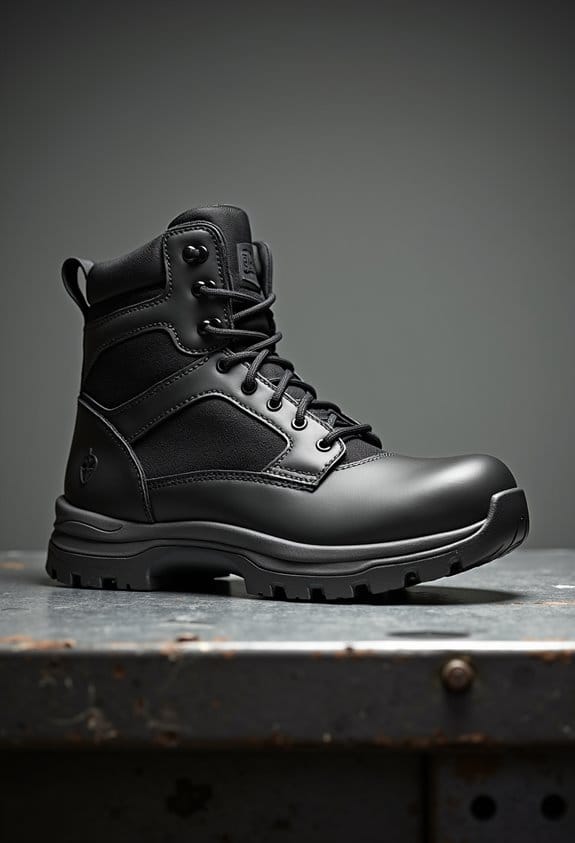
When exploring tactical boots, you should understand that these boots are designed primarily for high mobility and adaptability across unpredictable terrains. What makes tactical boots distinct for their purposes? They balance lightweight construction with durability, using materials like nylon and synthetic leather to help you move quickly without sacrificing protection. Key features include breathable mesh panels, moisture-wicking linings, cushioned insoles, and slip-resistant outsoles. These elements enhance comfort and stability, especially during long hours or rapid movements. Unlike other boots focused on heavy protection, tactical boots serve varied environments such as urban areas and outdoor field operations. Additionally, they require less break-in time, making them suitable for those needing fast adaptation. Understanding these qualities helps you choose the right boot for demanding tasks requiring agility and reliability. Models like the Under Armour Charged Valsetz series incorporate durable Vibram XS Trek outsoles that provide excellent traction and flexibility critical for mission readiness.
Characteristics of Regular Work Boots

Regular work boots prioritize durability and protection, making them well-suited for industrial and heavy-duty environments. What are the key characteristics of regular work boots? First, they are heavier than tactical boots, often weighing 4-6 lbs per pair, which enhances stability. Second, their construction uses high-quality leather with reinforced materials, offering excellent impact protection against workplace hazards. Third, regular work boots include features such as arch support and shock-absorbing midsoles, helping you stay comfortable during long, physically demanding shifts. Fourth, waterproofing and insulation protect your feet from moisture and extreme temperatures, increasing their functionality. Unlike tactical boots, these boots focus less on mobility, emphasizing durability and security for environments where heavy-duty performance matters most. Many also incorporate oil- and slip-resistant outsoles to enhance safety on hazardous and slippery surfaces.
Materials Used in Tactical vs. Work Boots
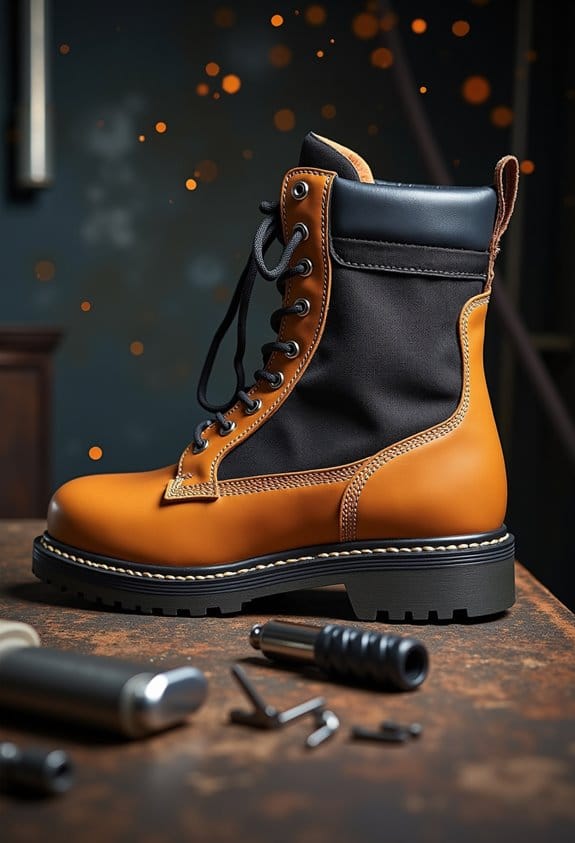
Material choice plays a significant role in defining the performance and purpose of tactical and work boots, directly influencing how well they meet user needs. What materials are typically used in these boots?
- Tactical boots use lightweight materials such as nylon, synthetic leather, and breathable mesh. This combination enhances mobility and comfort during active tasks.
- Work boots prioritize durable construction, often incorporating full-grain leather and reinforced rubber to withstand harsh industrial environments.
- For moisture management, tactical boots feature moisture-wicking linings to keep feet dry, whereas work boots include waterproof membranes to combat wet conditions.
- The soles differ as well: tactical boots focus on slip-resistant treads for diverse terrains, while work boots have thicker, rugged soles designed for grip and stability.
Additionally, many high-quality work boots use premium waterproof leather and meet ASTM F2413 safety standards to ensure durability and protection in demanding work environments.
Weight and Mobility Comparison

Often overlooked in boot selection, weight and mobility are essential factors that influence performance and comfort across different work environments. What is the weight and mobility comparison between tactical boots and work boots? Tactical boots prioritize being lightweight, typically weighing under two pounds per pair. This enhances your mobility, making quick movements and agility easier during tasks like running or climbing. In contrast, work boots are built heavier, usually between four and six pounds per pair, which adds stability and protection but can limit speed and ease of movement. Tactical boots prioritize comfort for extended wear, balancing durability with less bulk. Meanwhile, work boots are built for long-term safety in hazardous areas with their heavier, sturdier construction that sacrifices some mobility for added protection. Additionally, tactical boots often feature flexible soles that allow for natural foot movement and improved shock absorption, further enhancing agility.
Flexibility and Range of Motion
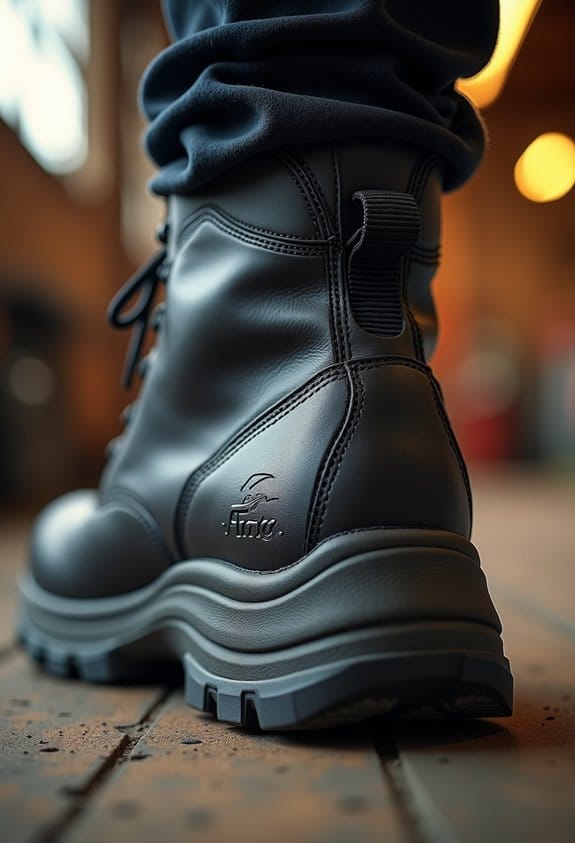
Weight impacts not only mobility but also the flexibility and range of motion provided by work boots. How do tactical boots enhance flexibility and range of motion compared to regular work boots? Tactical boots use lighter materials like nylon and synthetic leather, which allow your foot to move more freely. Their thinner, more flexible midsoles and outsoles promote natural foot movement, helping reduce fatigue during long wear. Additionally, tactical boots typically weigh under two pounds per pair, improving agility during rapid movements. What about support? Unlike regular work boots with stiff midsoles prioritizing stability over flexibility, tactical boots balance both, so you maintain support without restricting motion. To summarize, tactical boots offer better flexibility and range of motion, making them suited for activities needing swift, agile footwork. Many tactical boots also incorporate Vibram slip-resistant outsoles, further enhancing stability during agile movements in diverse terrains.
Comfort Features and Fit
Comfort in tactical boots results from several design features that work together to reduce foot fatigue and enhance fit during extended wear. What comfort features distinguish tactical boots? Key elements include:
- Cushioned insoles that absorb impact and reduce strain on your feet.
- Ergonomic designs shaping the boot to your foot’s natural contours.
- Breathable mesh panels and moisture-wicking linings that keep feet dry and cool.
How does the fit of tactical boots compare to regular work boots?
- Tactical boots use lighter materials to improve flexibility and mobility.
- Fit is more tailored, often requiring a break-in period to conform closely to your feet.
- Padded collars add comfort around the ankles.
These comfort and fit features make tactical boots suitable for prolonged activities demanding both support and flexibility. Additionally, many tactical boots incorporate removable insoles to allow for hygiene maintenance and customized comfort levels.
Protection and Durability Differences
As you consider comfort and fit, it is also important to examine the protection and durability offered by tactical boots compared to regular work boots. What sets tactical boots apart in these areas?
- Tactical boots use premium materials like Cordura and full-grain leather, which resist water, abrasion, and extreme weather more effectively.
- Reinforced toe caps and shanks in tactical boots provide superior protection against impacts and punctures.
- Tactical boots feature higher cut designs, improving ankle support to help prevent injuries during dynamic movements.
- Durability in tactical boots often exceeds that of regular work boots, which tend to prioritize comfort over ruggedness.
- These attributes make tactical boots suitable for demanding environments where enhanced protection and longer-lasting wear are critical.
- Many tactical boots incorporate TPU outsoles that provide excellent waterproofing, abrasion resistance, and slip resistance to enhance protection and durability.
Traction and Outsole Design
When selecting work boots, understanding the differences in traction and outsole design is essential for safety and performance. What makes tactical boots stand out in these areas?
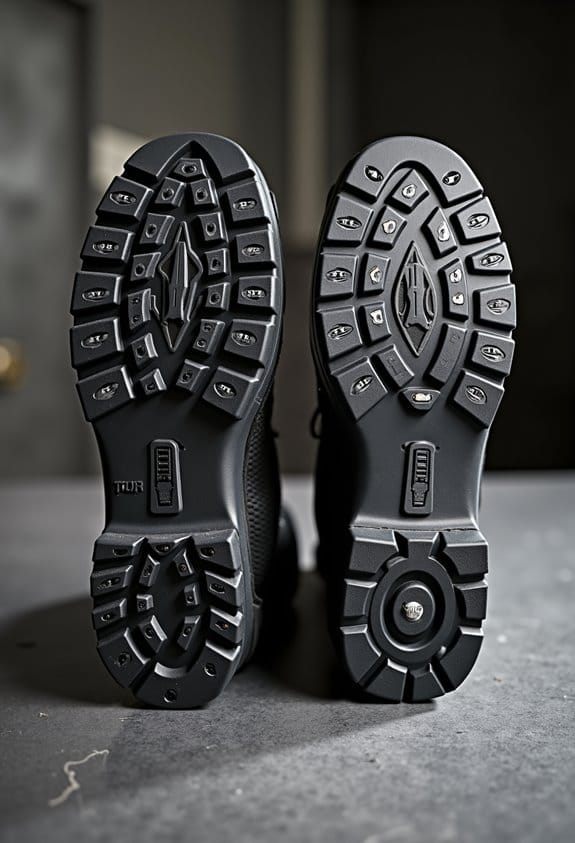
- Tactical boots feature deep tread patterns that offer superior traction on various surfaces, unlike regular work boots with flatter outsoles meant for stable environments.
- Their outsole design often uses rubber compounds, enhancing slip resistance and durability during high-mobility tasks.
- Multi-directional lugs improve traction during rapid movements and uneven terrain navigation, maintaining stability in dynamic situations such as climbing.
- Regular work boots focus more on comfort, sacrificing traction to suit predictable, stable work settings.
- Many tactical boots incorporate Vibram XS Trek outsoles which ensure exceptional traction and flexibility on tough terrain, enhancing performance in demanding environments.
Weather Resistance and Insulation
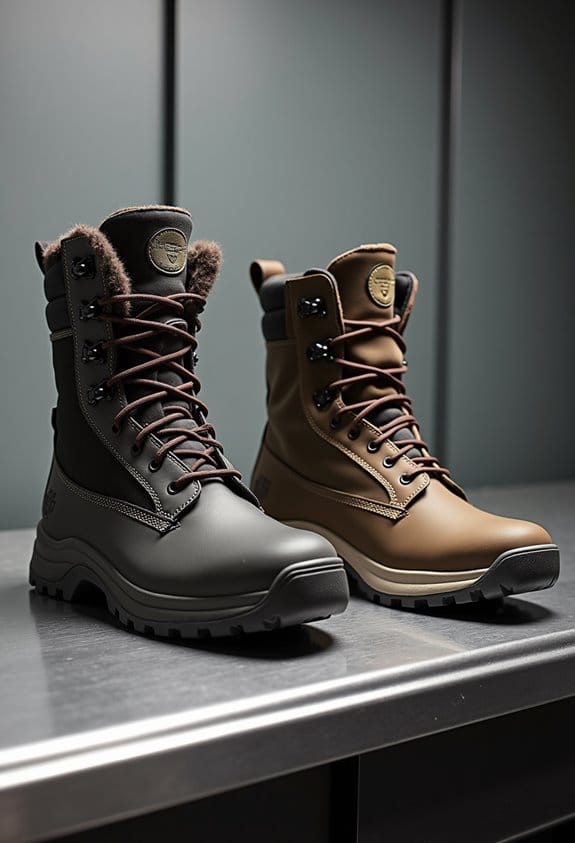
Beyond traction and outsole design, weather resistance and insulation play significant roles in determining the suitability of tactical versus regular work boots. What features contribute to better weather protection? Tactical boots often include waterproofing membranes and insulation, which help maintain warmth without adding bulk, unlike many regular work boots. How do breathable materials affect comfort? Tactical boots use moisture-wicking linings to keep feet dry, while regular boots may lack this focus. What about water resistance? Reinforced water-resistant materials in tactical boots protect against splashes and puddles, preventing water absorption common in standard work boots. Together, these features enhance performance in varied conditions, offering mobility and protection beyond the typical work boot’s capability in stable environments. Additionally, the use of breathable membranes in tactical boots allows sweat and heat to escape, reducing moisture buildup and stabilizing temperature inside the boots for improved foot health.
Ideal Environments for Tactical and Work Boots
Although tactical and regular work boots share the goal of protecting feet, each type suits different environments based on specific demands. What are the ideal environments for tactical boots? These boots excel in urban settings and unpredictable terrains where agility and quick response are needed, such as law enforcement, military operations, hiking, or climbing. Their lightweight design and advanced grip support high traction and mobility. Conversely, what environments best fit work boots? Work boots thrive in industrial sites like construction zones or factories where durability and safety are critical. Features like reinforced toes and insulation protect against hazards and harsh conditions. Understanding these ideal environments helps you recognize when tactical boots or work boots provide the appropriate support and protection for your specific tasks and surroundings. Additionally, tactical boots often incorporate waterproof Gore-Tex technology to manage moisture in variable weather conditions, enhancing their usability in diverse environments.
Choosing the Right Boot for Your Needs
How can one determine the best boot type for specific tasks and environments? To choose the right boot, consider these key factors:
- Environment and Task: Tactical boots suit dynamic activities in urban or outdoor settings requiring agility. Work boots excel in industrial environments needing sturdy foot protection.
- Weight and Mobility: Tactical boots are lightweight (under two pounds) for quick movements, while work boots weigh 4–6 pounds, offering strong support but less flexibility.
- Comfort Features: Choose tactical boots with moisture-wicking linings and cushioned insoles for long wear comfort. Work boots focus on reinforced materials, prioritizing safety rather than comfort.
- Protection Level: Tactical boots provide advanced traction and support for active use. Work boots emphasize impact resistance and waterproofing against hazards.
Ultimately, assess your specific requirements carefully to choose the right option between tactical boots and work boots.
Frequently Asked Questions
What Is the Difference Between Tactical Boots and Work Boots?
Tactical boots excel in outdoor applications with lightweight design and flexible ankle support, enhancing agility. In contrast, work boots emphasize material durability and reinforced structure, prioritizing protection over mobility in demanding industrial environments.
What’s the Point of Tactical Boots?
Tactical boots optimize mobility and protection through performance features like reinforced toe caps, design innovations such as breathable, lightweight materials, and material benefits including moisture-wicking linings, all enhancing comfort and adaptability in demanding physical environments.
What Defines a Tactical Boot?
A tactical boot is defined by tactical boot features like reinforced toe caps, slip-resistant soles, and breathable mesh panels. Tactical boot materials include lightweight nylon and synthetic leather, while tactical boot design prioritizes flexibility, agility, and durability in demanding environments.
What Are Common Problems With Tactical Boots?
Common tactical issues include reduced tactical boot durability due to lighter materials and a break-in period affecting tactical boot fit, often causing discomfort. Additionally, challenges with water resistance and ankle support frequently compromise overall performance and user experience.