As an Amazon Associate, we earn from qualifying purchases. Some links on this site are affiliate links at no extra cost to you. Our recommendations are based on thorough research and editorial judgment.


Recognizing When Your Work Boots Are No Longer Supporting You Properly

To recognize when your work boots no longer support you properly, check for visible damage like cracks, tears, or worn soles reducing traction. Detect internal wear by noting excessive flexibility, wrinkles, or midsole compression indicating cushioning failure. Assess protective features such as toe caps and metatarsal guards for dents or cracks that weaken safety. Pay attention to persistent foot pain or easy heel bending signaling lost support. Monitoring usage time and tread depth helps prevent discomfort and injury. Explore further to understand detailed signs and maintenance tips.
Key Takeaways
- Persistent foot pain or discomfort signals that your work boots may have lost proper arch and overall support.
- Excessive sole flexibility and wrinkling in the midsole indicate structural breakdown affecting support.
- Visible cracks, tears, or separation in the boot’s upper or sole compromise stability and protection.
- Noticeable tread wear and smooth, flat soles reduce traction and increase the risk of slips.
- Frequent bending or collapse in the heel or toe area suggests the boot no longer provides adequate support.
Identifying Visible Damage on Your Work Boots

How can you tell if your work boots need attention? Inspecting for visible damage is a key step to evaluate whether to replace them. Look for signs of damage such as cracks, tears, or holes in the outer material, especially on the toe guards and safety features. Check for wear and tear on the soles, including worn tread or smooth areas, which reduce traction and increase slip danger. Examine the structural support by observing any separation between the upper boot and sole; this affects foot health and reduces protection. Finally, assess the midsole for visible degradation because it impacts cushioning and support. Consistent inspecting guarantees your work boots maintain safety features and structural support, preventing injuries and preserving foot health over time. Additionally, maintaining proper waterproofing benefits ensures that your boots continue to protect your feet from moisture-related issues and extend their useful life.
Detecting Internal Wear and Hidden Issues

Detecting internal wear and hidden issues in work boots requires careful attention to subtle signs that affect performance and foot health. What indicates midsole failure? Look for reduced height in the boot’s sole and compression or wrinkles in the midsole, which lower cushioning and support. How does structural damage appear? Excessive flexibility, especially in the toe area, signals weakened structure and inadequate support, risking foot injury. When might persistent foot pain occur? Often, it results from worn-out insoles failing to support the arches. What reveals traction wear? Signs of slippage or flat, worn-down soles reduce grip and stability. Regular checks for internal wear can prevent discomfort and injury by ensuring your boots continue to provide proper support throughout demanding tasks.
Assessing the Condition of Protective Features
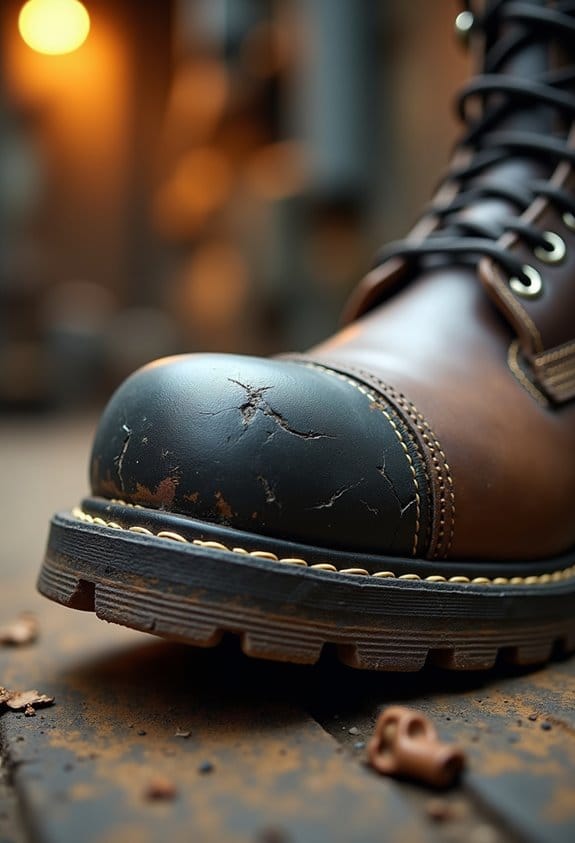
Protective features in work boots serve as critical barriers against injuries, and regular assessment is necessary to guarantee their effectiveness. How can you assess these features? First, check for damage such as dents, cracks, or holes in safety features like toe caps and metatarsal guards. If metatarsal guards are visible or poking through the boot’s upper, it is time to replace work boots. Second, inspect the structural integrity; worn work boots with compromised safety elements risk catastrophic failure in hazardous environments. Third, test waterproofing by observing any water seepage or material degradation, which can increase the risk of foot injuries. To summarize, maintain these steps:
- Regularly look for visible damage
- Check that all safety features remain intact
- Replace work boots when protective features weaken
Recognizing Discomfort and Support Loss
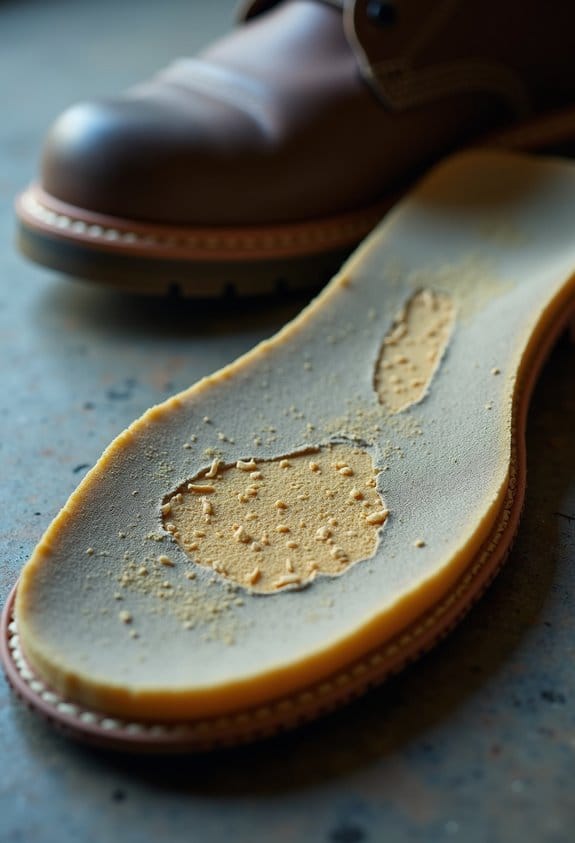
When discomfort or pain arises in the feet, ankles, knees, or hips during or after wearing work boots, it often signals a loss of support within the footwear. How can you recognize this loss?
- Persistent foot pain or plantar fasciitis may indicate insufficient arch support.
- Notice if the boot’s heel bends easily or shows excessive flexibility, as this suggests loss of structural support.
- Inspect the upper shaft for wrinkles or tilting, which means the integrity is compromised.
- Discomfort during use—such as instability or uneven pressure—often signals that the supportive function is failing.
If these signs appear, evaluating replacement is essential to avoid worsening pain or injury. Proper support preserves foot health and overall comfort during work activities. Considering boots with advanced cushioning technologies can help restore comfort and reduce fatigue.
Understanding the Impact of Excessive Flexibility

Although some flexibility is important for comfort, excessive bending in work boots often signals a loss of critical structural support. Why does this matter? Excessive flexibility means the materials have weakened, reducing the boot’s ability to protect your feet from injuries like sprains. How can you check? Perform a flexibility test by bending the boot from toe to heel; if it feels floppy or the heel counter easily folds, the supportive structure has likely degraded. What are the risks? Without proper structural support, your body alignment may suffer, leading to uneven weight distribution and discomfort in your back or ankles. To maintain safety, combine flexibility tests with regular visual inspections, ensuring the work boots you wear continue to provide necessary comfort and reliable support throughout their use. Additionally, paying attention to the material durability of your boots is crucial, as premium waterproof leather and abrasion-resistant features play a significant role in maintaining support and longevity.
Evaluating Boot Usage and Replacement Timing
A critical part of maintaining safe footwear is evaluating how much your work boots have been used and determining the right time to replace them. When should you replace your boots? Consider these signs and factors:
- Usage: Work boots often need replacement every 6 to 12 months; heavy-duty jobs may require new boots every 3 to 4 months.
- Wear: Check tread depth and inspect for external damage that reduces support.
- Pain: Foot discomfort can indicate inadequate boot support caused by wear.
- Environmental exposure: Water, mud, and heavy materials accelerate boot deterioration, affecting replacement timing.
- Mileage: Walking between 300 and 500 miles typically signals significant wear.
- Regular inspections help track support loss and identify replacement needs before pain occurs.
- Additionally, paying attention to the condition of your boots’ slip-resistant outsoles is vital for maintaining safety on slippery surfaces.
Frequently Asked Questions
When to Throw Out Work Boots?
Work boots should be discarded when tread wear, insole wear, and sole flexibility decline, compromising comfort deterioration, ankle support, toe protection, water resistance, breathable materials, or when outer material damage exceeds the expected work boot lifespan.
How Do You Tell if You Need New Work Boots?
Signs indicating the need for new work boots include boot sole wear, diminished arch support, compromised toe protection, reduced ankle stability, poor grip performance, increased moisture absorption, cushioning breakdown, fit issues affecting weight distribution, and decreased long-term comfort.
How Often Are You Supposed to Replace Work Boots?
Work boots should typically be replaced every 6 to 12 months, depending on boot durability factors, tread wear indicators, insoles replacement tips, waterproofing effectiveness, boot material types, arch support importance, work environment impact, safety toe requirements, proper care techniques, and seasonal considerations.
When to Retire Boots?
When sole wear mirrors a fading mountain trail and tread depth flattens like a weathered path, comfort indicators fade—foot pain or diminished arch support signal retreat. Assess fit, heel lift, water resistance, and structural integrity for material breakdown.