As an Amazon Associate, we earn from qualifying purchases. Some links on this site are affiliate links at no extra cost to you. Our recommendations are based on thorough research and editorial judgment.

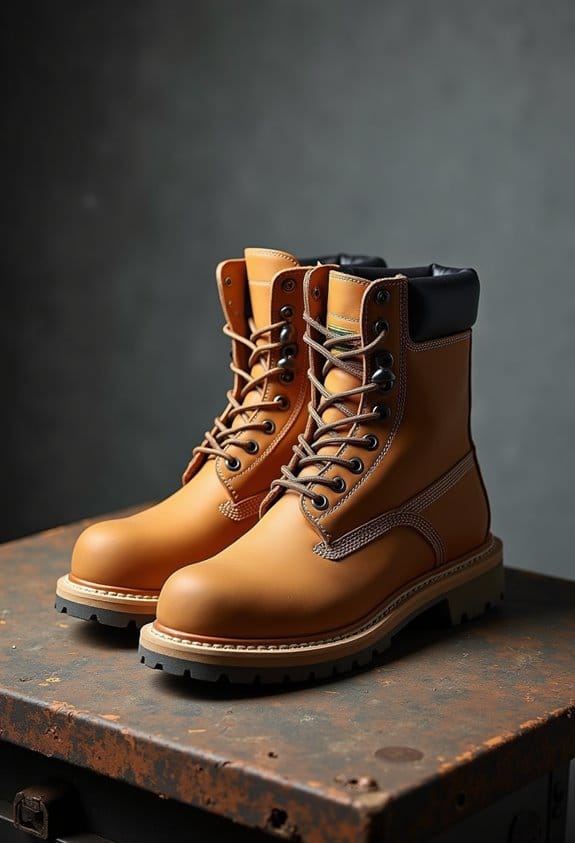
Interviews With Workers: What They Wish They Knew Before Buying Work Boots

Workers wish they knew the importance of selecting boots based on job hazards, such as steel toe protection for impact risks or insulation for cold environments. Proper fit reduces blisters and foot strain, so trying boots at day’s end is advised. Durable leather with reinforced stitching guarantees longevity, while slip-resistant soles match terrain needs. Understanding tread patterns and consulting experts or reviews helps tailor choices. Learning these factors improves comfort and safety; more details follow to help you choose wisely.
Key Takeaways
- Prioritize proper fit and immediate comfort to avoid long-term foot pain and blisters from ill-fitting boots.
- Understand the required toe protection type, like steel or composite, based on your specific job hazards.
- Choose durable materials and construction methods for longer boot lifespan, especially reinforced stitching and puncture-resistant soles.
- Consider environmental factors such as waterproofing and slip resistance for better safety and comfort in varied work conditions.
- Regularly maintain boots with cleaning, conditioning, and proper storage to prevent premature wear and maintain performance.
Understanding Job-Specific Boot Requirements
When selecting work boots, it is essential to understand the specific requirements of your job site to guarantee appropriate protection and comfort. What does your job require in work footwear? First, review OSHA guidelines, which clarify when steel toe boots are necessary based on industry risks. Next, assess electrical hazards at your site; this helps in choosing boots with proper insulation or non-conductive materials. Consider the balance between flexibility and durability, as some tasks demand more sturdy boots, while others need more agile options. Evaluate boot construction types: Goodyear welt offers long-lasting durability, while direct attach types enhance flexibility. Finally, select toe protection suited to the task—steel toes provide heavy-duty defense, composite toes reduce weight, and aluminum toes improve breathability without sacrificing safety. Additionally, pay attention to features such as high-traction soles to ensure stability and grip, especially in wet or slippery conditions. This targeted approach guarantees informed footwear decisions that meet job demands.
Importance of Proper Fit and Comfort
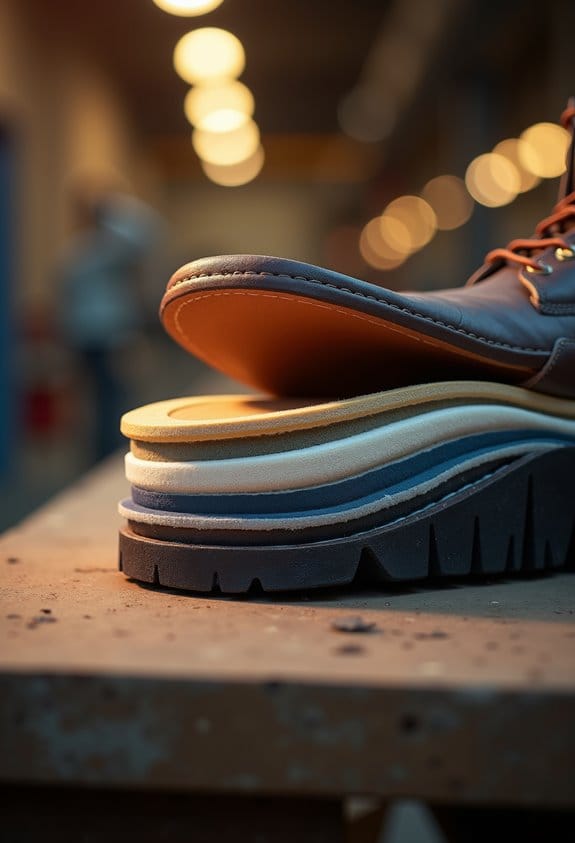
Proper fit and comfort in work boots are essential elements that directly affect worker safety and productivity throughout the day. Why is proper fit so important? It prevents issues like blisters and ingrown toenails that can arise from boots being too tight. How can you guarantee proper fit? Try boots on at the end of the day when your feet are naturally largest, and wear cushioned, moisture-wicking socks to improve sizing accuracy and comfort. What about comfort? Prioritize boots that offer immediate comfort instead of those requiring a long break-in period, since prolonged discomfort lowers work efficiency. Finally, remember to regularly reassess fit and comfort because your foot shape and size may change over time due to age or activity level. Additionally, incorporating boots with arch support and cushioning can significantly reduce foot strain and fatigue during extended wear.
Selecting the Right Toe Protection
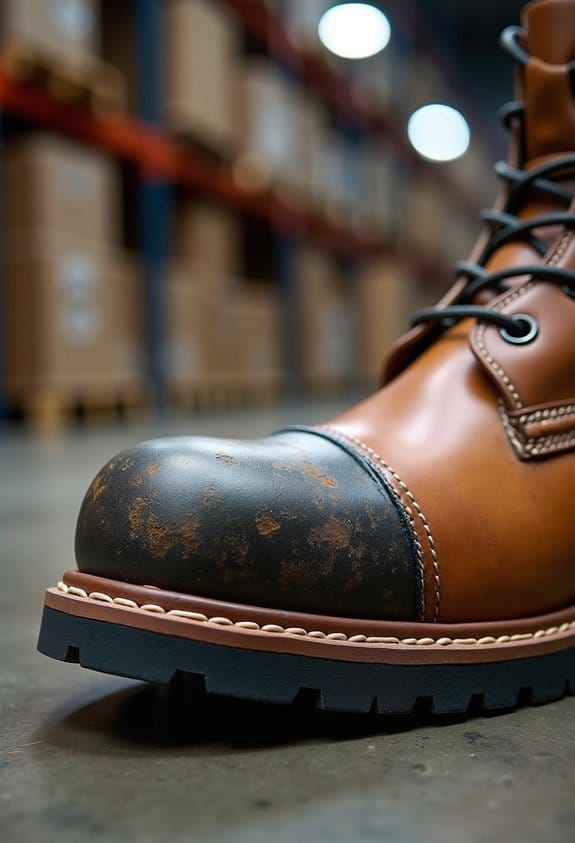
How should you choose the right toe protection for your work boots? Begin by identifying the hazards in your work environment to select suitable protection. Consider these options:
- Steel toe boots offer strong defense against falling objects and meet industry safety standards, making them ideal for construction and heavy-duty jobs.
- Composite toe caps are lightweight and non-metallic, helping workers who pass through metal detectors frequently.
- Aluminum or alloy toes provide lighter alternatives but may still trigger metal detectors.
Evaluate these key factors:
- Weight: Composite or alloy toes usually weigh less, reducing fatigue.
- Security: Composite toes avoid metal detectors.
- Protection: Steel toes deliver traditional, high-level impact resistance.
Choosing the right toe protection depends on balancing safety requirements with comfort and workplace demands. Additionally, features like slip-resistant outsoles are important to consider for overall foot safety in various work environments.
Recommended Products

Motorcycle-Ready Design: 11-inch pull-on design built for motorcycle enthusiasts seeking reliable performance and protection.
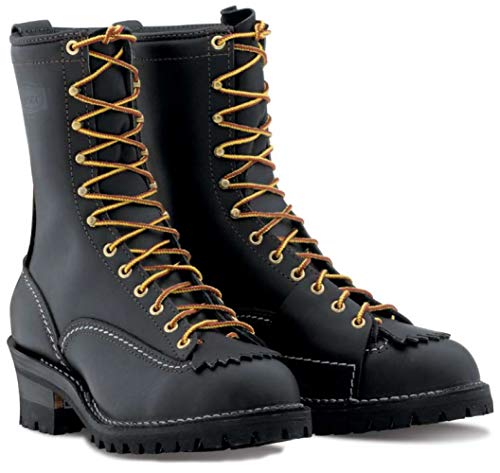
Premium Construction: The ultimate climbing boot worldwide, featuring 10 inches of 7 ounce oiled-leather top and foot for maximum durability and protection

10 inch tall 2.8mm thick full grain leather uppers
Evaluating Boot Durability and Material Quality
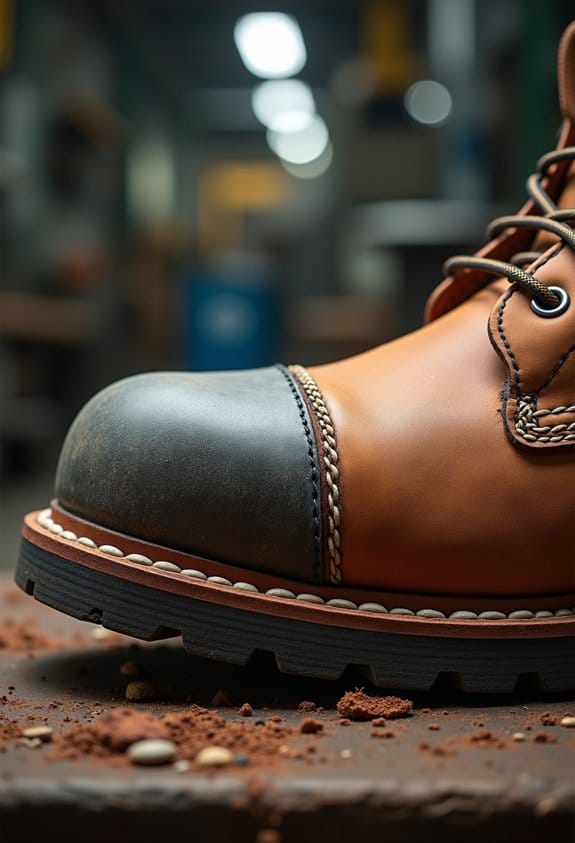
After choosing the appropriate toe protection, evaluating the overall durability and material quality of work boots becomes the next important step. How can you assess these features effectively?
- What construction methods impact durability? Boots with Goodyear welt construction last longer but may feel less flexible, while cement construction offers more comfort but less durability.
- Which materials provide the best support? Leather boots generally supply superior durability and support compared to synthetic alternatives, which tend to be lighter but wear out faster in tough conditions.
- What other signs indicate lasting boots? Reinforced stitching, heavy-duty outsoles, and high-quality waterproofing protect against daily wear and moisture damage.
- How can you prolong boot durability? Regular maintenance, such as cleaning and conditioning leather, helps maintain protection and extend lifespan.
- Selecting boots with steel shanks and puncture-resistant soles enhances long-term durability while providing essential safety features.
Recommended Products

The Seatcraft experience is where craftsmanship meets functionality. Engineered for unparalleled quality and ergonomic comfort. Sit with us and experience the decades of mastery and passion we’ve put into our seats. Don’t settle for less.

Complete CAT 4 Protection: Stay protected while navigating electrical environments with our Arc Flash Kit, featuring a large 40 Cal FR bib overall, coat, class 2 rubber voltage gloves, face shield, safety glasses, gear bag, and tools

KIT INCLUDES: 12 cal/cm² Arc Rating, HRC 2, FR coat with bib overall, Class 0 Rubber Voltage Gloves, 10" Leather Glove Protectors, Glove Bag, Hard Hat with Arc Flash Faceshield & Chin Cup, Safety Glasses, Faceshield Bag, Gear Bag. Offering convenient protection in 1 bag!
Tips for Trying On Boots Effectively

When is the best time to try on work boots for an accurate fit? It is recommended to try on a pair of work boots at the end of the day when your feet are slightly swollen, simulating true work conditions. To try on boots effectively:
- Wear the same type of socks you plan to use, preferably moisture-wicking and cushioned.
- Walk around on different surfaces in the store to evaluate comfort and support.
- Use any insoles or orthotics you normally need, as they affect fit.
- Check for immediate comfort; avoid boots that require a long break-in period.
These steps guarantee your selected pair of work boots will fit well and provide reliable support during your workday. Also, ensure the boots feature proper arch support to reduce fatigue and maintain comfort over extended wear.
Recommended Products

Fleece lined with 200g Thiosulfate insulation

✔ GeForce GTX 1660 6GB GDDR5 Graphics Card (Brand May Varies) | 8GB DDR4 3200MHz Gaming Memory with Heat Spreaders | Windows 10 Home 64-bit | AMD High Performance Air Cooler

AMD Ryzen 7 7700 3.8GHz (5.3GHz Turbo Boost) CPU Processor | 1TB NVMe M.2 SSD – Up to 30x Faster Than Traditional HDD | High-Performance Air Cooler
Navigating Different Types of Work Environments
Recognizing the unique demands of various work environments is essential when choosing appropriate work boots that guarantee safety and comfort. What factors should you consider for different settings?
- Hazards and Safety: Does your job involve heavy machinery or electrical risks? OSHA guidelines often require steel toe protection for construction boots in hazardous conditions.
- Terrain and Surface: Will you work outdoors on rugged terrain or indoors on smooth floors? Outdoor work demands robust treads for better traction, while indoor work favors lighter, flexible boots.
- Exposure to Elements: Are you often around water or chemicals? Waterproof, slip-resistant boots made from rubber or treated synthetics protect your feet and keep you comfortable.
- Seasonal Comfort: Do temperatures vary? Consider insulation for cold weather or breathable materials for heat to maintain foot comfort throughout the year.
- Additionally, selecting boots with an EVA midsole can enhance cushioning and reduce fatigue during long shifts, improving overall comfort regardless of the environment.
The Role of Tread Patterns and Slip Resistance
Slip resistance is a key feature to evaluate when selecting work boots, and tread patterns greatly influence this characteristic. What should you know about tread patterns and slip resistance?
- Tread patterns with deeper grooves provide better traction on slippery or uneven surfaces.
- Rubber outsoles improve slip resistance, especially where oils, acids, or water are present.
- Choose tread designs based on your worksite; shallow treads work well on mud and grass, while aggressive patterns suit wet or oily floors.
- Regularly inspect outsole wear, because worn treads reduce grip and increase fall risks.
- Remember, inadequate footwear causes 22% of construction slip and fall incidents.
- Prioritizing boots with slip-resistant outsoles enhances stability and reduces accidents in demanding outdoor environments.
Recommended Products
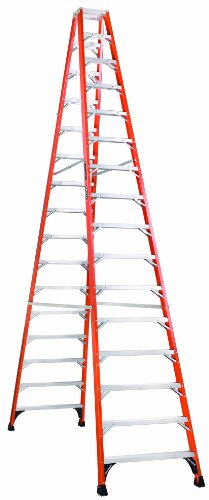
STURDY AND STRONG: With its 375-Pound capacity, elegant design and smooth finish, you won’t find a more durable, reliable ladder

VERSATILE: Our Cross Step Ladder offers versatility like no other, effortlessly converting from a step ladder into a shelf ladder for a convenient 2-in-1 combination, allowing you to get closer to the work area with ease.

16″ 7 ounce oiled-leather top and foot
Balancing Style and Function in Work Boots
Balancing style and function in work boots frequently influences workers’ satisfaction, confidence, and productivity on the job. Why is this balance important? Combining style with essential safety features helps you feel more comfortable and confident while working. How can you find the right boots? Consider these aspects:
- Look for safety boots designed with steel toes and slip-resistant soles that meet protection standards.
- Choose models using innovative materials that offer durability and visual appeal.
- For women, seek brands offering stylish safety boots tailored for fit and comfort.
- Explore various designs to express your personal style without sacrificing safety.
How does this help your work? Comfortable, well-designed boots reduce fatigue, improving your focus and efficiency throughout the day. Additionally, selecting boots with waterproof capabilities can keep your feet dry, enhancing comfort in wet working conditions.
Maintaining Your Work Boots for Longevity
To guarantee work boots last as long as possible while maintaining their protective qualities, proper maintenance is essential. How can you maintain your boots effectively? First, regularly clean them by removing dirt and mud, which prevents material breakdown and keeps stitching intact. Second, allow boots to dry naturally after exposure to moisture—avoid direct heat that can damage materials. Third, rotate between multiple pairs to reduce bacteria growth and minimize wear on one pair. Fourth, inspect boots frequently for signs of damage or excessive wear to determine when replacements are necessary. Finally, store your boots properly by unlacing them and placing them in a cool, dry place to help maintain their shape and prevent deterioration when not in use. These steps collectively extend the life of your boots. Additionally, applying leather conditioner weekly helps maintain flexibility and prevent cracking.
Recommended Products

100% LEATHER UPPER, these uncompromising motorcycle boots were inspired by Civil War cavalry and represent American craftsmanship at its best

FULL-GRAIN LEATHER boots tested nine ways for strength and durability, made in America and triple-stitched for longevity
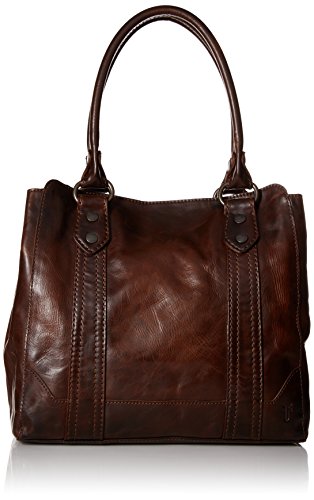
The Frye® Melissa Tote has a rich leather construction and luxurious interior that will hold all your essentials and will easily become your favorite bag!
Consulting Experts and Peer Recommendations
How can consulting experts and peer recommendations simplify the process of selecting the right work boots? Experts and experienced cobblers offer tailored advice, ensuring your pair of boots meets job-specific safety and comfort needs. Peer recommendations provide practical insights based on real use, highlighting important factors like durability and brand reliability. To use these resources effectively, consider:
- Seeking advice from cobblers who know what boots can help with particular work conditions.
- Reading user reviews to identify potential problems with certain brands or models.
- Joining online footwear communities for shared experiences and support.
- Contacting customer service to clarify product details and safety compliance.
Additionally, understanding the differences between toe protection types can help you choose the most appropriate boots for your work environment.
Frequently Asked Questions
Can I Wear Work Boots to a Job Interview?
Wearing work boots to a job interview depends on industry norms and company culture. Prioritizing job interview etiquette, candidates should guarantee boot comfort and appearance, balancing professionalism with practicality to make a positive impression.
What Defines a Good Work Boot?
A good work boot is defined by comfort features that guarantee a proper fit and reduce fatigue, combined with material durability that withstands harsh conditions. Additionally, adequate toe protection and slip resistance enhance safety and longevity.
Are Boots Considered Professional Attire?
Boots are often considered professional attire in industries with strict boot regulations. Style preferences vary, but functional, compliant boots reflect professionalism and safety commitment, particularly in construction and manufacturing settings where safety footwear is mandated.
Why Are Work Boots Important?
Work boots are important because their safety features protect workers from hazards, preventing injuries. Additionally, workplace comfort provided by properly fitting boots enhances productivity by reducing foot fatigue and allowing employees to focus effectively on their tasks.