As an Amazon Associate, we earn from qualifying purchases. Some links on this site are affiliate links at no extra cost to you. Our recommendations are based on thorough research and editorial judgment.


Footwear Considerations for Workers Around Live Circuits and Panels

Workers around live circuits and panels should wear electrical hazard (EH)-rated footwear made of nonconductive materials like rubber soles to prevent grounding and reduce electrocution risk. Important features include ASTM F2413 certification, slip-resistant soles, and composite toe caps for protection without conductivity. Proper fit enhances stability and comfort, reducing fatigue and injury. Regular inspection and maintenance preserve effectiveness. These factors collectively guarantee safety and compliance with electrical standards. Further details clarify critical footwear choices for electrical work.
Key Takeaways
- Choose EH-rated footwear with non-conductive rubber soles to provide electrical insulation around live circuits and panels.
- Ensure footwear has ASTM F2413 certification for reliable electrical hazard protection.
- Use composite toe caps for lightweight, non-metallic protection that doesn’t conduct electricity.
- Prioritize slip-resistant soles to maintain stability on potentially wet or oily surfaces near electrical equipment.
- Maintain proper fit and comfort to reduce slips and fatigue, enhancing overall workplace safety.
Understanding Electrical Hazard Footwear
Understanding Electrical Hazard (EH) footwear is essential for anyone working near live electrical circuits, as these shoes provide critical protection against electrocution risks. What is electrical hazard footwear? EH-rated footwear is designed to reduce electrical shock by using nonconductive materials like rubber soles that prevent electricity from grounding through the body. How does it prevent electrical injuries? By insulating against electricity, these safety shoes offer secondary protection if contact with live electrical circuits occurs. Why are rubber soles important? Rubber soles reduce risk not only by blocking electrical flow but also by helping prevent slips and falls. How does this relate to workplace fatalities? Electrical injuries are among the leading causes of death in electrical work, so using appropriate protective footwear considerably lowers this risk. Proper selection and maintenance of these shoes are essential for ongoing safety. It is also important to ensure that electrical hazard footwear meets ASTM F2413 certification to guarantee reliable electrical resistance and overall protection.
Recommended Products

Black Prime Waterproof, Flame, and Cut-Resisting Leather upper

NFPA 1951, NFPA 1971, NFPA 1977, NFPA 1990(1992), ASTM F2413 & CAN/CSA-Z195 certified

10 inch tall 2.8mm thick full grain leather uppers
Key Features for Electrical Safety Shoes

Electrical safety shoes incorporate several key features designed to protect workers from hazards related to electricity. What makes protective footwear effective against electrical hazards? First, non-conductive materials are vital; these shoes often have rubber outsoles, providing insulation and slip resistance around live circuits. Second, the EH rating guarantees the shoe meets electrical safety standards for secondary protection. Third, composite toe caps offer lightweight, non-conductive protection while complying with ASTM F2413 requirements. Fourth, some models include anti-static footwear properties to prevent static buildup in sensitive environments. Why is inspection important? Regularly checking for wear maintains insulation and electrical safety. Together, these features help workers safely navigate electrical risks while maintaining comfort and durability on the job. Additionally, choosing boots with slip-resistant soles improves stability on wet or slippery surfaces common in electrical work environments.
Recommended Products
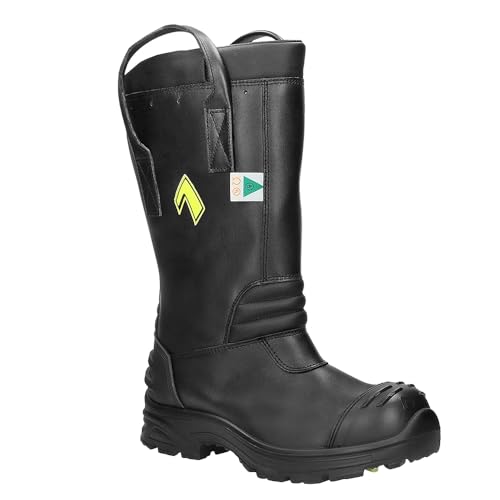
Certified to NFPA 1971, NFPA 1990 (1992), ASTM F2413 & CAN/CSA-Z195

Meets ASTM Safety Standards: This leather non-metallic safety toe work boot with HRO designed rubber outsole is slip, impact, compression, and electrical hazard resistant to meet ASTM F2413-18, M/I/C, EH and ASTM F3445-21, SR safety standards. HRO soles are heat resistant to melting at a minimum of 475º Fahrenheit.

STEEL TOE: These men's work boots feature a steel safety toe for heavy-duty protection
Benefits of Nonconductive Footwear

Nonconductive footwear offers several safety advantages for workers operating near live electrical circuits. What benefits does nonconductive footwear provide? First, it guarantees protection from live charges by using insulating materials that meet ASTM F2413 standards for electrical hazard protective footwear. How do rubber outsoles contribute? They enhance slip resistance, reducing slips or falls in various work environments. Can steel or composite toes be included? Yes, these protective features are safely integrated without compromising electrical safety. Additionally, nonconductive footwear promotes compliance with safety regulations, helping workplaces meet legal requirements. Why choose this type of footwear? Because it prevents electrical energy from grounding, considerably lowering electrocution risks. Overall, nonconductive footwear combines electrical safety, durability, and slip resistance, making it essential for workers near live circuits and panels. Many of the top-rated boots also feature removable sock liners for added comfort during long shifts.
Recommended Products

10" tall leather uppers made from 2.8 mm full grain leather feature double and triple stitching throughout for added durability
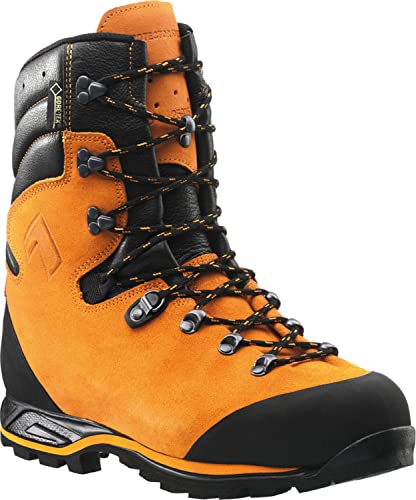
Enhanced Chainsaw Safety: Our boots are equipped with European Class 2 cut protection for chainsaw speeds up to 24m/s. Crafted from tough European bullhide leather and reinforced with a layer of cut-resistant material, they ensure durability and offer you vital seconds to react in case of unexpected chainsaw contact.

DELIVERS STABILITY & SUPPORT: Catalyst VX Work stands for performance, stability, and protection. Equipped with cushioning technology to reduce foot fatigue, it keeps feet comfortable in harsh outdoor work environments, including oil and gas exploration.
Importance of Proper Fit and Comfort

Why does proper fit and comfort matter when choosing safety footwear for electrical work? Proper fit and comfort in safety footwear are essential for protection and performance in electrical environments. They help reduce the risk of slips, trips, and falls by improving stability and grip. Comfort features, such as moisture-wicking materials and cushioned insoles, prevent fatigue, allowing workers to stay alert around live circuits. Ensuring proper fit also prevents foot injuries, decreasing workplace incidents and lost time. Compliance with safety standards, like those from ANSI, requires that footwear fits correctly to maintain effective protection. When selecting safety footwear, prioritize:
- Proper fit to avoid injury and enhance stability
- Comfort to prevent fatigue during long work hours
- Features like moisture-wicking and cushioned insoles for healthy feet
This approach helps maintain both safety and productivity in challenging electrical tasks. Additionally, boots that meet ASTM electrical hazard (EH) standards provide crucial protection against electric shock hazards.
Recommended Products

NFPA 1971, NFPA 1990(1992), ASTM F2413 & CAN/CSA-Z195 certified

FULL-GRAIN LEATHER boots tested nine ways for strength and durability, made in America and triple-stitched for longevity
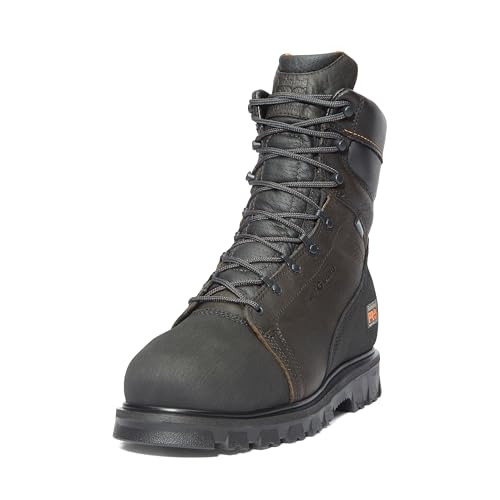
Anti-Fatigue Technology: A comfort system designed with shock-absorbing, geometrical technology that returns energy back to the foot to deliver all-day support and comfort.
Maintenance and Inspection of Safety Footwear
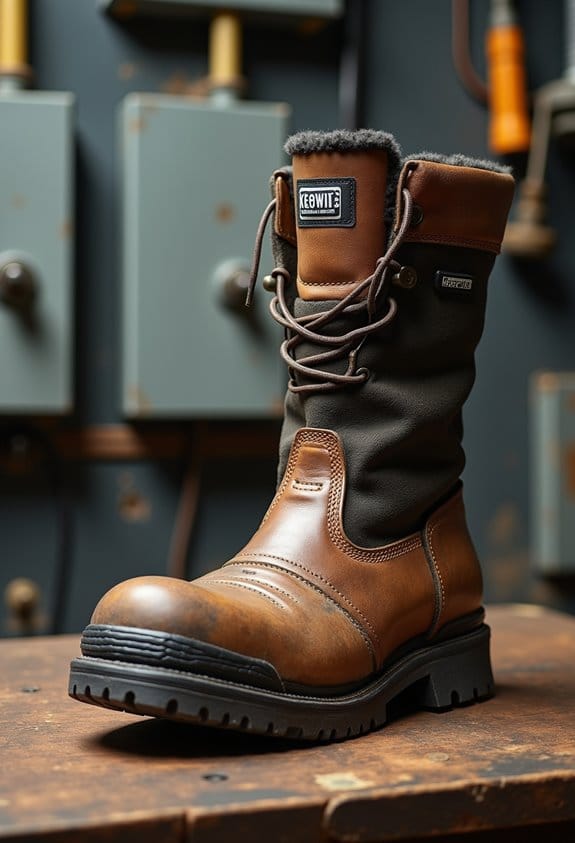
After choosing safety footwear with proper fit and comfort, maintaining and inspecting these shoes regularly is necessary to confirm continued protection. Why is maintenance important? It preserves protective features against electrical hazards and prolongs the footwear’s longevity. How should you inspect safety footwear? Check for wear and damage such as holes or sole thinning that reduce effectiveness. What maintenance steps help? For leather boots, apply mink oil or specialized treatments to maintain water resistance. How should footwear be stored? Keep them in a clean and dry environment to avoid odors and material breakdown. When is replacement needed? Conduct periodic replacement when significant wear or damage is found to reduce injury risks. Regular cleaning, proper care, and timely inspection confirm safety footwear remains reliable and effective. Additionally, ensuring boots meet ASTM F2413 certification standards can validate their ongoing safety performance.
Recommended Products
10" tall leather uppers made from 2.8 mm full grain leather feature double and triple stitching throughout for added durability

Chainsaw Cut Protection: Get the highest level of safety for your feet with European Class 2 cut protection. Durable European bullhide leather and an extra layer of cut-resistant material provide both long-lasting wear and extra time to react in case of unexpected chainsaw contact.
Enhanced Chainsaw Safety: Our boots are equipped with European Class 2 cut protection for chainsaw speeds up to 24m/s. Crafted from tough European bullhide leather and reinforced with a layer of cut-resistant material, they ensure durability and offer you vital seconds to react in case of unexpected chainsaw contact.
Frequently Asked Questions
What Are the OSHA Rules for Footwear?
OSHA guidelines require compliance regulations mandating personal protective footwear types that meet safety standards. Employers must conduct hazard assessments, provide employee training, and perform safety inspections to guarantee workplace safety and effective risk management under OSHA rules.
What Footwear Is Approved for Electrical Work?
Approximately 30% of electrical injuries could be prevented with proper gear. Approved footwear combines electrical insulation, toe protection, slip resistance, and arc flash compliance, adhering to workplace guidelines and safety standards in materials for PPE compliance against electrical hazards.
What Footwear Should Be Worn When Working on High Voltage Vehicle Systems?
When working on high voltage vehicle systems, dielectric footwear materials with electrical hazard ratings are essential, featuring insulated sole designs, slip resistant properties, moisture wicking fabrics, lightweight construction, ergonomic fit, toe protection standards, and adherence to workplace compliance guidelines guarantee electric vehicle safety.
What Safe Footwear Worn to Protect Against Live Electrical Current?
Safe footwear against live electrical current incorporates insulating materials with slip resistance, ergonomic design, and comfort features. Steel toe options meet voltage ratings, offer chemical resistance and waterproof options, and minimize grounding risks through advanced electrical hazard protection.


