As an Amazon Associate, we earn from qualifying purchases. Some links on this site are affiliate links at no extra cost to you. Our recommendations are based on thorough research and editorial judgment.

Drying Wet Work Boots Without Damaging Leather or Glue

To dry wet work boots without harming leather or glue, first remove insoles and laces to improve airflow. Clean boots gently using mild soap to prevent material damage. Stuff absorbent, loose materials inside to draw out moisture while avoiding direct heat, such as radiators, which can cause cracking and weakening of glue. Use a well-ventilated space or a boot dryer designed for leather, then condition leather afterward to keep it flexible. Follow these steps carefully for durable, comfortable boots; more detailed guidance follows.
Key Takeaways
- Remove insoles and laces to enhance airflow and speed up the drying process without trapping moisture inside boots.
- Stuff boots with absorbent materials like newspaper to draw out moisture while maintaining shape and airflow.
- Avoid direct heat sources such as radiators or hair dryers to prevent leather cracking and glue weakening.
- Dry boots in a well-ventilated area to prevent mold growth and unpleasant odors.
- Use a boot dryer designed for leather to provide gentle heat and airflow, followed by conditioning the leather after drying.
Why Proper Drying Is Essential for Work Boots
Proper drying is essential for work boots because it prevents several issues that can compromise health, safety, and durability. Why is proper drying important? First, it stops bacteria and fungi from growing inside your boots, which otherwise cause foot infections and unpleasant odors. Second, exposure to moisture weakens the safety boots’ structure, including adhesive bonds, which may damage your boots and reduce protection. Third, moisture from your boots can lead to cold-related problems like blisters, especially in winter. Fourth, maintaining the integrity of your boots through drying extends their lifespan, ensuring reliable performance on the job. Finally, regular improper drying causes frequent replacements, increasing financial costs over time. Consequently, proper drying preserves both your health and your investment in quality safety boots. Additionally, incorporating waterproof membranes in your boots can aid in moisture management, further enhancing protection and comfort.
Preparing Your Boots for Safe and Effective Drying
Cleaning and preparing your work boots before drying helps guarantee effective moisture removal and prevents damage. How should you prepare your boots properly?
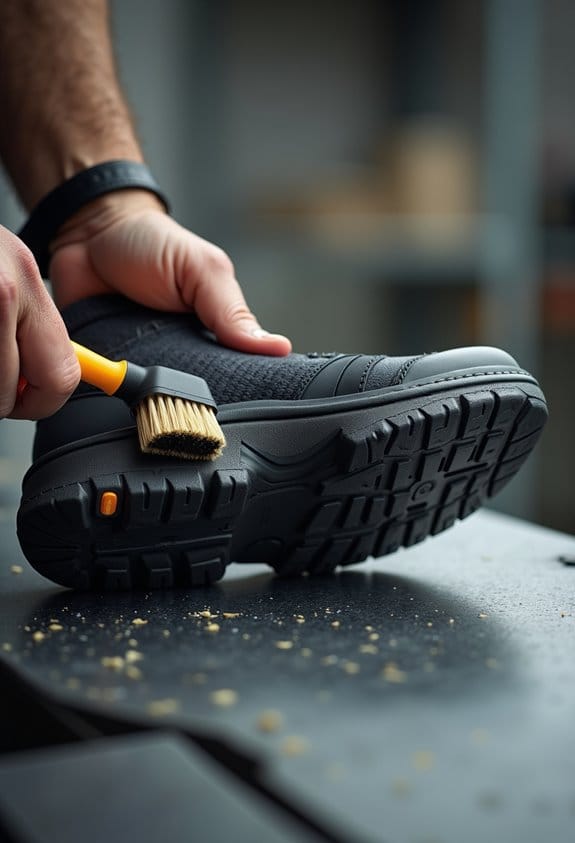
- Clean dirt and contaminants gently using mild soap to avoid damage to leather or glue.
- Remove insoles, as they trap moisture longer; this step promotes air circulation inside the boot.
- Optionally, remove laces to increase airflow, especially for high-leg boots.
- Avoid using harsh chemicals or strong detergents that can weaken the leather and glue.
- Choose a well-ventilated area for drying to facilitate evaporation and prevent creating a damp environment that encourages mold or odor.
- Insert absorbent materials like crumpled newspaper inside boots to help draw out moisture without applying heat.
- Proper maintenance, including use of leather conditioner and waterproof spray, is essential to maintain boot durability and longevity during drying and regular use.
Following these steps guarantees your drying methods work effectively while preserving the integrity of your boots.
Recommended Methods for Drying Leather Work Boots
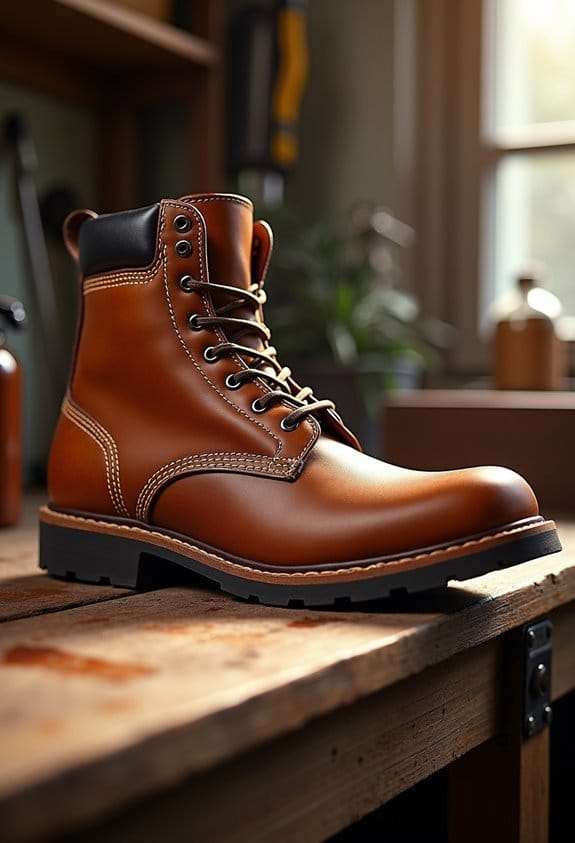
After preparing your boots by cleaning and removing insoles and laces, selecting the right drying method plays a vital role in preserving leather quality and extending boot life. How should you dry wet boots safely? First, allow air to circulate inside the boots by stuffing them loosely with newspaper or another absorbent material; this helps remove moisture without damaging leather or weakening glue. Avoid direct heat sources like radiators, which can cause cracking. For waterproof boots, follow specific manufacturer instructions to maintain their protective layers. Using a proper boot dryer designed for leather provides gentle heat and airflow, drying boots evenly and reducing damage risk. Once dry, condition your boots regularly to keep the leather flexible and strong against future moisture exposure. Additionally, choosing boots made from premium leather can enhance durability and resistance against moisture damage.
Common Mistakes to Avoid When Drying Boots

Avoiding common mistakes during the drying process is essential to maintain the durability and comfort of work boots. What errors should you avoid when boot drying?
- Never use direct heat sources like radiators or hairdryers, as they can harm the leather and weaken glue bonding.
- Remove insoles before you dry your boots to prevent moisture retention that causes odor and interior damage.
- Dry both the outer leather and the inner lining thoroughly, as neglecting the inside increases the risk of mold growth.
- Avoid storing damp boots with other footwear, which creates humidity conducive to mold and can harm your feet.
- After drying, apply leather conditioning to prevent cracking caused by moisture loss.
- Be mindful of synthetic materials inside, as they require gentle drying methods to maintain shape and comfort.
- Ensuring boots have proper waterproof membranes can reduce water absorption and ease the drying process.
Maintenance Tips to Preserve Boot Durability and Comfort

Several practical steps can help preserve the durability and comfort of work boots, ensuring they last longer and perform well. How can you maintain your boots properly? First, clean them regularly with soapy water and a soft brush to remove dirt and contaminants. After you dry your boots, condition the leather using natural oils to maintain flexibility and prevent cracking. What is the best method to dry boots? Remove insoles and use absorbent materials like crumpled newspaper or silica gel packs inside to draw out moisture, allowing air circulation. Where should you store your boots? Place your boots in a cool, dark place to avoid intense heat that can weaken glue and fade leather. These boot care tips help maintain flexibility and overall boot quality. Additionally, regular inspection for structural damage can ensure your boots remain safe and effective during use.
Frequently Asked Questions
How to Dry Out Wet Work Boots?
Effective boot drying methods involve removing insoles and using moisture absorption tips like newspaper stuffing, utilizing natural drying processes in ventilated spaces, employing boot dryers cautiously, and applying boot care techniques to preserve leather quality and prevent mold growth during winter boot maintenance.
Is It Safe to Put Work Boots in the Dryer?
Putting work boots in the dryer poses heat damage risks and glue integrity concerns. Boot dryer safety and boot care tips favor drying alternatives, such as air drying or specialized boot drying methods, to guarantee leather maintenance and enhance boot longevity strategies.
Are Leather Boots Ruined if They Get Wet?
Leather boots aren’t necessarily ruined by water damage; with proper leather care, waterproof treatment, and effective drying methods, boot maintenance guarantees boot longevity. Neglect invites wear and tear, mold prevention, and timely leather conditioning safeguard against permanent harm.
How Do Soldiers Dry Their Boots?
Soldiers employ boot maintenance tips including moisture wicking with newspaper, removing insoles and laces for airflow, outdoor boot drying, and leather preservation methods. Soldier boot care integrates hydration management, boot inspection techniques, and tactical footwear advice to maintain military gear.