As an Amazon Associate, we earn from qualifying purchases. Some links on this site are affiliate links at no extra cost to you. Our recommendations are based on thorough research and editorial judgment.


Can Anti‑Static or ESD Shoes Be Used in Place of EH‑Rated Boots?

Anti-static or ESD shoes cannot replace EH-rated boots because they serve different safety functions. EH-rated boots insulate against electrical shocks up to 600 volts AC, protecting wearers from live electrical hazards, while ESD shoes only reduce static electricity buildup and do not offer shock protection. If you work near energized circuits, EH boots are necessary. For tasks involving sensitive electronics but no shock risk, ESD shoes are appropriate. Explore their differences and proper usage for safe footwear decisions.
Key Takeaways
- ESD shoes prevent static buildup but do not insulate against electrical shock or live electrical hazards.
- EH-rated boots are specifically designed to protect against electrical shock up to 600V AC.
- Using ESD shoes instead of EH boots in electrical hazard zones increases the risk of electric shock.
- ESD footwear lacks the non-conductive sole and resistance required for EH safety compliance.
- Employers must select EH boots for electrical hazard protection, not ESD shoes, to meet safety standards.
Understanding Electrical Hazard (EH) Rated Boots
Electrical Hazard (EH) rated boots serve as essential protective footwear for individuals working in environments with potential electrical risks. What makes EH rated boots special? They reduce electricity flow through the footwear, lowering shock risk up to 600V AC. You will find “EH” marked on their ASTM label, proving their compliance. How do they protect you? Their soles are non-conductive, isolating you from the ground. However, if the sole is punctured, their protective ability decreases. Are ESD shoes the same? No, ESD shoes prevent static buildup but do not provide electrical hazard protection like EH boots. Can you use soft-toe shoes as EH footwear? No, only safety shoes meeting ASTM standards qualify as EH rated. Remember, EH boots are secondary protection, not for live electrical work. It is important to choose boots that meet ANSI standards to ensure effective electrical hazard protection.
The Purpose of Anti-Static Footwear
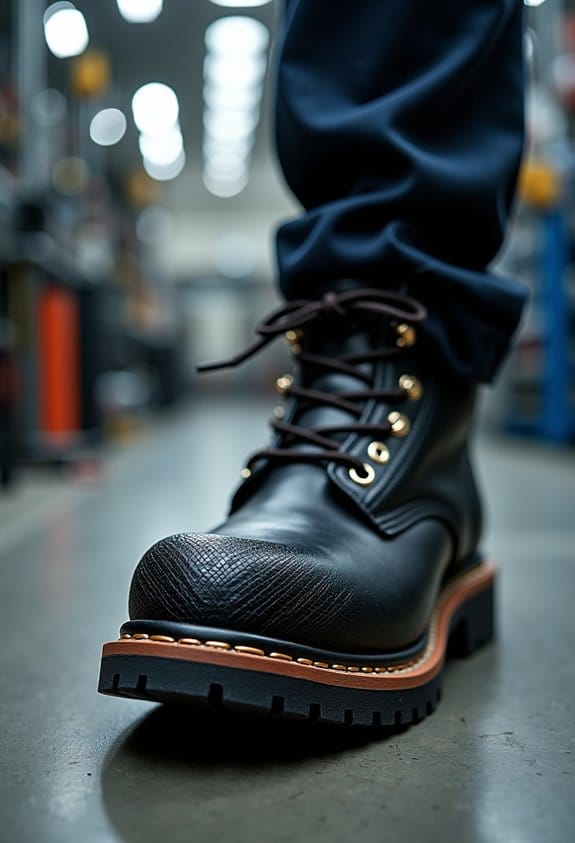
Static control is the main function of anti-static footwear, which helps prevent the buildup of electrical charges on the body. What exactly does this mean for you? Anti-static footwear, also known as ESD footwear, reduces the risk of static discharge that can harm sensitive electronic devices. This is achieved by grounding electrical charges through a resistance range between 0.1 and 1,000 MΩ. However, it is important to note that anti-static footwear does not protect against electrical shock and should not be used around live electrical circuits. Unlike EH-rated boots, which are made with non-conductive materials to minimize electrocution risk, anti-static shoes focus solely on managing static electricity. Consequently, if your work involves sensitive electronics, anti-static footwear is suitable, yet it offers no safeguard from electrical hazards. For protection against electrical hazards, always choose footwear compliant with ASTM F2413 standards designed specifically for electrical hazard safety.
What Does ESD Stand for and How Does It Work?

Electrostatic Discharge, abbreviated as ESD, describes the sudden movement of electrical charge between two objects when they come into contact or experience an induced voltage. What does ESD stand for and how does it work? ESD refers to the flow of electricity between electrically charged objects caused by static buildup. How does ESD footwear help with electrical safety?
- ESD shoes minimize static buildup by safely dissipating charges to the ground while walking.
- These shoes usually have a resistance range between 0.1 and 100 megohms, allowing efficient charge control.
- They are essential in environments where static electricity could damage sensitive electronics, like manufacturing or electronics facilities.
- ESD footwear is most effective when used alongside grounded floors, mats, and equipment, creating a full static control system.
- To ensure workplace safety, ESD shoes often comply with ASTM F2413 standards that verify their ability to control static electricity and protect wearers.
Key Differences Between EH and ESD Footwear

How do EH-rated boots differ from ESD footwear in their protective functions? EH footwear is designed to protect you from electrical shock by insulating you from the ground, capable of withstanding up to 18,000 volts at 60 Hz for one minute. In contrast, ESD footwear controls static electricity to protect sensitive electronic equipment, working within a resistance range of 0.1 to 100 MΩ. Key differences include:
- EH boots provide secondary protection against electrical hazards.
- ESD shoes do not protect against live electrical currents.
- Anti-static footwear offers less shock insulation and does not meet EH standards.
- Using ESD shoes instead of EH-rated boots risks electrical shock exposure.
Therefore, EH and ESD footwear serve different purposes and are not interchangeable for electrical hazard protection. It is essential to select boots that meet the ASTM electrical hazard (EH) standards to ensure adequate shock protection in environments with electrical risks.
Recommended Products

DURABLE full-grain leather boots tested six different ways for strength, made in America and triple-stitched for longevity

FIRE-RESISTANT UPPER: these men's firefighter boots feature a durable leather upper treated for fire resistance
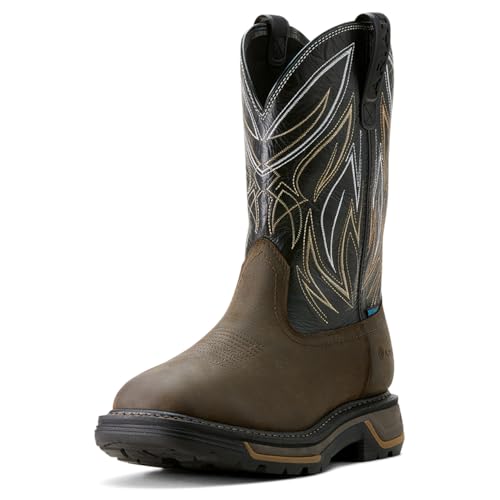
Soft, non-safety toe
Situations Requiring EH-Rated Boots
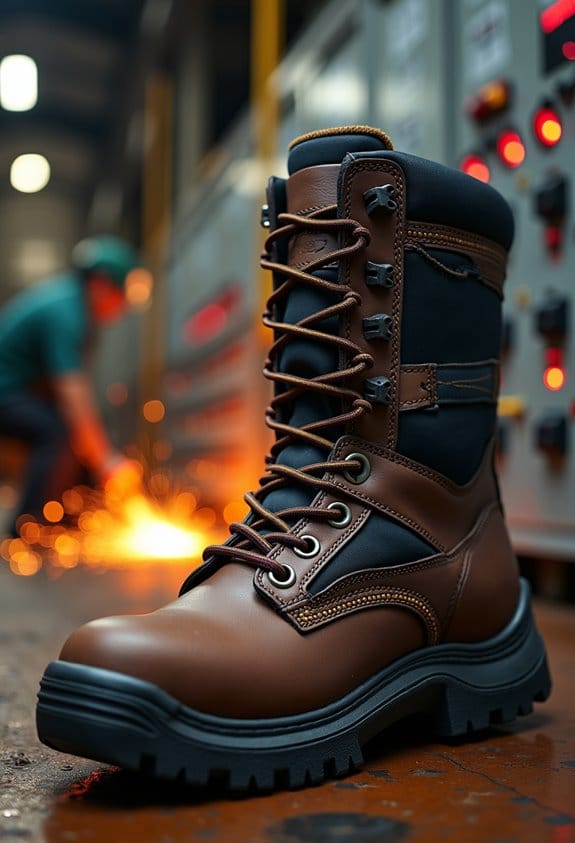
Several work conditions call for the use of EH-rated boots to prevent electrical shock hazards. When you work near live electrical circuits with voltages not exceeding 600V AC, EH-rated footwear offers vital protection by reducing electricity flow. These boots meet ASTM standards and withstand up to 18,000 volts at 60 Hz for at least one minute. Unlike anti-static or ESD shoes, which manage static electricity, EH-rated boots serve as a secondary defense against electrical hazard (EH). You should wear EH-rated footwear in environments where accidental contact with electrical sources is possible, but not during high-voltage or direct energized equipment tasks requiring insulated boots. Employers must assess electrical risks carefully to guarantee appropriate footwear selection and maintain workplace safety. It is also important to select boots with electrical hazard protection features such as ASTM F2413-18 certification and non-conductive soles to ensure maximum safety.
Recommended Products

Built with a durable full grain leather upper for long-wear performance

STEEL TOE boots protect your feet on the job with a steel shank for support and stability

MEN’S WORK BOOTS: The Ariat’s Powerline boots are designed to offer superior climbing stability and comfort without compromising on the style quotient. These ASTM F2892-11 EH Rated soft toe boots are safe for use by linemen and loggers.
Environments Where Anti-Static and ESD Shoes Are Appropriate
Certain work environments require footwear designed specifically to manage static electricity rather than protect against high electrical voltages. When should you choose anti-static or ESD shoes?
- Anti-static shoes are appropriate in settings where static build-up poses a risk, such as electronics assembly areas or locations with flammable vapors. They help ground static charges but do not insulate against electrical shock.
- ESD shoes are best for static-sensitive environments like server rooms or electronic manufacturing, where preventing static discharge protects delicate components.
- Both types are unsuitable when an electrical hazard involving voltages over 600 volts exists or live electrical work occurs. In those cases, EH-rated boots must be used for protection against current flow.
- Choosing footwear with appropriate Electrical Hazard (EH) protection is crucial for safety in environments with significant electrical risks.
Understanding these distinctions guarantees you select footwear that matches environmental risks safely and effectively.
Recommended Products

Men's Waterproof Cow Leather Safety Boot 8-inch Composite Toe Work Boots Insulated Winter Snow Boots
🔥【WATERPROOF & INSULATED】 Waterproof work boots with breathable and waterproof membrane liner keeps feet dry and comfortable by allowing vapor out without letting water in;(200gm 3M Thinsulate Microfiber), that insulates boots by trapping air molecules between you and the outside; WARM rated -25°F/-32°C .Works with thermal heat shield footbed for all around warmth

Made to keep safe from electric and static energy!

Heavy Duty Quick Lacing: The lacing system works really well and is much quicker and more secure than tying. K BY KEXIN Aluminum Alloy Toe Steel Toe Composite Toe safety shoes come with the KR Dial System which gives you a secure, consistent fit and a luxurious appearance. With the premium rotating buckle, pull out to release, press and rotate clockwise to tighten. It is durable and convenient to put on and take off
Safety Standards and Certifications for EH and ESD Shoes
Although both EH-rated boots and ESD shoes serve safety purposes related to electricity, they must comply with different standards and certifications to confirm proper protection. What are the key safety standards for EH vs ESD footwear?
- EH-rated boots meet ASTM F2413 standards, designed to protect against electrical hazard (EH) exposure up to 600V AC by providing insulation against electrical shock.
- ESD footwear complies with ANSI/ESD STM9.1 or IEC 61340 standards, focusing on safely dissipating static electricity in sensitive environments.
- EH footwear prevents voltage conduction but does not control static discharge, while ESD shoes prevent static buildup but do not provide electrical insulation.
- Consequently, choosing footwear based on correct certification confirms proper protection in specific work environments, distinguishing electrical hazard risks from static-sensitive needs.
- Additionally, selecting safety footwear with Electrical Hazard (EH) protection ensures compliance with workplace safety requirements when electrical risks are present.
The Risks of Using ESD Shoes in Electrical Hazard Zones
When selecting footwear for electrical hazard zones, it is important to understand why ESD shoes should not be used in these environments. ESD footwear is designed to dissipate static electricity, but it does not protect against electric shock from live electrical sources. Unlike EH-rated boots, which can withstand up to 18,000 volts for one minute, ESD shoes lack protective insulation against electrical currents. Using ESD footwear in electrical hazard (EH) areas may result in severe injury or electrocution because they provide no resistance to electric shock. Additionally, regulatory guidelines warn that wearing improper footwear like ESD shoes in EH zones can violate safety standards and increase liability risks. Consequently, ESD footwear should never replace EH-rated boots when working near electrical hazards. For proper protection, selecting boots with ASTM safety standards compliance is essential to minimize injury risks in hazardous environments.
Recommended Products

STEEL TOE: these men's work boots feature a durable and protective steel toe that meets ASTM F2413-18 1/75 C/75 EH

FULL-GRAIN LEATHER boots tested nine ways for strength and durability, made in America and triple-stitched for longevity

AMERICAN BUILT: Assembled with pride in Portland, Oregon, with a minimal-waste design using the finest materials from around the world; We’re proud to bring footwear manufacturing back to the USA, and to do it all in one of America’s most modern factories
How to Choose the Right Footwear Based on Job Hazards
How can workers and employers select the most suitable footwear for their specific job hazards? First, identify the nature of electrical risks present in the workplace. Use these guidelines to choose between EH-rated boots and ESD footwear:
- EH-rated boots: Required when working near live electrical circuits or high-voltage equipment. They provide protection against electrical shock, tested to withstand up to 18,000 volts at 60 Hz for at least one minute.
- ESD footwear: Appropriate in environments where static electricity buildup must be controlled, such as electronic manufacturing or handling sensitive electronics. They reduce static discharge but do not protect against electrical shock.
Employers should carefully evaluate job hazards and provide EH-rated boots if electrical shock exposure is possible. Using ESD footwear in place of EH-rated boots can lead to unsafe conditions. Additionally, selecting boots with electrical hazard ratings ensures adequate protection when working near live wires and slippery surfaces.
Recommended Products

Built for Performance: Danner's USA-made work boots combine full-grain leather with hand-crafted stitchdown construction for enduring strength. These boots reflect their heritage since 1932, making them suitable as men's work boots

STEEL TOE: These men's work boots feature a steel safety toe for heavy-duty protection

AMERICAN BUILT: Assembled with pride in Portland, Oregon, with a minimal-waste design using the finest materials from around the world; We’re proud to bring footwear manufacturing back to the USA, and to do it all in one of America’s most modern factories
Maintenance Best Practices for EH and ESD Footwear
Proper upkeep of EH-rated boots and ESD footwear plays a key role in maintaining their protective features and ensuring workplace safety. What are the essential maintenance best practices?
- Inspect EH footwear regularly for visible damage, focusing on sole integrity to maintain electrical hazard protection.
- For ESD shoes, replace insoles immediately if they lose conductivity, since static dissipating insoles are critical for performance.
- Clean both EH footwear and ESD shoes frequently; ESD outsoles should be cleaned weekly with mild soap to remove dirt.
- Maintain adequate moisture in feet when wearing ESD shoes, avoiding shoe powders that reduce humidity, which can impair effectiveness.
- Regular inspection is necessary to identify wear and maintain ESD shoe performance effectively.
The Role of Employers in Footwear Selection and Safety
Although many workers rely on footwear for safety, the responsibility to select appropriate shoes lies primarily with employers, who must carefully evaluate workplace hazards before making choices. How should employers approach footwear selection and safety?
- Assess specific risks, such as Electrical hazard (EH) exposure or environments requiring shoes that dissipate static to prevent shock or build-up.
- Establish clear safety policies detailing required footwear types based on job roles and hazards.
- Guarantee footwear complies with standards like ASTM for EH-rated boots or ANSI/ESD for anti-static and ESD shoes.
- Educate employees on differences between EH-rated, ESD, and anti-static footwear to avoid misuse.
- Conduct regular inspections and replace damaged footwear to maintain effectiveness.
Common Misconceptions About Electrical and Static Protective Shoes
What distinguishes anti-static and electrical hazard footwear often causes confusion among workers and employers alike. What are common misconceptions about these shoes?
- Are EH boots and static dissipative shoes interchangeable? No. EH boots protect against electrical shock from live electrical circuits up to 600 volts, while static dissipative shoes only reduce static buildup and do not insulate against shock.
- Can anti-static or ESD shoes replace EH boots? No. Wearing them in hazardous electrical environments can cause severe injuries since they don’t block electrical current.
- Do static dissipative shoes protect workers? They protect sensitive electronic equipment by preventing static discharges but offer no electrical hazard protection to the wearer.
Understanding these differences is crucial to comply with OSHA requirements and maintain safety in electrical workplaces.
Frequently Asked Questions
Are ESD and EH Shoes the Same?
ESD and EH shoes are not the same. They serve different footwear standards; ESD controls static electricity to protect electronics, while EH shoes guarantee workplace safety by insulating against electrical shocks in hazardous environments.
When Should an ESD Safety Shoe Be Used?
ESD shoe applications primarily involve environments handling sensitive electronics where static discharge risks exist. ESD shoe benefits include dissipating static safely. Selecting ESD footwear requires matching resistance properties to grounded systems for ideal protection and equipment safety.
What Is the Difference Between ESD and Antistatic Shoes?
ESD shoes dissipate static electricity through specific shoe materials, offering controlled grounding, while anti-static shoes only reduce static build-up. Both contribute to workplace safety, but ESD footwear provides stronger electrostatic discharge control in sensitive environments.
What Are EH Rated Safety Shoes?
EH rated safety shoes boast benefits by blocking bursts of brutal electrical hazards. Built with non-conductive materials, these boots meet EH shoe standards, safeguarding wearers from surprising shocks up to 600V AC, ensuring essential electrical safety.


