As an Amazon Associate, we earn from qualifying purchases. Some links on this site are affiliate links at no extra cost to you. Our recommendations are based on thorough research and editorial judgment.

5 Best Petrochemical Boots That Keep You Safe on the Job

You want petrochemical boots that protect against chemicals, water, and workplace hazards. Top choices include Servus XTP 15″ PVC Steel Toe Boots with triple density comfort and self-cleaning soles, Dunlop Durapro’s tall, slip-resistant PVC design, and CLC Climate Gear’s ozone-resistant rubber boots featuring secure buckles. Servus by Honeywell offers seamless, chemical-resistant boots with steel shanks for support, while Tingley Work Brutes serve as durable overshoes. These options balance safety, durability, and comfort. Keep exploring to understand key selection factors.
Key Takeaways
- Choose petrochemical boots made from PVC or rubber with ASTM-certified chemical resistance for reliable protection against fuels and harsh chemicals.
- Steel toe boots meeting ASTM F2413 standards guard against impact injuries common in petrochemical work environments.
- Opt for waterproof, seamless boots with high tensile strength to keep feet dry and durable in wet, chemical-exposed conditions.
- Look for boots with contour cushion insoles and steel shanks to ensure comfort, arch support, and fatigue reduction during long shifts.
- Select slip-resistant outsoles featuring self-cleaning tread patterns to maintain grip and prevent slips on slick petrochemical surfaces.
Servus XTP 15″ PVC Steel Toe Work Boots
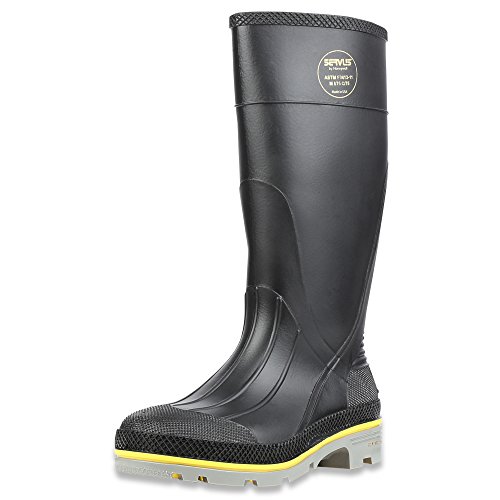
Servus XTP 15" PVC Chemical-Resistant Steel Toe Men's Work Boots, Black, Yellow & Gray, 11
- injection molded pvc with triple density technology (tdt) resists degradation from many harsh chemicals; seamless and 100% waterproof
- foot form contour cushion insole provides arch and heel support, and is removable, washable and replaceable; thick, wide steel shank supports the arch
- dual-compound center sole offers cushioning and lasts longer; open pattern outsole self-cleans liquid and debris with every step; outsole perimeter is formulated for...
If you’re working in environments like oil rigs or poultry processing, the Servus XTP 15″ PVC Steel Toe Work Boots offer key chemical-resistant protection combined with steel toe safety. You get a seamless, 100% waterproof boot thanks to its PVC injection molded construction with triple density technology. The steel toe meets ASTM safety standards, protecting you from heavy impacts. You’ll find comfort too, with a contour cushion insole offering arch and heel support that’s removable, washable, and replaceable. The open pattern outsole self-cleans liquid and debris, while reinforced stress points guarantee extended durability, making these boots reliable in tough industrial settings.
Best For: workers in industrial, chemical, and wet environments such as oil rigs, poultry processing, and fish processing who need durable, waterproof, and protective steel toe boots.
Pros:
- Seamless, 100% waterproof PVC injection molded with triple density technology for excellent chemical resistance.
- Steel toe meets ASTM safety standards for heavy impact protection.
- Comfortable contour cushion insole with arch and heel support that is removable, washable, and replaceable.
Cons:
- Limited color options (Black, Yellow & Gray) which may not suit all personal or workplace preferences.
- Only available in size 11, which may not fit all users.
- PVC material may be less breathable compared to leather or fabric alternatives, potentially causing discomfort in hot environments.
Dunlop Durapro Waterproof Steel Toe Work Boots
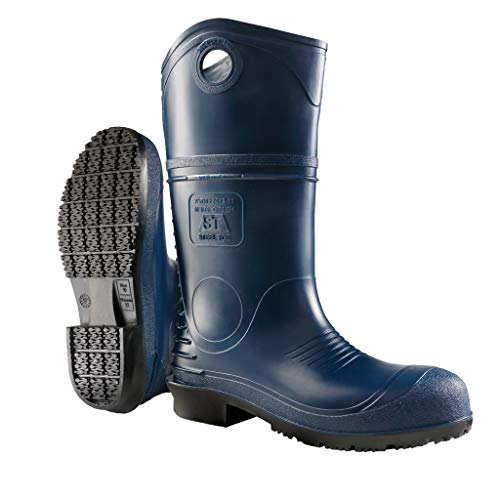
DUNLOP Durapro Steel Toe - Work boots for Men & Women - Waterproof Safety boots with Tall Shaft...
- STEEL TOE PROTECTION: Reinforced steel toe guards against impact and compression, making these work boots ideal for food, agriculture, and industrial environments.
- WATERPROOF TALL SHAFT: Durable PVC shaft keeps feet dry and protected in wet, messy, or chemical-prone conditions with extended coverage.
- CHEMICAL AND SLIP RESISTANT: Outsole resists fuel oils and workplace chemicals while providing dependable grip on slick or oily surfaces.

When you need reliable protection from hazardous substances and wet conditions, Dunlop Durapro Waterproof Steel Toe Work Boots are an excellent choice for workers in petrochemical environments. What makes these boots stand out?
- Steel toe guards protect your feet from impact and compression injuries.
- The durable PVC shaft keeps water, fuel oils, and chemicals from soaking in.
- Their tall shaft provides extra coverage in messy or slippery areas.
- A slip-resistant outsole improves your footing on slick surfaces.
- The DuraPro energizing insole reduces fatigue during long shifts.
- Available in sizes 3-16 with a classic fit for all-day comfort.
- Proudly made in the USA, ensuring quality craftsmanship.
Best For: Workers in petrochemical and industrial environments who require durable, waterproof, and protective steel toe boots for long shifts in hazardous and wet conditions.
Pros:
- Provides strong steel toe protection against impact and compression injuries.
- Waterproof PVC shaft and chemical-resistant outsole keep feet dry and safe from harmful substances.
- Energetic insole reduces fatigue, offering comfort for extended wear during long shifts.
Cons:
- The tall PVC shaft may feel bulky or restrictive for some users.
- Limited color option (dark blue) may not suit all personal or uniform preferences.
- Classic fit might not accommodate those needing wider or more specialized foot support.
CLC Climate Gear R200 Black Rain Boot Size 7

CLC Custom Leathercraft Climate Gear R200 Over The Sock Black PVC Rain Boot Size 7
- Black rubber bar tread sole for longer wear and traction
- Top strap with buckle for tightening adjustment
- Ozone resistant yellow rubber boot men's sizes 7-17
The CLC Climate Gear R200 Black Rain Boot in size 7 suits workers who need protective footwear that fits comfortably over their shoes. What makes this rain boot reliable for petrochemical environments? Here’s what you need to know:
- Made from ozone-resistant yellow rubber, it withstands harsh conditions.
- Fabric lining enhances comfort and allows easy removal.
- The black rubber bar tread sole improves traction and durability.
- A top strap and buckle let you adjust the fit securely.
- Size 7 is part of a range covering men’s sizes 7 to 17, ensuring a proper fit for most workers.
This boot helps keep your feet dry and safe.
Best For: Workers needing durable, comfortable, and adjustable protective rain boots that fit over shoes in industrial or petrochemical environments.
Pros:
- Made from ozone-resistant yellow rubber for enhanced durability in harsh conditions.
- Fabric-lined interior for comfort and easy removal.
- Adjustable top strap and buckle for a secure and customizable fit.
Cons:
- The over-the-shoe design may result in a bulkier fit compared to standard boots.
- Limited to men’s sizes 7-17, excluding smaller or women’s sizes.
- Primarily designed for use over shoes, which may not suit users preferring direct foot contact with the boot lining.
Servus by Honeywell PVC Chemical-Resistant Steel Toe Boots
Servus by Honeywell XTP 15"" PVC Chemical-Resistant Steel Toe Men's Work Boots, Black, Yellow...
- injection molded pvc with triple density technology (tdt) resists degradation from many harsh chemicals; seamless and 100% waterproof
- foot form contour cushion insole provides arch and heel support, and is removable, washable and replaceable; thick, wide steel shank supports the arch
- dual-compound center sole offers cushioning and lasts longer; open pattern outsole self-cleans liquid and debris with every step; outsole perimeter is formulated for...
For workers handling chemicals or operating in wet, slippery environments, Servus by Honeywell PVC Chemical-Resistant Steel Toe Boots provide reliable protection and comfort. What materials guarantee your safety? These boots use injection molded PVC with triple density technology, making them seamless and 100% waterproof. How do they support your feet during long shifts? They include a thick, wide steel shank for arch support and a dual-compound center sole for cushioning and durability. What about outsole design? The open pattern self-cleans liquids and debris, while the perimeter offers long-lasting support. Plus, their steel toe meets safety standards, ideal for oil rigs and processing plants.
Best For: Workers in chemical handling, wet environments, and industrial settings requiring waterproof, steel-toe protection and durable comfort.
Pros:
- Seamless, 100% waterproof injection molded PVC with triple density technology ensures chemical resistance and durability.
- Steel toe meets ASTM safety standards, providing reliable impact protection.
- Removable, washable, and replaceable insole with arch and heel support enhances long-shift comfort.
Cons:
- Limited color options may not suit all style preferences.
- Steel toe boots can be heavier compared to non-steel toe alternatives.
- Specific sizing, such as size 10, may not be available for all users.
Tingley Work Brutes PVC 14-Inch Overshoes Black

Tingley Rubber 35141 Work Brutes PVC 14-Inch Overshoe with Button, 2X, Black
- water resistance level: waterproof
- The product is high tensile strength
- The product is 100% durable
You’ll find the Tingley Work Brutes PVC 14-Inch Overshoes Black especially useful if you need reliable protection over your regular boots in wet or chemically hazardous conditions. What makes these overshoes effective?
- They’re waterproof and fit comfortably over your existing footwear, providing an extra barrier.
- Made from high tensile strength PVC, they offer 100% durability.
- Resistant to certain fats, acids, hydrocarbons, and caustics, they shield your feet from various workplace chemicals.
- The 14-inch height adds coverage against splashes.
Best For: individuals working in wet or chemically hazardous environments who need durable, waterproof overshoes to protect their regular boots.
Pros:
- Waterproof and comfortable fit over existing footwear.
- Made from high tensile strength PVC for 100% durability.
- Resistant to various fats, acids, hydrocarbons, and caustic chemicals.
Cons:
- Limited chemical resistance may not cover all hazardous substances.
- Overshoe size may be bulky or uncomfortable for some users.
- Only available in XX-Large size, limiting fit options.
Factors to Consider When Choosing Petrochemical Boots
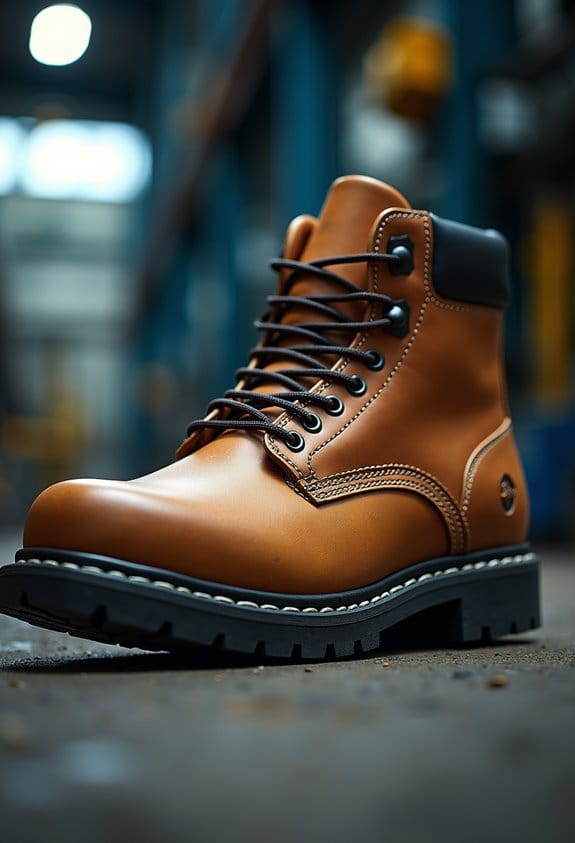
When choosing petrochemical boots, you need to focus on key features like chemical resistance and steel toe protection to keep you safe. Waterproof materials and slip-resistant outsoles also play essential roles in maintaining comfort and preventing accidents. Additionally, don’t overlook support and cushioning since long hours on the job demand durable, comfortable boots.
Chemical Resistance Importance
Chemical resistance in petrochemical boots is one of the most critical features you must prioritize to protect your feet from hazardous spills and contact with harmful substances. Why does it matter? Exposure to oils, acids, and solvents can cause serious injuries like chemical burns or skin irritation. What materials offer the best chemical resistance? Look for boots made of PVC, rubber, or chemical-resistant composites designed to handle these hazards. How can you be certain? Choose boots compliant with industry standards, such as ASTM certification, which guarantees proven protection. Should you consider the chemicals you face daily? Absolutely—different materials protect differently, so pick boots matched to your specific work environment. Remember, the right chemical resistance not only protects you but also extends your boots’ lifespan, saving money over time.
Steel Toe Protection
Although petrochemical environments pose many risks, steel toe protection remains one of the most essential safety features to keep in mind for your boots. Why choose steel toe boots? Here’s what to evaluate:
- Impact resistance: Look for boots meeting ASTM F2413 standards, tested to withstand at least 75 pounds of impact.
- Reinforced toe cap: This guards your feet from falling objects and heavy machinery hazards common in petrochemical settings.
- Injury prevention: Steel toe boots reduce foot injuries—among the most frequent workplace accidents.
- Additional safety features: Many boots combine steel toes with chemical resistance, enhancing protection in hazardous areas.
Selecting the right steel toe boots means balancing verified durability with petrochemical-specific safety needs, giving you reliable foot protection throughout your workday.
Waterproof Boot Materials
Steel toe protection guards your feet against impact and injury, but keeping them dry is equally important in petrochemical work environments. What materials should you look for in waterproof boots?
- PVC and rubber are excellent choices, providing a strong barrier against moisture to keep your feet dry.
- Boots with seamless construction prevent water from leaking in, boosting durability for tough work conditions.
- Some waterproof materials resist chemicals, protecting you from harmful substances common in petrochemical settings.
- High tensile strength adds to the boot’s lifespan, ensuring they withstand regular wear and tear.
- While waterproofing is key, certain boots use triple density technology (TDT) to maintain water resistance without sacrificing comfort and support.
Choosing boots with these features helps keep your feet safe and dry throughout your workday.
Comfort and Support
When you spend long hours on your feet, comfort and support become just as important as protection in petrochemical boots. What features should you look for? First, a contour cushion insole provides necessary arch and heel support, reducing fatigue during long shifts. Removable, washable, and replaceable insoles help maintain hygiene and keep cushioning fresh over time. How does the boot structure affect comfort? A thick, wide steel shank supports your arch, improving stability on hard surfaces. Dual-compound soles combine cushioning with durability, easing discomfort when standing or walking. Finally, consider how weight distribution influences comfort, ensuring your boots balance well to prevent strain. By choosing boots with these features, you’ll protect your feet while staying comfortable throughout demanding workdays.
Slip-resistant Outsoles
Slip-resistant outsoles play a key role in keeping you safe on slippery, oily, or wet surfaces in petrochemical environments. Why do they matter? Because they reduce the risk of slips and falls when you work around hazardous materials. What features should you look for?
- Specialized rubber compounds that improve grip
- Unique tread patterns designed for industrial floors
- Certifications like ASTM or ANSI confirming safety standards
- Self-cleaning designs to avoid debris buildup
- Regular outsole inspections to catch wear early
How do you maintain slip resistance? Check your boots often and replace them when the tread wears down. Choosing boots with these features helps you stay steady, minimizing accidents in tough conditions. Always prioritize reliable traction when selecting your petrochemical boots.
Durability and Reinforcement
Because petrochemical work environments put a lot of pressure on your boots, you need durable materials and reinforced designs to guarantee long-lasting protection. What makes a boot durable? Look for reinforced areas at critical stress points, such as the toe and heel, to prevent early wear. Why choose specific materials? PVC offers high tensile strength, resisting wear and tear under harsh conditions. How does construction affect durability? Injection molding creates seamless boots that resist chemicals and water better, extending use. What adds support during long shifts? Steel shanks provide arch reinforcement to maintain comfort and structural integrity. Finally, how do outsoles contribute? Specialized traction patterns improve grip and self-clean, preserving boot quality over time. These factors help ensure your boots last while keeping you safe.
Appropriate Boot Height
Boot height plays an essential role in protecting you from chemical splashes and spills while working in petrochemical environments. Why does this matter? Taller boots, usually 15 inches or more, shield your lower legs better, preventing harmful chemicals from reaching your skin. What else should you consider? Boots with a shaft height of at least 12 inches meet many industry standards for safety and are preferred for general petrochemical work. Are there other benefits? Yes, a higher boot shaft stops liquids from pooling around your ankles and offers extra stability in deep water or debris. What features can improve fit? Adjustable top straps keep boots secure, reducing the chance of chemicals entering. Always balance boot height with your specific tasks for ideal protection and comfort.
Frequently Asked Questions
How Do Petrochemical Boots Handle Extreme Heat Conditions?
You wouldn’t want boots that melt on a hot metal surface, right? Petrochemical boots handle extreme heat by using heat-resistant materials like Kevlar and treated rubber. They feature insulated soles and protective layers that prevent burns and heat transfer. When you wear them, these boots keep your feet cool, even near flames or hot equipment. Look for boots labeled with ASTM F2413 heat resistance standards for reliable protection every time.
Can Petrochemical Boots Be Used for Electrical Hazard Protection?
Yes, petrochemical boots can protect against electrical hazards if they meet specific safety standards. To guarantee protection:
- Look for ASTM F2413-18 EH (Electrical Hazard) rating on the boot label.
- Choose boots with non-conductive soles made from rubber or similar materials.
- Avoid boots with metal parts that conduct electricity without insulation.
Always verify manufacturer specifications before using boots in electrical hazard environments to keep yourself safe.
What Is the Average Lifespan of Petrochemical Boots?
You can expect petrochemical boots to last about 6 to 12 months with regular use. Factors affecting lifespan include:
- Frequency of wear and work intensity
- Exposure to harsh chemicals or extreme conditions
- Proper cleaning and maintenance routines, like drying and inspecting soles
- Quality of materials, such as chemically resistant rubber or leather
Checking boots monthly helps you spot damage early and replace them before safety is compromised.
Are Petrochemical Boots Suitable for Both Men and Women?
Yes, petrochemical boots are suitable for both men and women. You’ll find:
- Sizes designed to fit a wide range of foot shapes and sizes.
- Gender-neutral styles emphasizing safety features, like slip resistance and chemical protection.
- Some brands offer women-specific fits for better comfort and support.
When choosing boots, focus on proper fit, protective certifications, and durability to guarantee your safety regardless of gender. Always try them on to confirm comfort and functionality.
How Do You Properly Clean and Maintain Petrochemical Boots?
To properly clean and maintain petrochemical boots, follow these steps:
- Wipe off dirt with a damp cloth after each use.
- Use mild soap and warm water for deeper cleaning.
- Avoid harsh chemicals that can damage boot materials.
- Air dry boots away from direct heat or sunlight.
- Apply a protective conditioner or oil designed for the boot’s material monthly.
- Inspect boots regularly for cracks or wear, replacing them as needed.