As an Amazon Associate, we earn from qualifying purchases. Some links on this site are affiliate links at no extra cost to you. Our recommendations are based on thorough research and editorial judgment.


3 Best Ironworker Boots for Tough Jobs and All-Day Comfort

You need ironworker boots that offer steel toe protection, slip resistance, and comfort. The Thorogood 1957 Series 8” Waterproof Steel Toe boots provide ASTM-rated impact safety and excellent traction. For lighter protection, the Thorogood 1957 Series 6” Moc Toe boots feature waterproof leather and shock absorption. Wolverine’s Loader 8” boots offer a soft toe and cushioning for ventilation. Consider ankle support, durable materials, and sole traction to guarantee safety and comfort on tough jobs. Details ahead explain these factors further.
Key Takeaways
- Thorogood 1957 Series 8” Steel Toe boots offer reliable protection and slip resistance for heavy-duty ironwork environments.
- Thorogood 1957 Series 6” Waterproof Moc Toe boots provide waterproof comfort and electrical hazard safety for moderate protection needs.
- Wolverine Men’s Loader 8” Soft boots deliver lightweight comfort and ventilation suitable for less hazardous ironworking tasks.
- Optimal ankle support and removable cushioned insoles ensure stability and all-day comfort during demanding shifts.
- Slip-resistant outsoles meeting ASTM F3445-21 standards enhance safety on slippery or uneven surfaces common in ironworking.
Thorogood 1957 Series 8” Waterproof Steel Toe Work Boots for Men

Thorogood 1957 Series 8” Waterproof Steel Toe Work Boots for Men - Full-Grain Leather with Moc...
- PREMIUM FULL-GRAIN LEATHER BOOTS in Thorogood’s moc toe work boots design, in dark Briar Pitstop brown (804-3800), are both comfortable and stand up to punishing jobs
- MAXWEAR WEDGE TRACTION OUTSOLE flexes better than other work boot outsoles, absorbing impacts and protecting your feet and ankles while working on difficult surfaces...
- Shaft measures approximately 8" from arch
If you’re working in tough conditions where safety and comfort are essential, the Thorogood 1957 Series 8” Waterproof Steel Toe Work Boots are a strong option. You get full-grain leather with a moc toe design, available in dark Briar Pitstop brown. These boots are made in the USA using both domestic and global parts. They include a steel toe that meets ASTM F2413-18 standards for impact and compression protection. Additionally, the boots are EH rated for electrical hazards. This combination guarantees you stay safe while benefiting from dependable materials and craftsmanship in demanding work environments.
Best For: Workers in demanding industrial and outdoor jobs who need reliable steel toe protection, electrical hazard resistance, and all-day comfort in waterproof boots.
Pros:
- Steel toe meets ASTM F2413-18 standards, providing excellent impact and compression protection.
- Waterproof full-grain leather with moc toe design ensures durability and style.
- MAXWear Wedge outsole offers superior slip resistance and comfort, meeting ASTM F3445-21 slip test standards.
Cons:
- The steel toe, while protective, can add weight compared to composite toe options.
- The traditional moc toe design may not appeal to those seeking more modern boot styles.
- Made in the USA with some globally sourced parts, which may result in a higher price point.
Thorogood 1957 Series 6” Waterproof Moc Toe Work Boots for Men

Thorogood 1957 Series 6” Waterproof Moc Toe Work Boots for Men - Soft Toe, Full-Grain Leather with...
- AMERICAN MADE with USA and globally sourced components by the skilled craftsmen and women at Thorogood’s US plants
- WATERPROOF BOOTS for men, with gusseted tongue to keep water and liquids at bay while the moisture-wicking lining inside pulls sweat away and out, so you can work without...
- EH RESISTANT - these MAXWear Wedge work boots meet ASTM F2892-18 electrical hazard resistance safety standards
You’ll find the Thorogood 1957 Series 6” Waterproof Moc Toe Work Boots ideal if you need reliable protection and comfort in wet, demanding environments. What features keep your feet dry and safe? These boots have a gusseted tongue and waterproof full-grain leather to block water, plus a moisture-wicking lining that pulls sweat away. How do they protect you? They meet ASTM F2892-18 electrical hazard standards, supporting jobs like carpentry, welding, and electrical work. For comfort, they include a removable shock-absorbing footbed and flexible ankle support. Their Goodyear Storm Welt construction guarantees durability and moisture resistance on tough job sites.
Best For: Men working in wet, demanding environments who need durable, waterproof, and electrically safe work boots with strong ankle support.
Pros:
- Waterproof gusseted tongue and full-grain leather keep feet dry.
- Meets ASTM F2892-18 electrical hazard standards, ensuring safety in various industrial jobs.
- Removable shock-absorbing footbed and fiberglass shank provide comfort and support.
Cons:
- Soft toe design may not offer the same protection as steel toe boots.
- Made in the USA with some globally sourced components, possibly affecting uniformity in manufacturing.
- The 6-inch height might not provide enough protection for hazards requiring higher boots.
Wolverine Men’s Loader 8″ Soft

Wolverine Men's Loader 8" Soft Toe Wedge Work Boot, Brown, 11 M US
- Genuine full-grain leather upper
- PU wedge outsole increases comfort and sheds away dirt and other debris
- Removable full-cushioned footbed

The Wolverine Men’s Loader 8″ Soft boot is designed for workers who need durable footwear that remains comfortable during long shifts in hot environments. What materials and construction methods guarantee its durability and fit? It uses genuine full-grain leather and Goodyear Welt construction, which molds to your feet for a custom fit. How does it keep your feet cool? The unlined interior and padded collar promote ventilation in warm conditions. What about comfort? A removable, full-cushioned footbed provides extra support. Finally, the PU wedge outsole repels dirt and debris, enhancing comfort and safety on tough job sites.
Best For: Workers seeking durable, comfortable boots that stay cool during long shifts in hot environments.
Pros:
- Durable genuine full-grain leather upper with Goodyear Welt construction for a custom fit.
- Unlined interior and padded collar provide ventilation to keep feet cool.
- Removable full-cushioned footbed and PU wedge outsole offer enhanced comfort and debris resistance.
Cons:
- Unlined design may offer less insulation in colder conditions.
- PU wedge outsole might provide less traction on slippery surfaces compared to lug soles.
- Imported product availability and sizing might vary by region.
Factors to Consider When Choosing Ironworker Boots
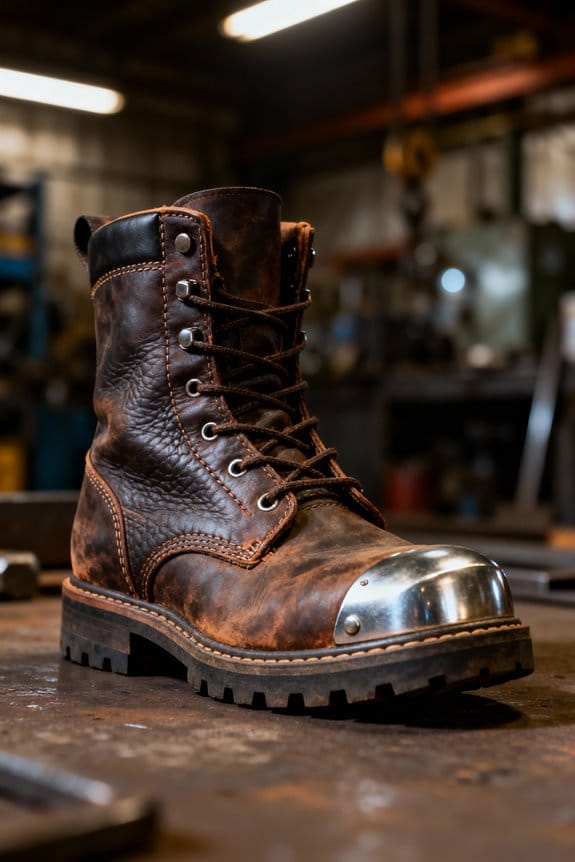
When choosing ironworker boots, you need to focus on several key features to guarantee safety and comfort on the job. Think about the safety standards compliance, the type of toe protection, waterproof capabilities, the level of ankle support, and any comfort features included. Each of these factors plays an essential role in protecting your feet and keeping you comfortable during long work hours.
Safety Standards Compliance
Before choosing ironworker boots, you’ll want to make sure they meet important safety standards that protect you on the job. What safety standards should you look for? First, verify the boots comply with ASTM F2413-18 for safety toe protection against impact and compression hazards. If you work near electricity, boots must meet electrical hazard (EH) resistance standards to reduce shock risks. Slip resistance is crucial too—look for ASTM F3445-21 compliance to prevent falls on slippery surfaces. Is waterproofing important? Yes, especially if your job exposes you to wet conditions, as it keeps your feet dry and comfortable. Finally, check for additional features like steel toe caps and reinforced construction that enhance safety in hazardous environments. Meeting these standards helps keep you safe and productive every day.
Toe Protection Type
Although both steel toe and soft toe boots offer foot coverage, your choice depends largely on the level of protection you need for the job. Steel toe boots include a hard protective cap that supports impact and compression resistance, meeting standards like ASTM F2413-18. They’re ideal for sites where heavy materials or machinery pose risks. Soft toe boots, on the other hand, are lighter and more flexible but lack the reinforced protection, making them better suited for less dangerous environments. You should also consider if you need EH-rated boots, which combine toe protection with electrical hazard resistance. To decide, ask yourself: What hazards will I face? Do I work near electrical hazards? Selecting the right toe protection enhances safety and comfort, helping you get the job done efficiently.
Waterproof Capabilities
Any ironworker boots that claim waterproof capabilities should keep your feet dry and comfortable, especially when you face wet or messy conditions on the job. What should you look for?
- Gusseted tongue: This feature blocks water and liquids from seeping inside, enhancing waterproofing.
- Moisture-wicking lining: It pulls sweat away, preventing blisters and discomfort during long hours.
- Breathability: Waterproof doesn’t mean hot; quality boots balance water resistance and ventilation.
- Waterproof certifications: Look for ASTM or similar standards to guarantee reliable water protection.
These factors help select boots that won’t let moisture in while maintaining comfort. Remember, staying dry keeps you safer and focused, even when conditions get tough and unpredictable.
Ankle Support Level
One critical aspect you should consider when choosing ironworker boots is the level of ankle support they provide, since your job often demands climbing, kneeling, and moving on uneven surfaces. Why does ankle support matter? It helps reduce the risk of sprains and injuries during your daily tasks. What features contribute to good ankle support?
- Boots with a height of 6 to 8 inches shield your ankle better than shorter boots.
- Full-grain leather and advanced construction enhance stability.
- A steel or fiberglass shank inside maintains the boot’s shape and adds arch support.
- Flexible ankle support allows movement without compromising protection.
Choosing boots with these qualities guarantees your ankles stay secure, letting you focus on your work safely.
Comfort Features Included
After understanding the importance of ankle support, you should also consider how comfort features affect your overall performance and foot health throughout demanding workdays. What key comfort elements should you look for in ironworker boots?
- Removable insoles like dual-density polyurethane footbeds offer impact absorption and let you customize comfort.
- Moisture-wicking linings keep your feet dry by pulling sweat away, reducing discomfort during long hours.
- Flexible ankle support helps maintain mobility without sacrificing stability, found in boots with varied heights.
- A fiberglass shank maintains the boot’s shape and supports foot alignment, which helps reduce fatigue.
- Goodyear welt construction not only adds durability but also allows the boot to form a custom fit over time.
Focusing on these features guarantees your boots provide all-day comfort and support for tough jobs.
Outsole Traction Quality
Outsole traction plays a critical role in keeping you safe and steady on the job, especially when you work on slippery or uneven surfaces. Why is traction so important? It guarantees you have a firm grip on various terrains, reducing slip risks in hazardous spots like scaffolding.
What should you look for in outsole traction quality?
- Slip-resistant designs meeting ASTM F3445-21 standards guarantee reliable stability.
- Rubber or polyurethane materials offer better grip and flexibility for controlled movements.
- Tread patterns that maximize surface contact help disperse liquids and prevent slips.
- Impact-absorbing outsoles provide extra stability while moving around heavy equipment.
Choosing boots with these traction features lets you stay balanced and secure during tough, demanding tasks.
Durability and Construction
Traction keeps you steady, but durability and construction determine how well your boots hold up over time in tough environments. What materials should you look for? Full-grain leather offers superior durability and resists wear in harsh conditions. How does the construction affect longevity? Boots with Goodyear welt construction let you replace the soles, extending their life considerably. What about water protection? Models with moisture-sealing features prevent damage from wet conditions, especially outdoors. Are internal supports important? Fiberglass shank construction provides stability while helping the boots maintain shape and flexibility, vital for ironworker tasks. Finally, why check safety standards? Ensuring your boots meet ASTM or similar certifications guarantees they can endure the demands of heavy-duty work environments, protecting your feet and investment.
Weight and Flexibility
When selecting ironworker boots, you’ll want to carefully consider both weight and flexibility to reduce fatigue and maintain agility during long shifts. How does weight affect your work? Lighter boots generally help you move more easily and tire less. What about flexibility? Boots must allow smooth motion for handling tools and balancing at heights without sacrificing support. So, how do you find the right balance? Look at these points:
- Choose boots made with synthetic materials to keep weight down but durability up.
- Confirm the design offers enough ankle support to prevent injuries.
- Avoid boots that are too stiff or too flexible, as they either limit movement or lack protection.
Balancing weight and flexibility helps you stay comfortable and safe while working hard.
Frequently Asked Questions
Can Ironworker Boots Be Used for Casual Wear?
Yes, you can wear ironworker boots for casual use, but consider comfort and style. They provide:
- Strong protection with steel toes and tough soles,
- Durable materials that handle rough terrain,
- Less flexible design than casual shoes,
- Heavier weight, which might feel cumbersome,
- A work-focused look that may not suit all casual outfits.
If you prioritize durability and foot safety over fashion and lightness, these boots work fine for casual wear.
How Do Ironworker Boots Perform in Extreme Cold?
Ironworker boots perform well in extreme cold if they include insulated linings like Thinsulate and waterproof membranes to keep your feet dry and warm. Features to check are slip-resistant soles for icy surfaces and durable outsoles that retain flexibility in low temperatures. However, without proper insulation, your feet might get cold quickly. To maximize comfort, choose boots with enhanced thermal protection and moisture-wicking liners specifically designed for harsh winter conditions.
Are These Boots Vegan or Made With Synthetic Materials?
Ironworker boots often use synthetic materials, but many aren’t fully vegan. Here’s what you should check:
- Uppers: Some use leather, others synthetic fabric or PU.
- Insoles: Typically synthetic foam or gel for comfort.
- Outsoles: Usually rubber or TPU, which are vegan materials.
- Safety features: Steel toes and shanks are metal, not animal-based.
If you want vegan boots, confirm the material list or look for brands advertising vegan-certified options.
What Type of Insoles Work Best With Ironworker Boots?
You want insoles that offer strong arch support and cushioning for shock absorption when working long hours. Look for these features:
- Memory foam or gel layers to reduce foot fatigue
- Orthotic design for proper foot alignment
- Moisture-wicking materials to keep feet dry
- Durable construction to withstand tough conditions
Brands like Superfeet, Dr. Scholl’s, or Sorbothane work well with ironworker boots, providing comfort and preventing injuries.
How Do Ironworker Boots Compare to Hiking Boots?
You know what they say: “Different strokes for different folks.” Ironworker boots offer heavy-duty protection with steel toes, slip-resistant soles, and durable leather designed for job sites. Hiking boots focus on ankle support, cushioning, and waterproof materials for rough outdoor trails. While both provide traction, ironworker boots prioritize safety standards, like ASTM ratings, whereas hiking boots enhance comfort over varied terrain. Choose based on your activity’s demands and safety needs.